
A patio can make a beautiful pool feel dated fast. Faded concrete, peeling coatings, hairline cracks, and stubborn calcium deposits pull attention away from the water and make the entire backyard feel unfinished. The right patio resurfacing options can restore that space without automatically requiring a full tear-out, but the best choice depends on the slab’s condition, drainage, heat exposure, and how your family uses the backyard.
For homeowners in Katy, Houston, and surrounding communities, resurfacing is more than a cosmetic decision. Texas sun, heavy rain, expansive clay soils, and pool chemicals all place real demands on a patio surface. A finish that looks good on installation day but becomes slick, hot, or cracked after a few summers is not a long-term upgrade. The goal is a patio that supports the way you live outside - from quiet evenings by the pool to weekends hosting family and friends.
Start With the Condition of Your Existing Patio
Before choosing a color, texture, or material, assess the slab underneath. Surface staining, light wear, and minor cosmetic cracking can often be addressed with a resurfacing system. Larger structural cracks, settling, standing water, or a patio that slopes toward the home call for a more involved solution.
This distinction matters. Resurfacing over an unstable concrete slab may hide problems temporarily, but it will not correct movement or drainage. In some cases, targeted repairs, joint work, or a partial replacement provides better value than applying a new finish over a failing surface.
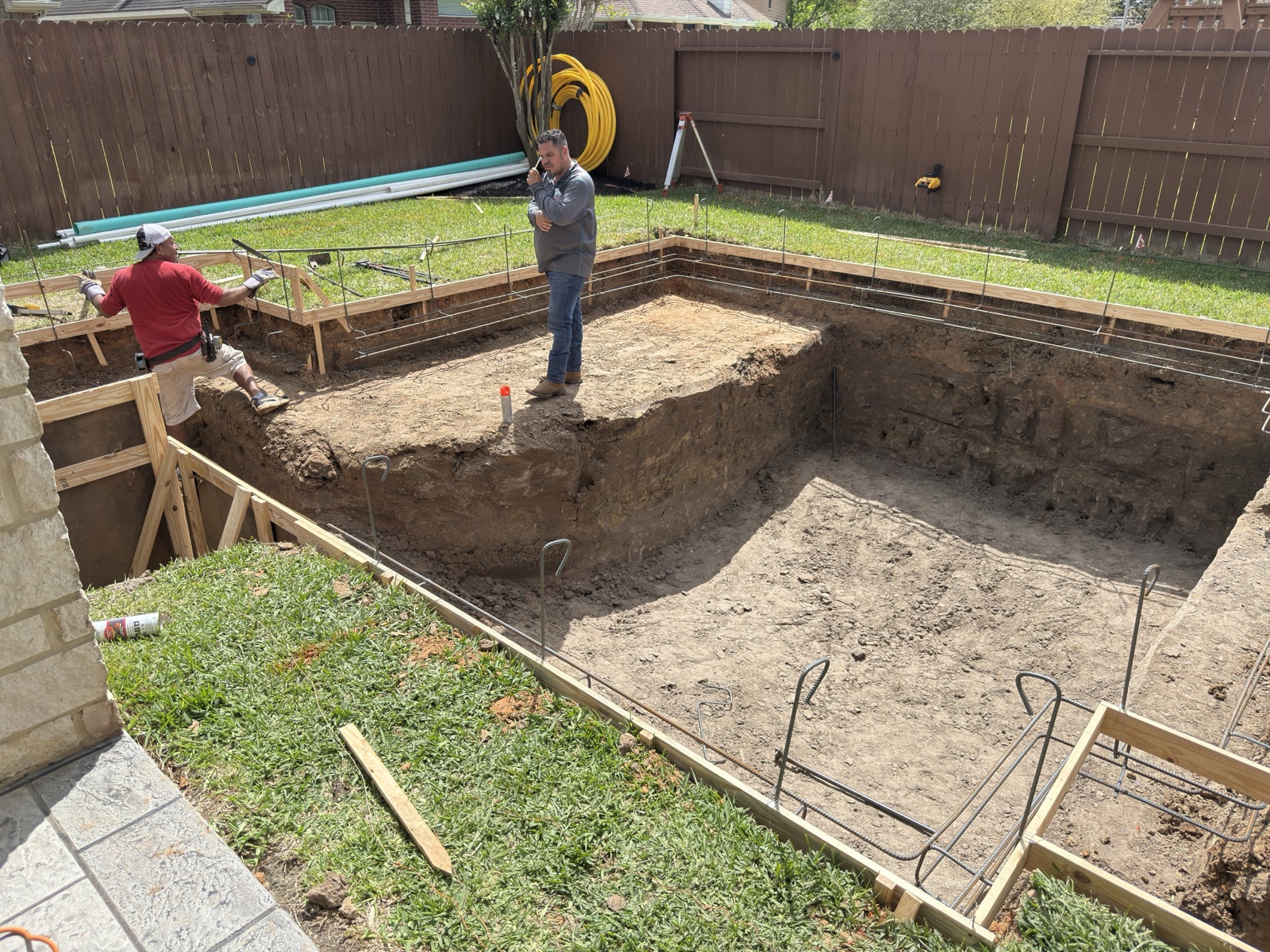
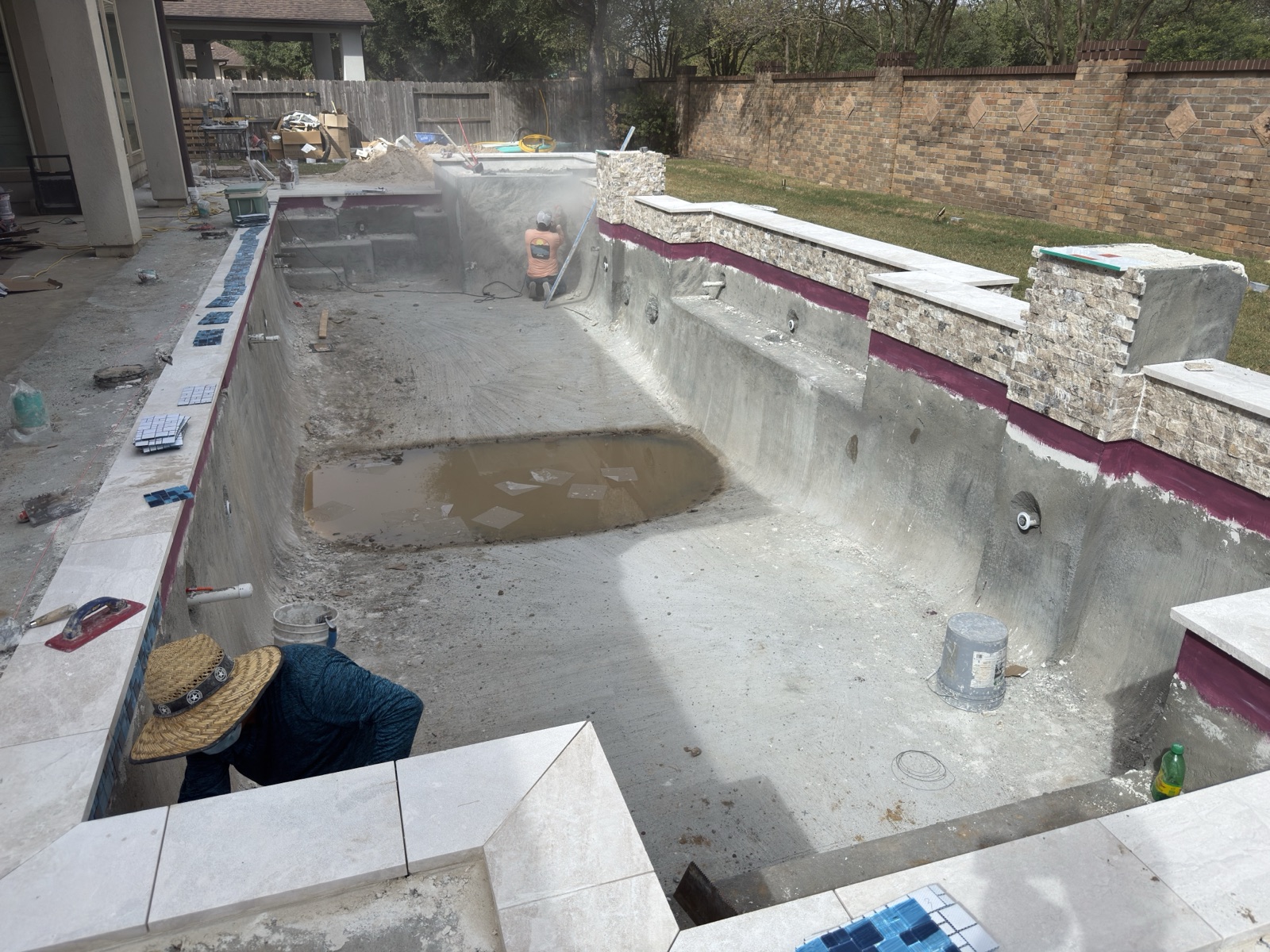
A professional site evaluation should look at the concrete’s integrity, elevation around the pool, drainage paths, expansion joints, and the transition between the patio, coping, and any outdoor kitchen or covered structure. This is especially important when a backyard remodel includes more than the patio. A new pool finish, waterline tile, decking, and outdoor living area should be planned as one connected design.
Popular Patio Resurfacing Options for Pool Decks
Decorative concrete overlays
A decorative overlay is a cement-based coating applied over sound existing concrete. It can create a fresh, uniform surface while offering far more design flexibility than plain gray concrete. Depending on the system, overlays can be textured, troweled, stamped, or colored to resemble stone, slate, travertine, or a custom concrete finish.
For many pool decks, a textured overlay offers a practical balance of appearance, comfort, and cost. Texture improves traction around wet areas, while lighter colors can help reduce surface heat. The key is proper preparation. The concrete must be cleaned, repaired, profiled, and bonded correctly for the overlay to perform well through Houston’s changing weather.
Overlays are a strong fit when the existing patio is structurally sound but visually worn. They are less suitable for slabs with significant ongoing movement or widespread cracking.
Spray texture and cool deck coatings
Spray-applied texture systems are commonly selected for poolside patios because they create a slip-resistant finish with a softer feel underfoot than bare concrete. Often called cool deck-style coatings, these systems can help make a sun-exposed deck more comfortable, particularly when paired with a light, heat-reflective color.
This option works well for homeowners who want a clean, updated pool area without adding much thickness to the existing deck. It can also be a smart way to coordinate an older patio with a newly remodeled pool.
There are trade-offs. Coatings need professional surface preparation and may require periodic maintenance or recoating over time. The right product, texture, and color selection will make a meaningful difference in how the deck holds up against chlorine splashes, sunscreen, furniture traffic, and intense Texas sun.
Stamped concrete overlays
Stamped overlays add pattern and dimension without removing the original slab. They can recreate the look of flagstone, natural stone, brick, or wood planks at a lower cost than installing those materials individually. For a backyard with a traditional pool, outdoor fireplace, or covered patio, stamped concrete can bring visual character to a large hardscape area.
The finish needs careful design around a pool. Deep patterns and dark colors may look dramatic, but they can be harder to keep clean and hotter under bare feet. A pool deck should prioritize safe texture and easy maintenance alongside style. A more subtle stamp pattern with an integrated non-slip finish is often the better choice.
Pavers over an existing patio
Concrete or porcelain pavers can be installed over some existing concrete patios when elevations, drainage, and door clearances allow. This creates a high-end, modular surface that is easy to customize with borders, geometric patterns, and contrasting colors. Pavers also make future repairs more straightforward because individual units can be removed and replaced if needed.
Porcelain pavers offer excellent color consistency and stain resistance, while concrete pavers provide a wide range of shapes and a more traditional hardscape appearance. Both can elevate a backyard significantly, especially when the patio is being expanded to connect a pool, outdoor kitchen, and seating area.
However, pavers add height and require precise base or pedestal planning. They are not simply placed over concrete without considering water flow, coping height, gates, steps, and thresholds. When installed thoughtfully, they offer a premium result built for heavy use.
Natural stone and travertine
Travertine remains a popular choice for upscale Texas pool decks because of its timeless look and naturally cooler feel compared with many dense materials. Its soft, neutral tones work beautifully with modern pools, freeform pools, and outdoor kitchens alike. Natural stone options such as limestone or flagstone can also create a more organic, custom landscape design.
Stone is not a one-size-fits-all answer. Material quality, installation details, grout or joint design, and sealing requirements all affect long-term performance. Some stones are more porous than others, and poorly selected materials can stain, chip, or become difficult to maintain around a pool. A knowledgeable builder can help match the stone to the backyard’s exposure, architecture, and maintenance expectations.
Choosing the Right Color and Texture
In Houston-area backyards, color is a performance decision as much as a design decision. Dark charcoal, chocolate, and deep gray surfaces can look refined, but they generally absorb more heat. Light sand, cream, soft gray, and warm taupe tend to be more comfortable underfoot and pair naturally with water, landscaping, and most home exteriors.
Texture deserves the same attention. A patio should have enough grip for wet feet without feeling rough when children are playing outside or guests are walking barefoot. The most successful pool decks use a controlled, slip-resistant texture rather than an aggressively rough finish.
Consider how the patio will look from inside the home as well. Since the deck often occupies a large visual area, its tone should complement the pool coping, tile, exterior brick or stucco, and any planned outdoor kitchen finishes. Free 3D design planning can help homeowners see these relationships before construction begins instead of trying to coordinate materials after the fact.
Drainage and Expansion Joints Are Not Optional Details
A beautiful resurfaced patio still fails if water has nowhere to go. Water should drain away from the home and avoid collecting at the pool edge, outdoor kitchen, or low points where it can encourage staining and surface deterioration. In many older backyards, correcting drainage is one of the most valuable parts of the renovation.
Expansion joints also need attention. Concrete expands and contracts in Texas heat, and joints are designed to manage that movement. Covering or improperly filling them during resurfacing can lead to cracking in the new finish. A quality installation respects the slab’s movement and uses appropriate joint treatment rather than treating the patio as one continuous, immovable surface.
When Full Replacement Makes More Sense
Resurfacing is efficient, but it is not always the right answer. Full patio replacement may be the wiser investment when concrete has major settlement, extensive structural cracking, poor drainage, deteriorated edges, or an outdated layout that no longer serves the backyard.
Replacement also creates an opportunity to improve the entire outdoor plan. You may want to widen the pool deck, add a fire feature, create a dining zone, install an outdoor kitchen, or improve the path from the home to the pool. Starting fresh can provide better elevations, cleaner transitions, and a more cohesive finished space.
CHR Builder approaches patio work as part of the complete outdoor environment, not as an isolated surface upgrade. With more than 25 years of construction experience, the team can evaluate whether resurfacing protects your investment or whether a redesigned hardscape will deliver the stronger long-term result.
Your patio should make the backyard easier to enjoy, not become another maintenance concern. A clear assessment, durable materials, and a design built for Texas livin can turn an aging pool deck into the comfortable, finished outdoor space your home deserves.