A patio can look beautiful on installation day and still become a regret after its first Houston summer. The right material has to handle bare feet, pool water, afternoon storms, and the daily wear of Texas outdoor living. This travertine patio review looks at where natural stone delivers, where it demands more attention, and whether it is the right fit for your backyard investment.
Travertine Patio Review: The Short Answer
Travertine is one of the strongest choices for premium pool decks and outdoor patios in Katy and Houston because it stays relatively comfortable underfoot, has natural texture, and creates a high-end, timeless look. It works especially well around custom pools, outdoor kitchens, covered patios, and entertaining areas where the hardscape needs to feel as intentional as the home.
It is not maintenance-free, and it is not the lowest-cost patio material. Travertine is a natural stone with pores, color variation, and a need for proper installation. Homeowners who want a perfectly uniform surface or a budget-first solution may be happier with stamped concrete or porcelain pavers. But when the goal is a durable, elevated backyard built for Texas livin, travertine earns its reputation.
Why Travertine Works Around Texas Pools
Heat is the first reason many homeowners consider travertine. Light-colored travertine generally absorbs less heat than dark concrete, brick, or some dense pavers. No deck material stays cool in direct Texas sun all day, but travertine can be noticeably more comfortable for families moving between the pool, patio seating, and outdoor kitchen.
The stone's naturally textured surface is another advantage. Tumbled travertine offers more grip than a polished surface, which matters around wet pool coping and splash zones. That said, no patio is slip-proof. Sunscreen, standing water, algae, and improper cleaning can all create slick conditions. Good drainage, thoughtful deck slopes, and regular care matter as much as the surface material.
Travertine also gives a backyard visual depth that manufactured materials have a hard time replicating. Each paver has subtle differences in veining and tone. Cream, ivory, walnut, and silver selections can complement everything from a Mediterranean-style home to a clean, contemporary pool design.
The Installation Details That Protect Your Investment
Travertine performs best when the work below the stone is handled correctly. A premium paver cannot compensate for poor base preparation, inadequate drainage, or a patio that was not planned around existing grade changes.
For a pool deck, the installer should account for deck elevation, coping transitions, expansion needs, water runoff, and access to pool equipment. In Houston-area clay soils, a construction-led approach is particularly valuable because soil movement and drainage issues can affect patios over time. The goal is not simply to place stone. It is to build a stable outdoor surface that directs water away from the home and supports the way the space will be used.
Travertine may be installed over a prepared base as individual pavers or set over a concrete slab, depending on the design, site conditions, and desired finish. Pavers can make future repairs more manageable because individual pieces may be lifted and reset. A slab installation can provide a different feel and may suit certain layouts, but it requires careful crack and movement planning.
Costs and Trade-Offs to Consider
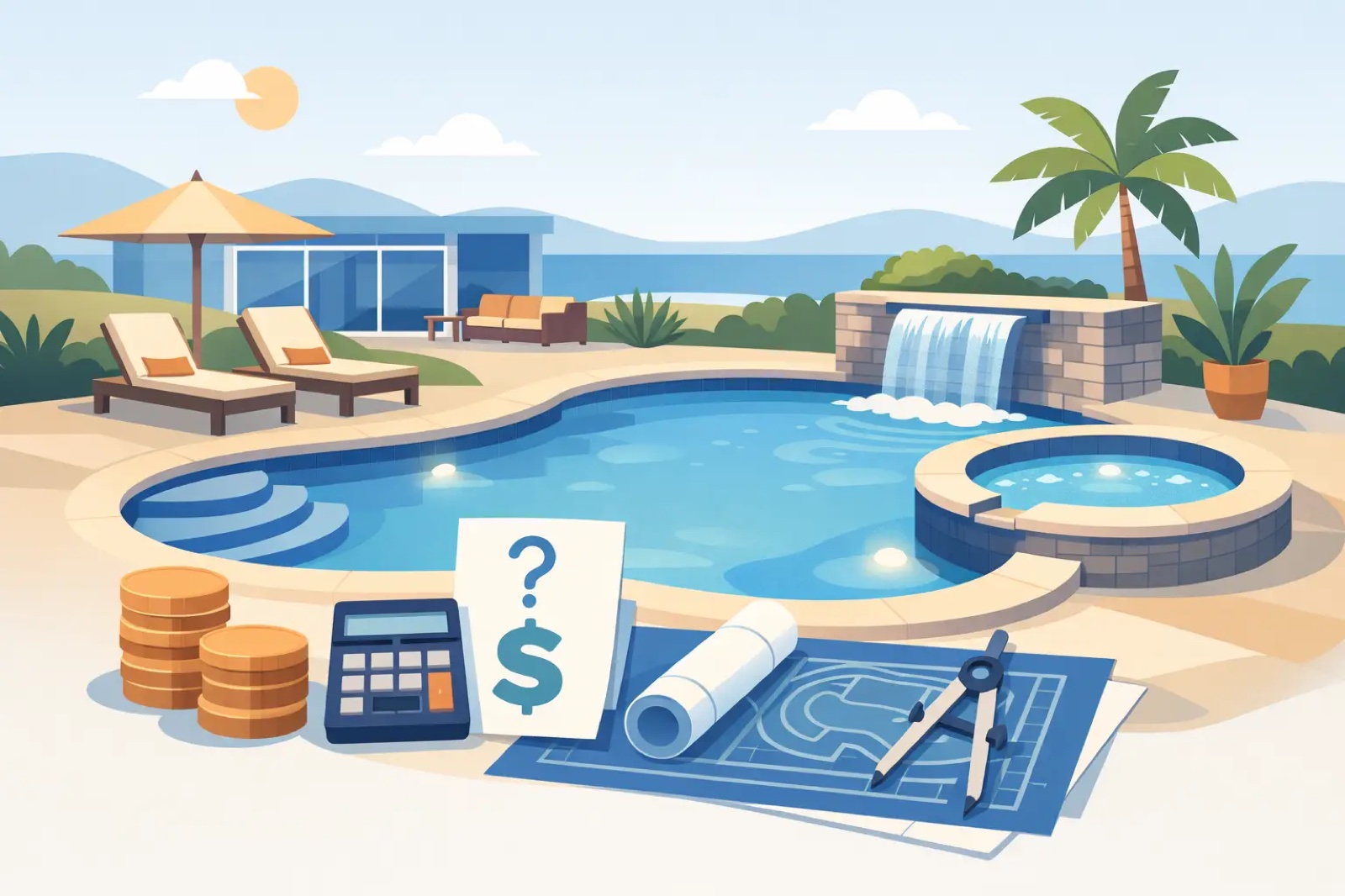
Travertine typically costs more than a basic concrete patio, both in material and skilled labor. The final project price depends on stone grade, thickness, pattern, square footage, demolition, drainage work, borders, coping, and site access. A patio that connects to a new pool, retaining wall, kitchen, or covered structure also has more coordination involved than a standalone pad.
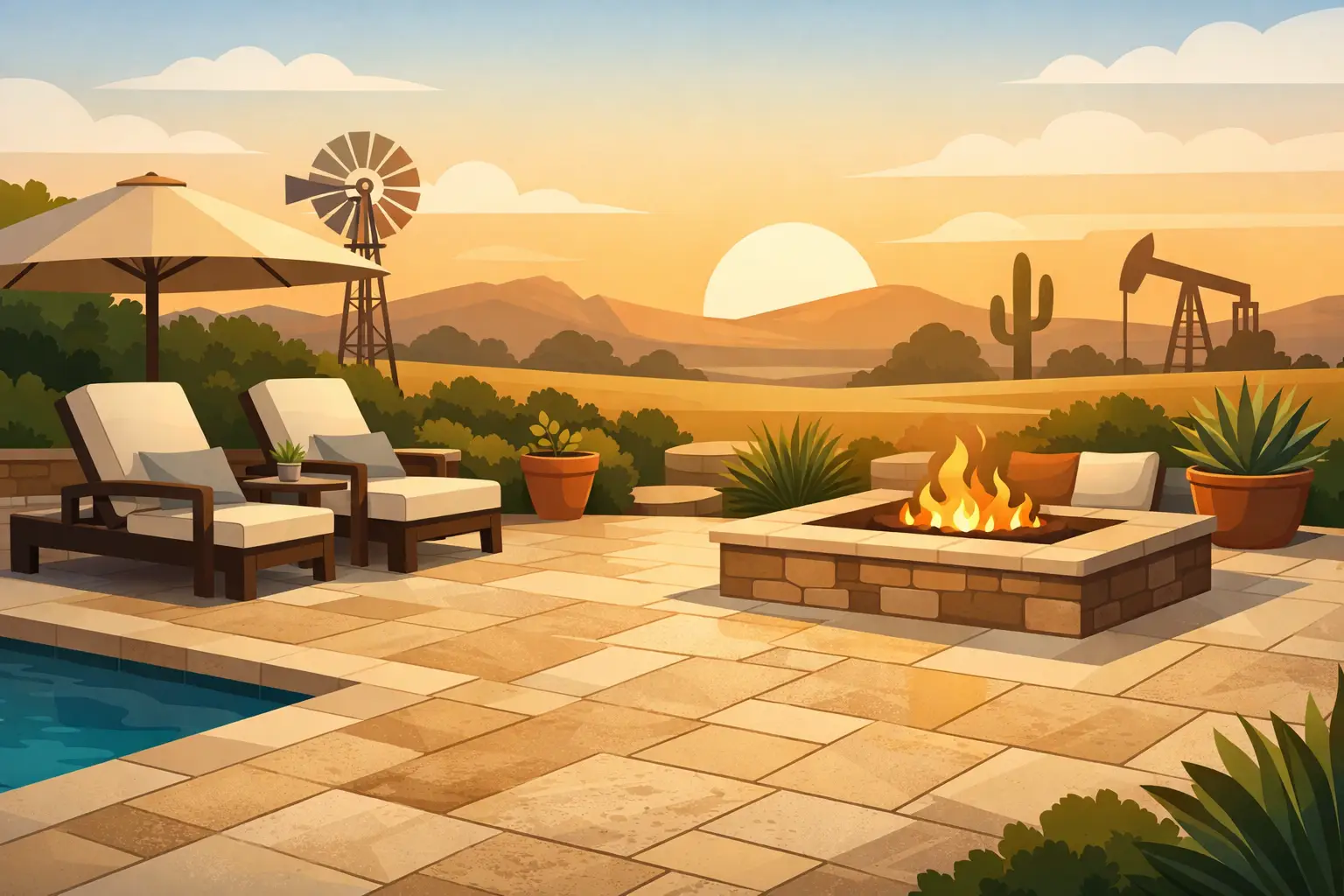
The higher upfront cost can make sense when the patio is part of a complete backyard transformation. Natural stone improves the visual continuity between a pool deck, fire feature, seating area, and outdoor kitchen. It can also support the perceived quality of the property when the installation is clean and well maintained.
Still, travertine is not ideal for every homeowner. Because it is porous, it can stain if spills are left untreated. Dropped oil, barbecue grease, rust, and leaf tannins deserve quick attention. Some pieces may have natural holes or voids, which can be filled during manufacturing or accepted as part of the stone's character. If that variation feels like a flaw rather than a feature, a porcelain paver may be a better match.
Maintenance Expectations for a Travertine Patio
Routine maintenance is straightforward: sweep away debris, rinse the surface as needed, and clean spills promptly with products safe for natural stone. Avoid harsh acidic cleaners because they can etch or dull the surface. Pool owners should also monitor calcium buildup near waterlines and splash areas, especially where hard water is common.
Sealing can help reduce staining and simplify cleanup, but it should be selected and applied carefully. A sealer should protect the stone without creating an overly glossy or slippery finish. Resealing needs vary based on sun exposure, pool use, cleaning habits, and the specific product used.
A professional builder can also design the patio to make maintenance easier from the beginning. Proper drainage reduces standing water. Adequate expansion joints help manage movement. Clear transitions around coping, drains, and outdoor structures prevent small details from becoming future repair issues.
Is Travertine the Right Choice for Your Backyard?
Choose travertine if you want a natural, upscale pool deck that feels comfortable, adds texture, and ties a luxury outdoor space together. It is especially compelling for homeowners planning a custom pool or a full patio renovation rather than a quick surface upgrade.
Before selecting a color or pattern, see the stone alongside your pool finish, home exterior, and outdoor kitchen materials. A free 3D design from CHR Builder can help you visualize the entire space before construction begins, so your patio is planned as part of the backyard rather than treated as an afterthought.