When a homeowner is planning a pool deck or outdoor living space in Texas, the travertine patio vs stamped concrete question usually comes up fast - and for good reason. Both can look sharp. Both can elevate a backyard. But they do not perform the same once you add Houston heat, pool water, heavy rain, shifting soil, and years of foot traffic.
If you are building for long-term value, not just first impressions, the right answer depends on how you use the space, how much maintenance you want, and what kind of finish you expect five or ten years from now. A patio should not only look good on install day. It should stay comfortable, durable, and cohesive with the rest of your backyard design.
Travertine patio vs stamped concrete for Texas homes
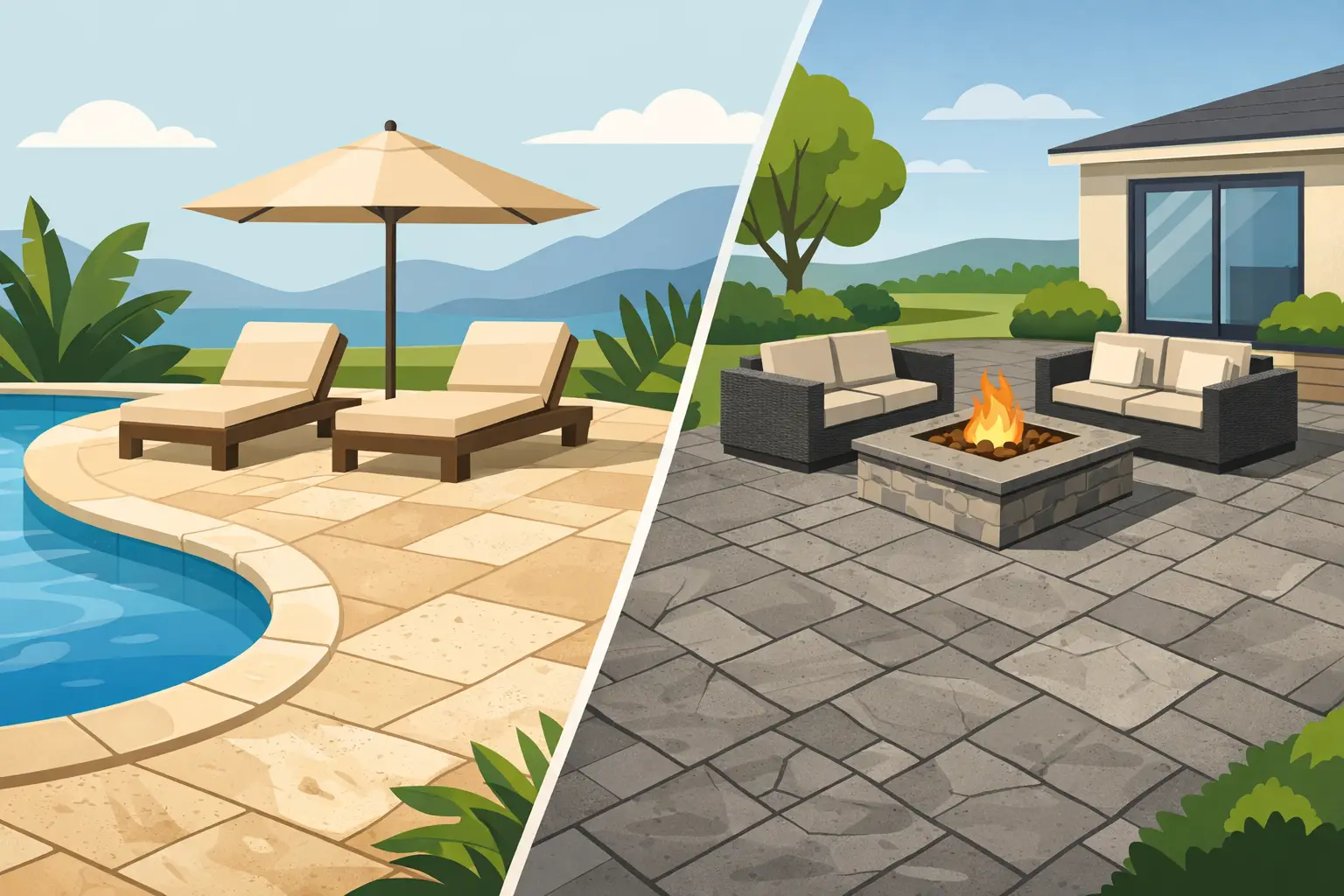
For many homeowners, this choice comes down to natural stone versus decorative concrete. Travertine is a real stone with variation in tone, texture, and character. Stamped concrete is a poured slab patterned and colored to imitate stone, brick, or other materials.
That difference affects more than appearance. It changes surface temperature, repair options, drainage planning, and how the patio ages around a pool. In Katy, Houston, and surrounding areas, those details matter because outdoor spaces work hard year-round.
How travertine looks and feels
Travertine has a more natural, high-end appearance because it is not trying to imitate anything. Each piece has subtle movement and color variation, which gives the patio depth without looking busy. Around custom pools and outdoor kitchens, that tends to read as more refined and more custom.
It also feels better underfoot in many cases. Travertine stays cooler than many concrete surfaces in direct sun, which is a major advantage during Texas summers. If you have kids running around barefoot or you spend a lot of time near the pool, that comfort becomes a real quality-of-life feature.
How stamped concrete looks and feels
Stamped concrete can create a polished look at a lower upfront price. It is versatile in pattern and color, and when installed well, it can complement a wide range of backyard styles. Homeowners who want the appearance of stone without paying for natural stone often start here.
The trade-off is that stamped concrete is still concrete. Even with texture and color added, it typically does not have the same depth or authenticity as travertine. It can also get hotter in the sun, which is worth considering if the patio will be used heavily in peak summer months.
Cost is only part of the decision
Stamped concrete usually wins on initial cost. For budget-conscious projects, that can make it attractive, especially if the patio covers a large footprint. If you are trying to balance a new pool, coping, landscaping, and an outdoor kitchen, every material choice affects the total investment.
But upfront cost should not be the only filter. A cheaper install can become more expensive over time if it cracks, fades, or needs more visible repairs. Travertine typically costs more at the start, yet many homeowners see that as part of a longer-term investment in appearance, comfort, and resale appeal.
This is where project planning matters. A well-designed backyard is not a collection of random upgrades. It is a complete environment. Choosing the right patio material should support the level of finish you want across the entire space.
Heat, slip resistance, and poolside performance
Around pools, function matters just as much as style. That is one reason travertine remains a popular choice in higher-end outdoor living projects. Its surface tends to stay cooler than stamped concrete, and it offers solid traction when finished and installed correctly.
Stamped concrete can also be textured for slip resistance, but the result depends heavily on the installer, the pattern, and the sealer used. Some finishes look great but become slicker when wet, especially if they are over-sealed. That does not mean stamped concrete cannot work near a pool. It means the details cannot be treated as an afterthought.
In Texas, heat is not a minor issue. A patio that is painful to walk on in July will not get enjoyed the way it should. Homeowners investing in a premium backyard usually want materials that look good and live well in the climate.
Durability and what happens over time
Both materials can last, but they age differently.
Travertine is made up of individual pavers or tiles, depending on the application. If one section gets damaged, it is often easier to replace a localized area without redoing the entire patio. That is a practical advantage. Natural stone also tends to age with more grace, especially when the overall design is intended to feel timeless.
Stamped concrete is one continuous slab, which can be a weakness in areas where soil movement is common. Texas conditions can be tough on concrete surfaces. Expansion, contraction, and shifting ground can lead to cracking. Control joints help, but they do not eliminate the risk. And when stamped concrete cracks, repairs are often noticeable because matching the pattern and color perfectly is difficult.
Fading is another factor. Over time, stamped concrete may lose some of its original color and require resealing to maintain its appearance. Travertine is not maintenance-free either, but its natural variation can make wear less obvious.
Maintenance expectations
Neither option should be sold as zero-maintenance. Outdoor living materials need care, especially around pools where water, chemicals, and organic debris are part of everyday use.
Travertine generally benefits from sealing, periodic cleaning, and attention to grout or joint material depending on the installation method. The good news is that routine care tends to preserve a look that already feels natural. Small changes over time rarely make it look tired.
Stamped concrete also needs sealing and cleaning, but maintenance can feel more appearance-driven because the finish relies on surface color and texture. If the sealer wears unevenly or the color dulls, the patio can lose some of the visual impact that made it appealing in the first place.
For homeowners who want a patio that keeps a premium look with fewer cosmetic frustrations, travertine often has the edge.
Which material fits your backyard style?
If your goal is a more upscale outdoor space with a custom pool, clean coping lines, and a cohesive design, travertine usually fits more naturally. It pairs well with modern, transitional, and Mediterranean-inspired backyards, and it helps the finished project feel intentionally designed rather than assembled from stock options.
Stamped concrete can still be the right move when the project needs visual impact on a tighter budget. It works well for larger entertainment areas, detached patio zones, and homeowners who want decorative value without moving fully into natural stone pricing.
The biggest mistake is choosing based on a small sample alone. A patio has to work with the home, the pool, the drainage plan, and the daily way your family uses the yard. Materials should be selected in context, not in isolation.
When travertine makes more sense
Travertine is often the stronger choice if you want a cooler pool deck, a more natural luxury finish, and better flexibility for future repairs. It also makes sense when the patio is part of a larger investment and the overall goal is long-term value.
For homeowners building a custom backyard built for Texas livin, this is usually the material that aligns with a premium vision. It supports the kind of finished result that feels custom from every angle.
When stamped concrete makes more sense
Stamped concrete is often the better fit if budget is the main driver and you still want something more decorative than plain broom-finished concrete. It can deliver a big visual upgrade for less money upfront, particularly on larger patio areas.
It may also make sense when the patio is not the star of the project and the design goal is to keep costs balanced across multiple features. The key is proper installation. With stamped concrete, craftsmanship has a huge impact on the final result.
The right choice depends on the whole project
There is no one-size-fits-all winner in the travertine patio vs stamped concrete decision. The better material is the one that matches your design goals, comfort expectations, maintenance tolerance, and long-term plans for the property.
That is why experienced design-build guidance matters. When a patio is being planned alongside a pool, outdoor kitchen, or full backyard transformation, the surface material should be chosen as part of the entire build strategy. CHR Builder approaches outdoor spaces that way - with construction knowledge, design clarity, and a focus on results that hold up beyond the first season.
A great backyard should still feel like a great decision years later. That is the standard worth building toward.