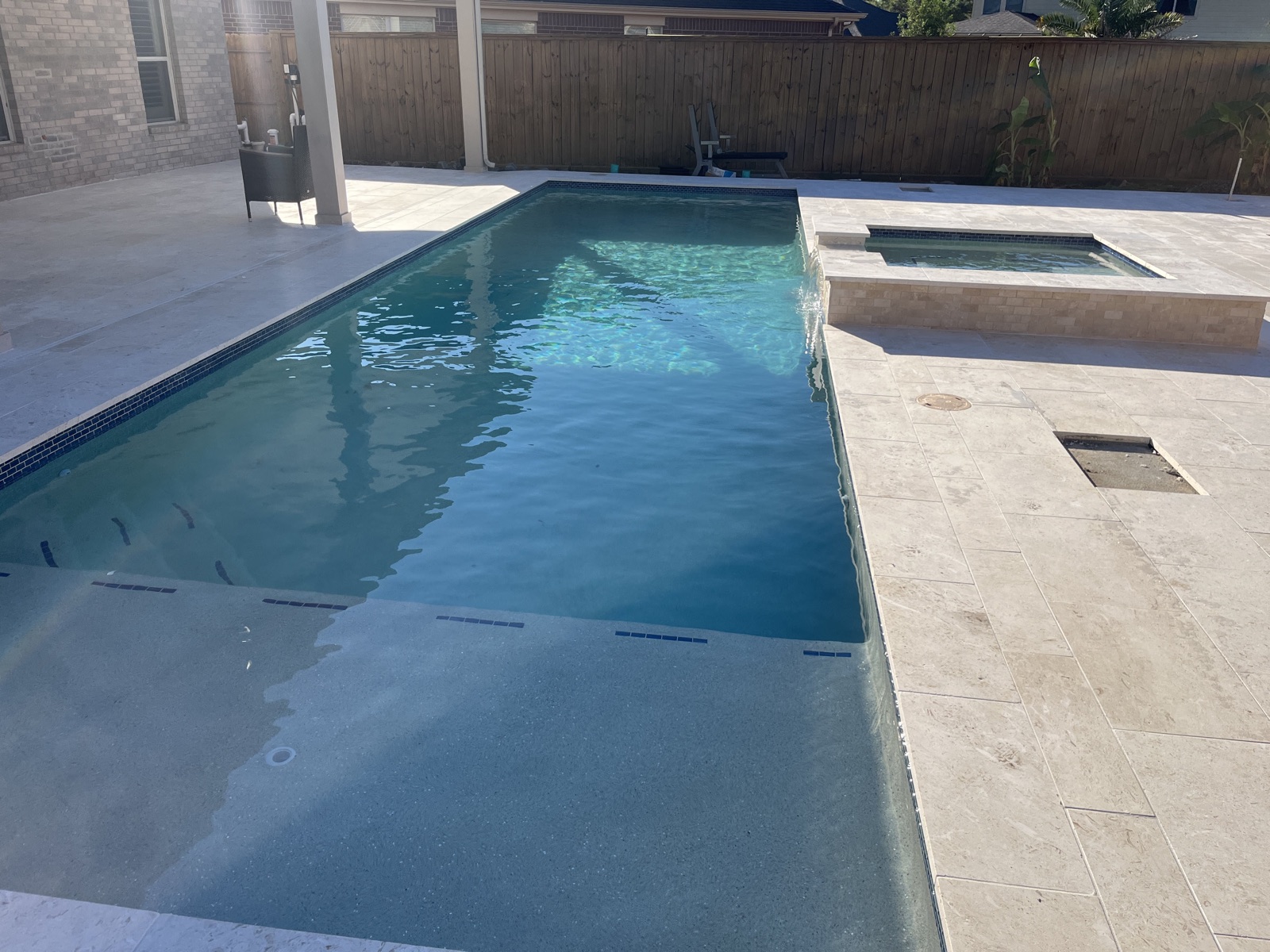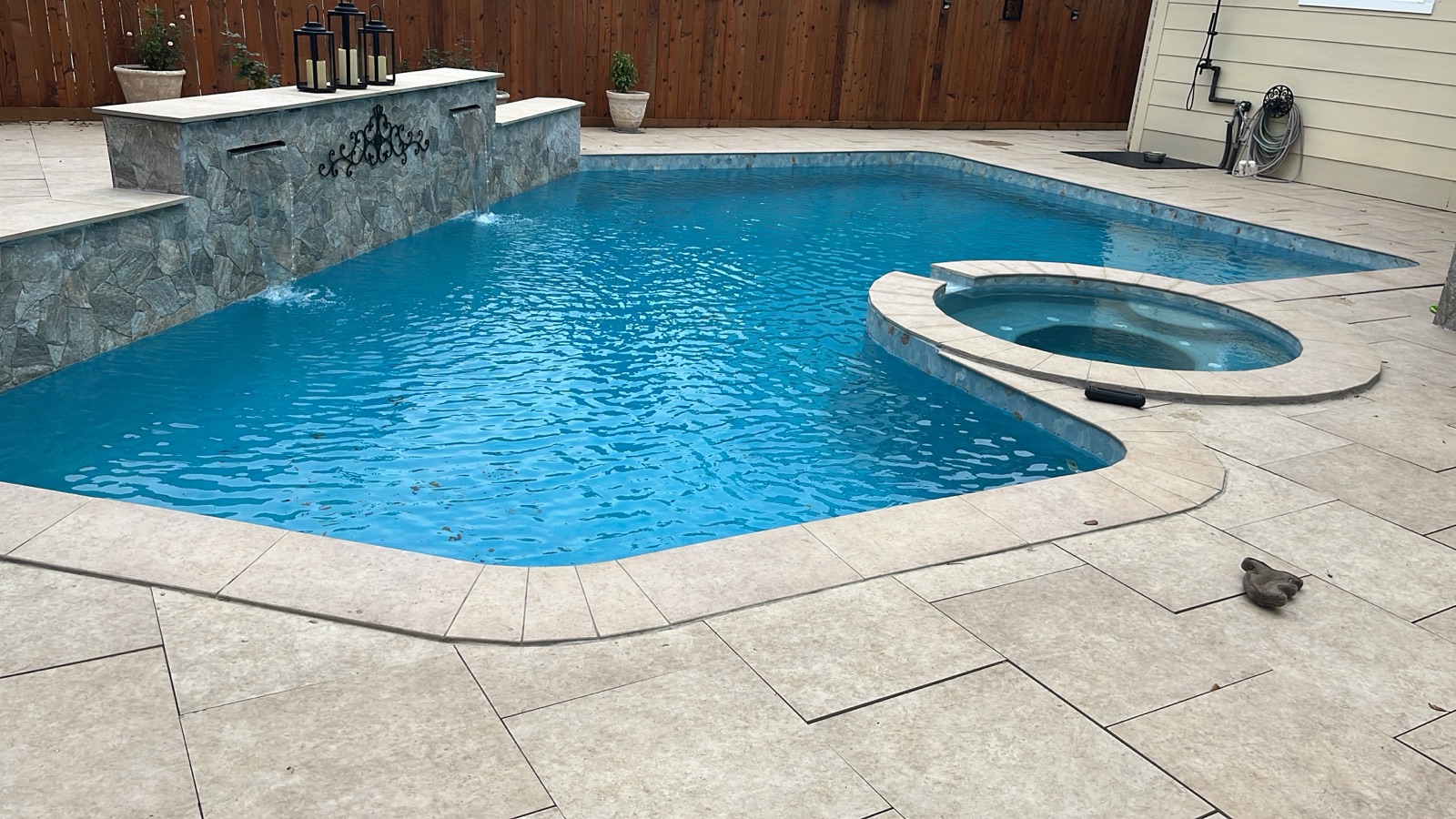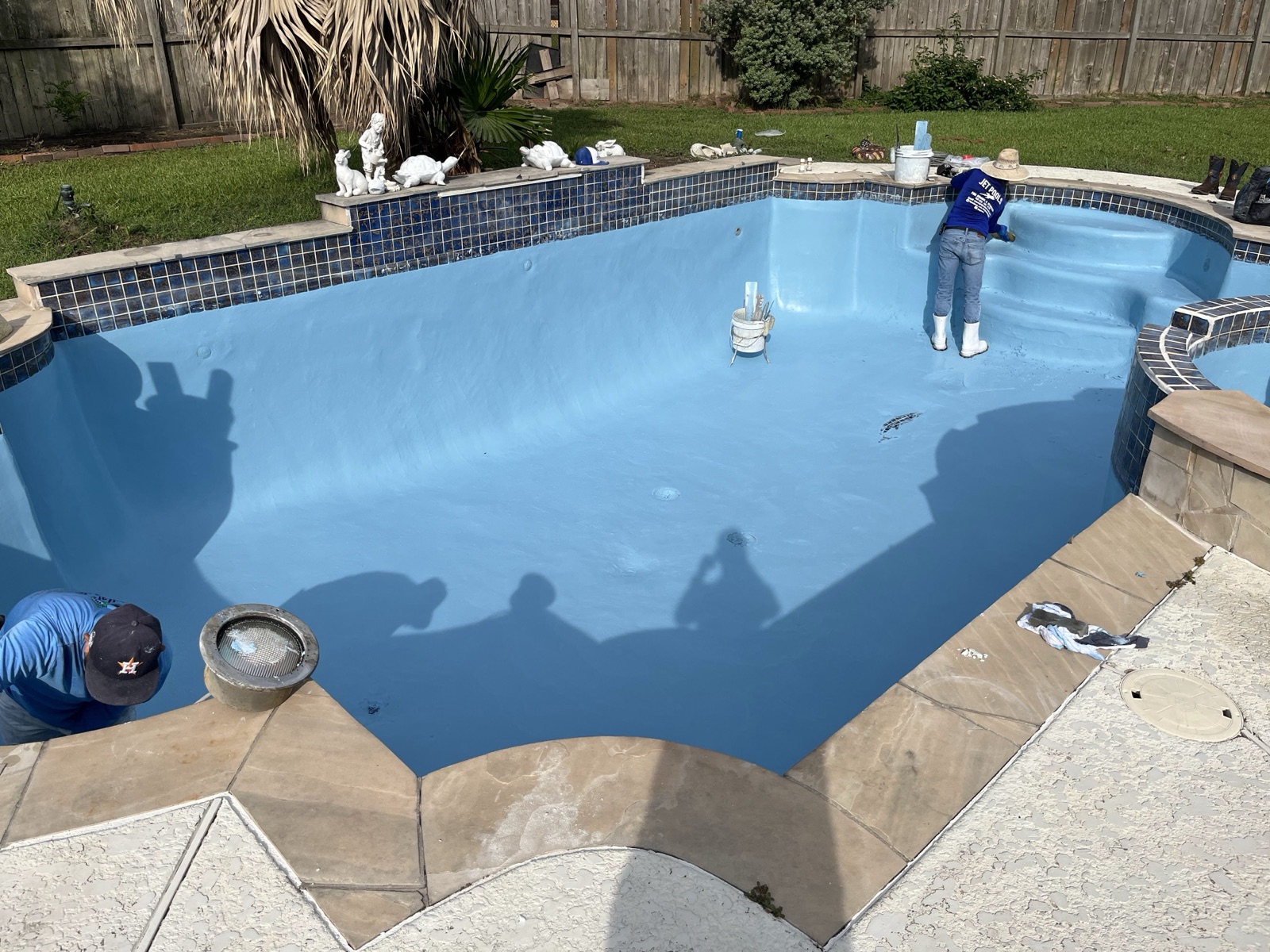
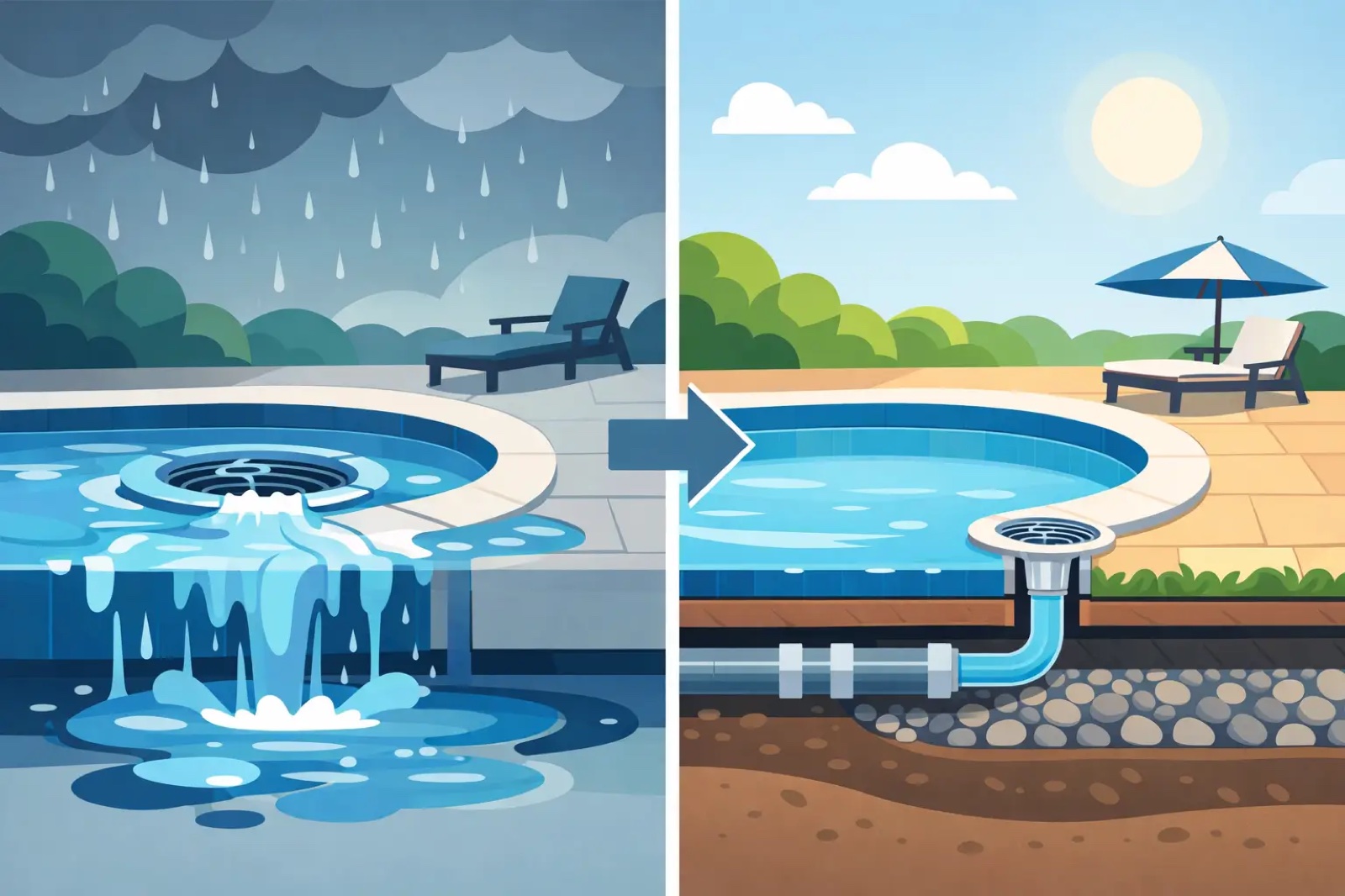
If you have noticed water pooling on your pool deck after rain, water running toward the house instead of away from it, or erosion in the grass and landscaping around the pool, you are dealing with a drainage problem. In the Katy and Houston area, where summer storms can dump several inches of rain in a matter of hours, poor drainage around a pool is not just an annoyance. It can damage the pool structure, undermine coping and decking, and create real long-term problems if left unaddressed.
Why Drainage Matters More in Texas
Houston is one of the wettest major metros in the country. The clay-heavy soil that dominates this region does not absorb water quickly, which means runoff moves fast and in high volume during a storm. When that runoff has nowhere to go, it finds the path of least resistance, and that path often leads to your pool deck, your coping, or the space underneath your pool shell.
Hydrostatic pressure is the specific risk that drainage problems create for the pool itself. This is the pressure that groundwater and saturated soil exert against a pool shell from the outside. In most normal conditions, the weight of the filled pool is enough to counteract this pressure. But in a pool that has been drained for repair or maintenance during a heavy rain event, or in situations where soil saturation is extreme and persistent, hydrostatic pressure can crack or even lift a pool shell. Most pools have relief valves installed for this reason, but proper drainage around the pool reduces the risk significantly.
Common Drainage Problems Around Pools
The most straightforward issue is a deck that does not slope away from the pool and the house. Concrete and pavers need to be installed with a slight grade that directs water toward a drain or away from structures. When the original grading was done incorrectly, or when settling over time has changed the surface level, water collects instead of flows.
Yard grading problems are related but different. If the terrain around your pool leads water toward the pool area from elsewhere in the yard, no amount of deck grading will fully solve the problem. Water coming off a slope, running off a roof, or draining from a neighbor's yard can all contribute to chronic pooling around the pool.
Undersized drain systems are common in older pools and in pools where the drainage was designed for lighter rainfall than what the property actually receives. A single area drain that worked fine for normal rain can be overwhelmed by a significant storm, leaving water nowhere to go.
Roof and structure discharge is another factor people often overlook. Downspouts from the house that discharge near the pool area can concentrate large amounts of water in a small zone. If a downspout is directing water toward the pool rather than away from it, that is a contributing factor to the drainage problem regardless of what else you do.
Practical Solutions That Work
Addressing drainage starts with understanding the full picture of how water moves across your property. A quick fix that treats one symptom often just moves the problem somewhere else. An effective drainage plan looks at all the sources and creates a coordinated path for water to leave the area.
Regrading the deck surface is appropriate when the slope is the primary issue. This may mean adding a new layer of concrete or pavers over the existing surface, or in some cases breaking out and repaving a section. Channel drains, which are linear grates installed at the edge of the deck or across the pool area, capture surface runoff efficiently and direct it into underground piping.
Area drains are point drains installed in low spots where water collects. They work well in conjunction with channel drains when there are multiple collection zones. Underground piping connects these drains to a point of discharge, typically at the street, a retention area, or a low point away from the house and pool structure.
French drains are a good solution when the problem involves saturated soil around the pool. A French drain is a trench filled with gravel and perforated pipe that collects water from the surrounding soil and redirects it away from the pool area. This is particularly useful in the expansive clay soils common in this region, where water does not percolate down quickly and tends to stay in the upper soil layers.
Retaining walls can address slope-related drainage issues by redirecting runoff or creating terraced surfaces that control water flow before it reaches the pool. They also add a structural and visual element to the landscape that can enhance the overall backyard design.
Including Drainage in a Remodel or New Build
The best time to address drainage is during a new pool build or a significant renovation, when the surrounding area is already disrupted and the cost of adding drainage infrastructure is lower than it would be as a standalone project. At CHR Builder, drainage is part of every design conversation. The site conditions, yard grade, soil type, and rainfall patterns all inform how we engineer the area around the pool.
For homeowners considering a remodel, adding proper drainage to an existing pool area is absolutely doable. It requires some excavation and planning, but the result is a pool area that handles Texas weather the way it should, without standing water, erosion, or concern for what a heavy storm is doing to the structure underneath.
A quick patch may cost less up front, but a coordinated drainage plan protects the larger investment better. When you factor in the cost of repairing coping, decking, or plaster damage caused by years of poor drainage, the math on doing it right the first time is straightforward.
Ready to Talk to an Expert?
If you have drainage problems around your pool or want to include proper drainage in a new build or renovation, our owner is happy to walk through the options on a free 15-minute call. No obligation, no sales pressure. Just a straight conversation with the person who will build your pool.
Call us at (346) 481-3835 or book your free call at chrbuilder.com.