A pool finish can look like a small design decision on a 3D rendering. In the finished backyard, it sets the water color, affects how the surface feels underfoot, and influences how your pool ages through Houston heat, hard water, and heavy use. This pebble pool finish review gives Texas homeowners a practical look at whether pebble is the right fit for a custom pool or remodel.
What Is a Pebble Pool Finish?
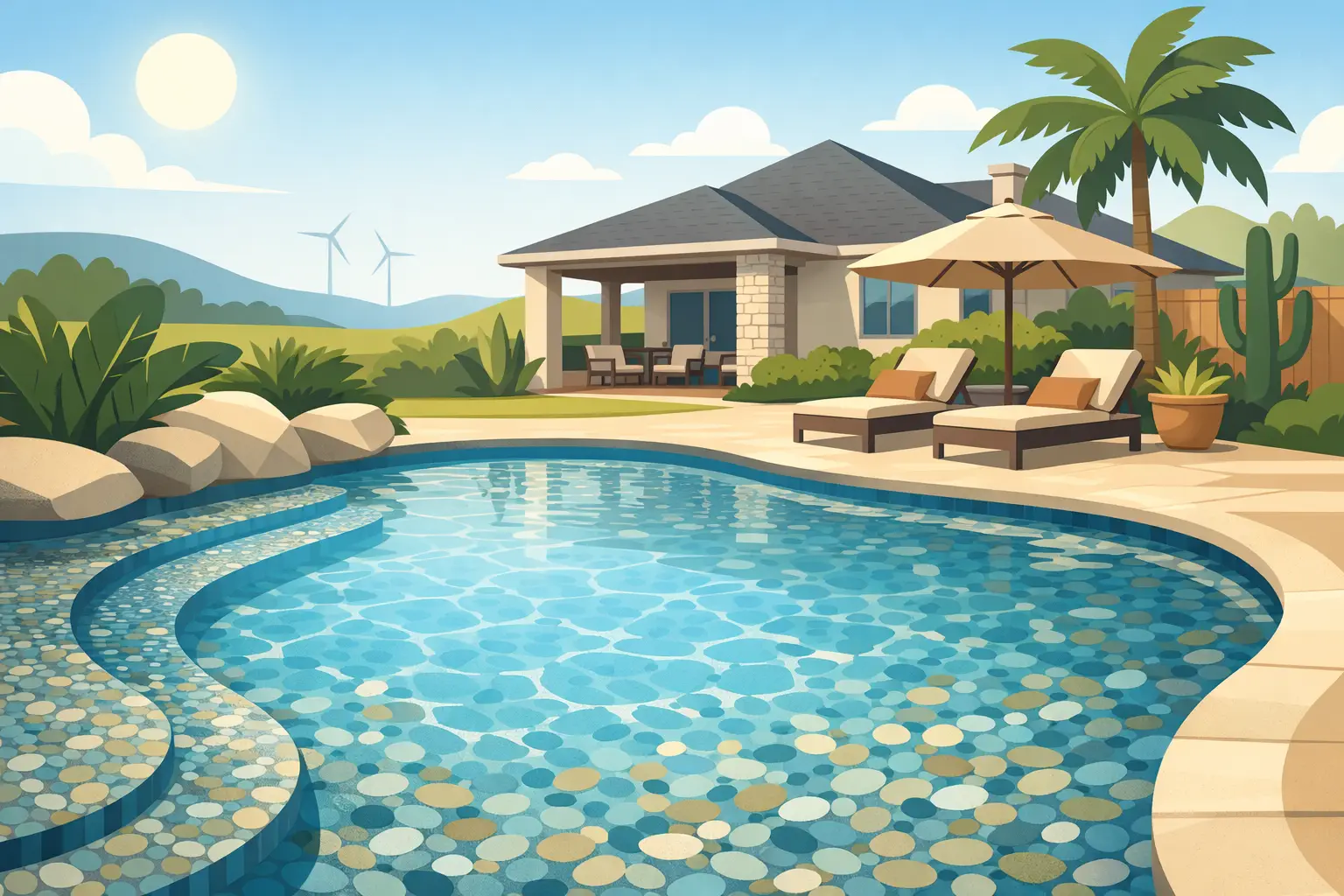
A pebble finish is an exposed-aggregate interior surface made with small, naturally rounded stones suspended in a cement-based material. After application, the surface is washed to reveal the pebbles. The result has more texture and visual depth than traditional white plaster.
It is a popular choice for custom pools because the finish creates a more natural, upscale water appearance. Depending on the pebble blend, tile selection, pool depth, and surrounding light, the same pool can read as soft blue, deep blue, green-blue, or lagoon-inspired turquoise.
For homeowners building a premium backyard, the appeal is not only cosmetic. Pebble finishes are generally selected for their long service life and ability to hold up well in active family pools, tanning ledges, spas, and outdoor environments built for Texas livin.
Pebble Pool Finish Review: The Major Benefits
Durability is the main advantage
A properly installed pebble finish is typically more durable than standard plaster. The exposed stone aggregate provides a harder wearing surface, which can be especially valuable in a pool that sees frequent use from children, guests, pets, and regular entertaining.
That durability does not mean the finish is maintenance-free. Water chemistry still matters. Houston-area pools can develop calcium scale when water is not balanced correctly, and hard-water buildup can dull any finish over time. Still, pebble generally offers better resistance to normal wear, staining, and etching than basic plaster.
For a homeowner planning to stay in the property for years, that longer performance window can help justify the higher upfront investment.
The water color has more depth
Traditional plaster has a clean, classic look, but it can appear flat compared with pebble. Pebble blends create variation beneath the waterline, giving the surface more movement and dimension. This is particularly effective in pools with sun shelves, raised spas, water features, and carefully chosen coping.
A light blend can create a bright, coastal water color. A medium blue or gray blend can produce a polished resort-style appearance. Darker blends deliver drama and can make a pool feel deeper, though they may also show calcium deposits and debris more easily.
The best color is not always the darkest or most dramatic sample board. It should work with your home's exterior, the amount of direct sun in the yard, and the materials planned for the patio, kitchen, or pergola.
It supports a more customized design
Custom pool construction is about how every material works together. A pebble finish gives homeowners more ways to coordinate the interior with waterline tile, coping, decking, and landscape design.
For example, a modern home with light limestone decking may look sharp with a cool gray or blue-gray pebble blend. A warmer backyard with travertine, natural stone, and mature landscaping may benefit from softer earth-tone pebbles. The finish is one part of the visual plan, not a choice that should be made in isolation.
That is why viewing finish samples outdoors and reviewing the complete design in 3D is more useful than choosing from a small indoor display.
The Trade-Offs to Consider Before Choosing Pebble
Pebble is not automatically the best finish for every project. It is a premium material, and its texture is more noticeable than plaster.
It can feel rougher underfoot
This is the most common concern in a pebble pool finish review. Because the stones are exposed, the surface can feel more textured on bare feet, particularly on steps, benches, and shallow play areas where people stand or sit often.
Many homeowners find the texture comfortable after getting used to it, especially with smaller or polished pebble options. Others strongly prefer the smoother feel of plaster or a polished aggregate finish. If comfort is a top priority for young children, older adults, or frequent spa use, ask to see and feel actual finish samples before committing.
Application quality matters here. A skilled installation team will properly expose the aggregate and finish the surface evenly. Poor workmanship can leave a finish unnecessarily rough or inconsistent.
The cost is higher than standard plaster
Pebble usually costs more upfront than basic plaster because of material quality, installation labor, and the finish process. Pricing varies by pool size, surface condition, selected blend, prep work, and whether the project is part of a new build or a renovation.
The better question is not simply, “What is the least expensive finish?” It is, “What finish makes sense for the life of this pool?” A lower-cost finish can be appropriate for some budgets and projects. But homeowners who want a long-lasting, visually distinctive pool often find that pebble delivers stronger long-term value.
Dark colors require realistic maintenance expectations
Dark finishes can create rich water color, but they are not always forgiving. Leaves, pollen, dust, and calcium deposits can be easier to notice, especially in full Texas sun. A lighter or mid-tone blend may be the smarter choice for homeowners who want a refined look without constantly seeing every trace of debris.
Consistent brushing, circulation, cleaning, and balanced chemistry protect both appearance and lifespan. If existing calcium scale is already present on an older pool, removal and surface preparation should be addressed before a new finish is installed.
How Long Does a Pebble Pool Finish Last?
With professional installation and consistent care, a pebble finish can often last 15 to 25 years or longer. Actual lifespan depends on water balance, pool use, local water conditions, cleaning practices, and whether repairs are handled promptly.
A finish can fail early when chemistry is neglected, calcium is allowed to build up, or structural issues are ignored. Acid washing too aggressively or too often can also shorten the life of a pool interior. Maintenance should protect the finish, not simply make it look clean for the moment.
For a remodel, it is also important to evaluate what is underneath the old surface. Cracks, hollow areas, plumbing concerns, and bond-beam issues should be identified before resurfacing. A beautiful new interior cannot solve a structural problem below it.
Choosing the Right Pebble Color for Houston-Area Pools
Water color is influenced by more than the finish sample. Pool depth, shade, tile, landscaping, and sky conditions all change what you see. A blend that appears nearly black in a showroom may look blue outdoors, while a pale blend may reflect bright Texas skies and look much lighter than expected.
For many Katy and Houston homeowners, medium-tone blue, gray, and blue-green blends offer a strong balance. They provide depth without making every bit of debris obvious. Lighter blends are excellent for bright, open yards and a clean contemporary style. Darker finishes can be striking when paired with modern architecture and a disciplined maintenance routine.
Ask your builder to show examples of completed pools in natural light, not just manufacturer photos. Seeing the finish at full scale is the best way to set realistic expectations.
Is Pebble the Right Finish for Your Pool?
Pebble is an excellent choice when you want a durable, high-end pool interior with rich water color and a customized appearance. It is especially well suited to homeowners treating the pool as a lasting part of a larger outdoor living investment.
It may be less ideal if your priority is the smoothest possible surface or if the project budget is tightly focused on the lowest initial cost. In those cases, a quality plaster or polished aggregate option may better match your goals.
The right answer comes from balancing feel, appearance, budget, maintenance habits, and the way your family will use the pool. CHR Builder can help you compare real finish samples within a free 3D pool design, so the interior, tile, decking, and outdoor features are planned as one complete backyard. Choose the finish that will still look right when the first splash of summer turns into years of backyard memories.