If you own a pool in Katy, Texas, you have probably seen the chalky white line that forms at the waterline. That is calcium scale, and it is one of the most common pool problems in this area. It is not a sign that you are doing something wrong. It is a natural result of our local water chemistry combined with the Texas heat. But it does need to be removed correctly, because the wrong approach can damage your tile permanently.
Why Katy Pools Get Calcium Buildup Faster
The municipal water supply in the Katy and greater Houston area comes from groundwater sources that are naturally high in calcium and magnesium. This is referred to as hard water, and it affects everything from how well soap lathers to what happens inside your pool over time.
When your pool water evaporates, the water molecules leave but the minerals stay behind. In the summer, a Texas pool can lose an inch or more of water per week to evaporation. Every time you top the pool off to replace that water, you are adding more calcium. Over weeks and months, calcium builds up on the tile at the waterline, where evaporation is most concentrated. The heat speeds up the process, the scale hardens, and what started as a thin haze becomes a visible, rough crust that brushing alone will not remove.
What Calcium Buildup Actually Looks Like
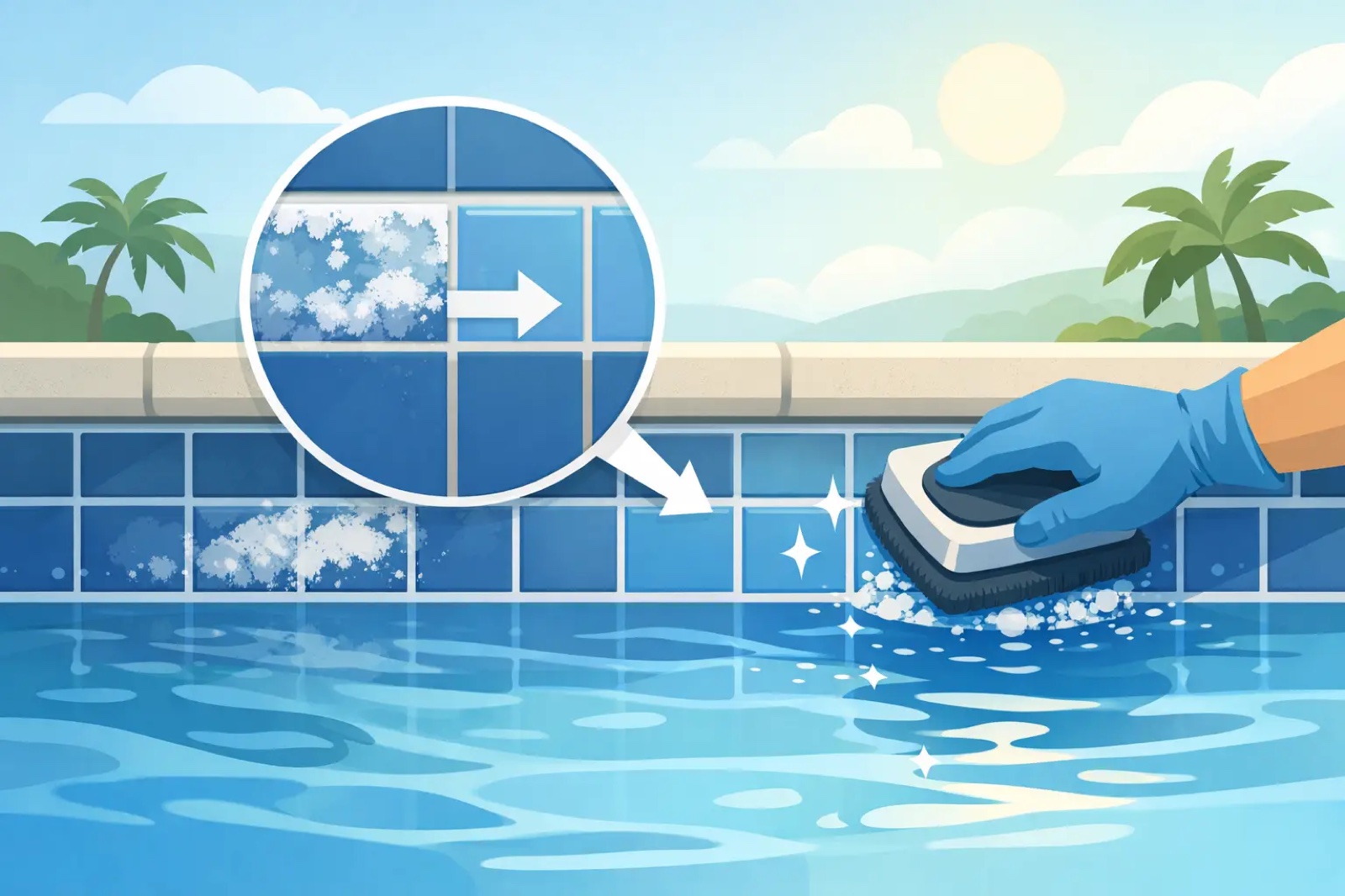
In the early stages, calcium appears as a slight milky haze on the tile at the waterline. The tile may look dull rather than crisp. As it progresses, the deposits become more visible: white or gray, slightly raised, and rough to the touch. In advanced cases, the buildup is thick enough to feel crusty and can extend below the tile line onto the plaster or coping surface.
It is worth distinguishing calcium scale from other waterline staining. Calcium is typically white or light gray and feels hard and rough. Algae staining is green or black and can often be brushed away. Metal staining from iron or copper tends to be brown, rust-colored, or blue-green. Knowing what you are dealing with determines the right treatment.
DIY Removal: What Works and What to Avoid
For light, early-stage calcium on standard ceramic or porcelain tile, a pumice stone used wet can remove surface deposits without scratching the tile. The critical word is wet: keep both the pumice and the tile surface wet throughout, use light pressure, and test a small inconspicuous area first. Do not use a pumice stone on glass tile, glazed decorative tile, or any polished or specialty surface. The abrasiveness will scratch these finishes and the damage cannot be undone.
Pool-safe descaler products are another option for mild buildup. These are acid-based formulas that dissolve calcium chemically rather than mechanically. Apply them carefully, follow the instructions, and keep in mind that any acid product applied near the pool affects the water chemistry. Test and adjust after treatment.
Scrapers and razor blades are sometimes used on flat ceramic tile, but they carry real risk of scoring the tile glaze. On anything other than flat, hard ceramic, they should be avoided. And on grout lines, no scraper should ever be used.
Professional Removal: Bead Blasting and Acid Washing
When the scale is thick, covers a large area, or is on glass or natural stone tile, professional removal is the right choice. Attempting aggressive DIY removal on premium tile finishes is one of the more costly mistakes we see pool owners make.
Bead blasting is the preferred professional method for calcium removal at the waterline. Fine glass or mineral beads are propelled at controlled pressure against the tile surface, stripping the calcium cleanly without damaging the tile or grout underneath. The process is precise and fast, and the results on glass tile in particular can look almost like new tile after treatment. It is also the appropriate approach when the buildup has extended onto natural stone, travertine coping, or other delicate surfaces that would be damaged by acid or abrasive pads.
Acid washing is a different application, typically used on the plaster interior of the pool rather than the tile itself. If the plaster has developed overall haze, staining, or mineral discoloration throughout the basin, draining the pool and applying a diluted muriatic acid solution can remove the staining and brighten the surface considerably. This is a more involved process and should be performed by an experienced professional, as the dilution, application, and neutralization all need to be managed carefully.
Combining Calcium Removal with Other Restoration Work
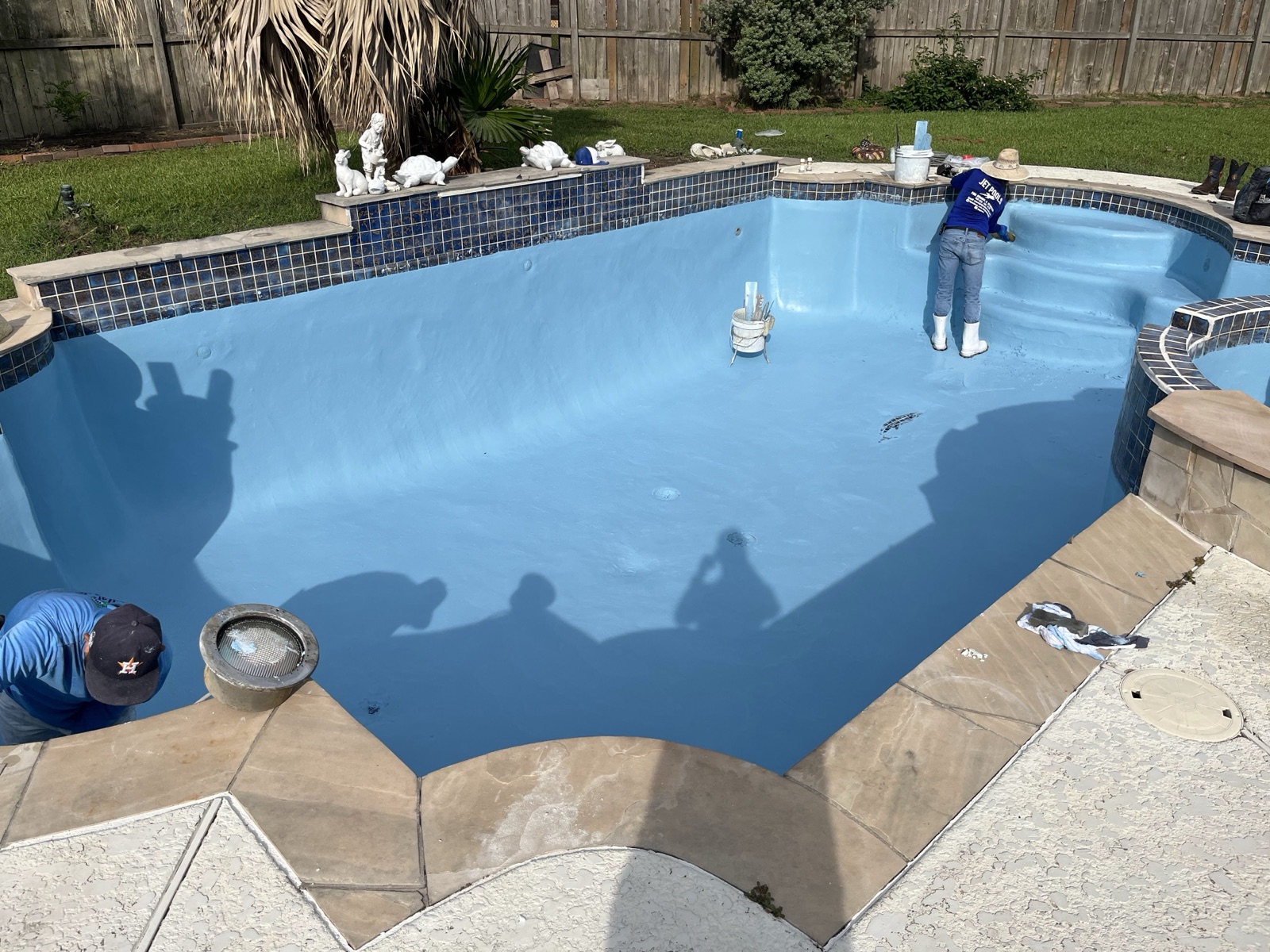
When we come out to do calcium removal on a pool, it is usually a good opportunity to look at the full picture. If the tile band is being cleaned, the pool is typically drained or partially drained, which means access to surfaces that are normally underwater. That is a good time to inspect the plaster for deterioration, check the coping for cracks or separation, and look at any other areas that might benefit from attention while the pool is already down.
Pairing calcium removal with plaster or coping work, when either is needed, reduces the total cost and disruption compared to scheduling each as a separate job. If you have been thinking about refreshing the look of the pool or addressing other maintenance items, mentioning that during the initial conversation helps us give you a plan that makes sense for the whole pool, not just the visible waterline.
Ready to Talk to an Expert?
If you have calcium buildup on your pool tile and want to know what removal method is right for your surface, our owner is happy to walk through it on a free 15-minute call. No obligation, no sales pressure. Just a straight conversation with the person who will build your pool.
Call us at (346) 481-3835 or book your free call at chrbuilder.com.