A pool finish can look great on day one and still be the wrong choice for how you actually use your backyard. That is why homeowners comparing pool plaster versus pebble need more than a color sample. You need to know how each finish feels underfoot, how it handles Texas heat, what it takes to maintain, and how long it is likely to hold up.
For families in Katy, Houston, and surrounding areas, this decision affects more than appearance. Your interior finish influences water color, comfort, upkeep, and long-term renovation costs. If you are building a custom pool or remodeling an older one, choosing the right surface now can save frustration later.
Pool plaster versus pebble: the real difference
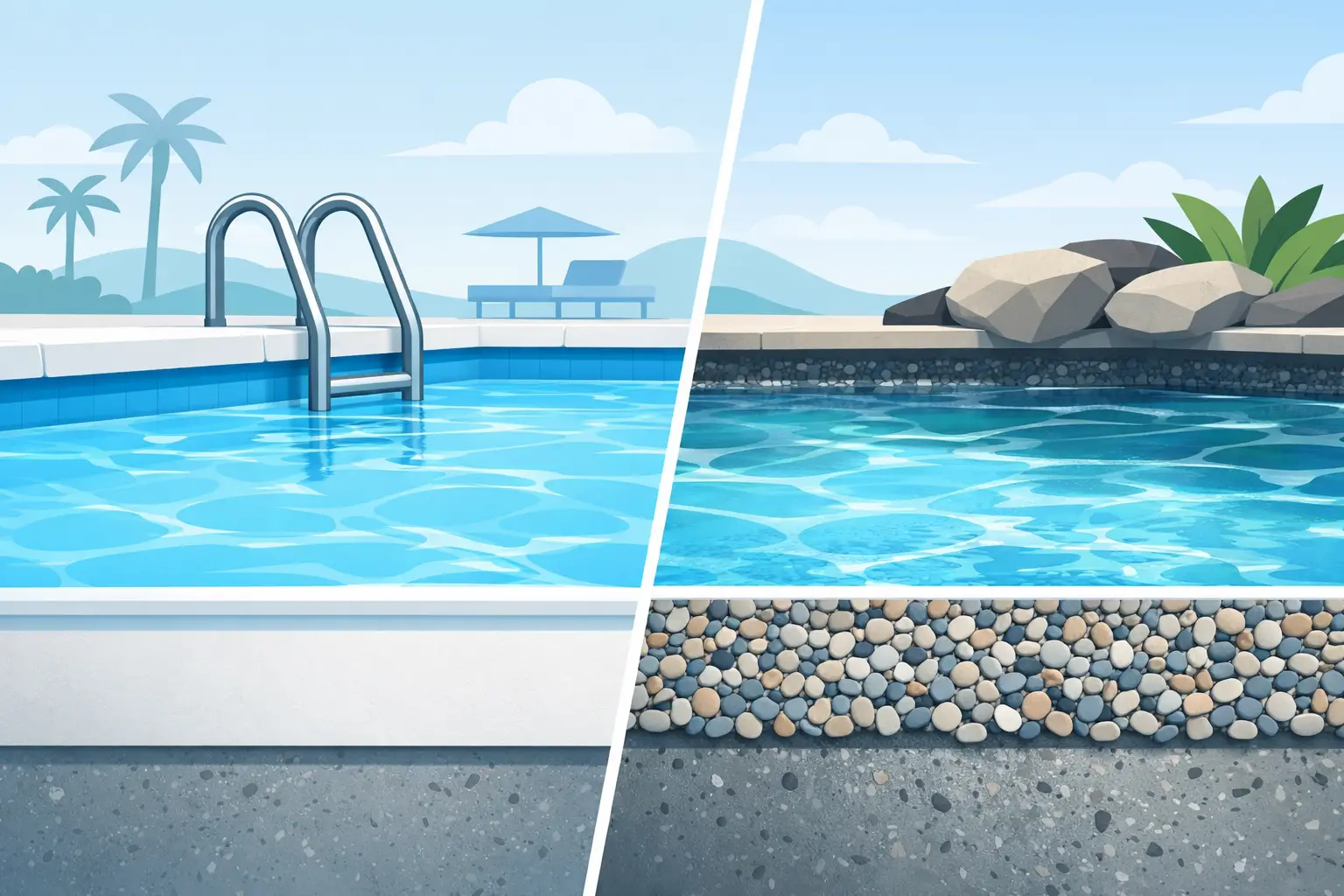
At a basic level, plaster is a smoother, more traditional pool finish made from cement mixed with marble dust or similar aggregates. Pebble finishes use small natural stones embedded in a cement-based material, creating a more textured and higher-end surface.
That sounds simple, but the performance difference is where the decision gets real. Standard plaster is usually the lower upfront investment and gives pools a clean, classic look. Pebble costs more at the start, but it is often chosen for durability, stain resistance, and visual depth.
If you want the shortest version, plaster usually wins on initial budget and smoothness. Pebble usually wins on longevity and upscale appearance. Most homeowners, though, are not deciding in a vacuum. They are balancing budget, comfort, style, and how long they plan to stay in the home.
How plaster looks and performs
Plaster has been a go-to pool finish for decades because it delivers a clean, bright surface and a familiar feel in the water. White plaster creates that traditional light-blue pool look many homeowners still want. Tinted plaster expands your options with softer grays, blues, and other tones.
One of plaster's biggest advantages is feel. It is generally smoother than pebble, which matters if you have young kids, spend a lot of time standing on tanning ledges, or simply prefer a softer surface on your feet.
The trade-off is durability. Plaster is more vulnerable to etching, staining, mottling, and chemical wear over time. In Texas, where heat, sun, and water chemistry can be tough on pool materials, that matters. A plaster finish can still perform well, but it usually requires more careful maintenance and may need refinishing sooner than a pebble surface.
A plaster pool can be a smart choice when you want a refined, classic finish and plan to stay proactive about water balance and care. It also makes sense when keeping the project budget tighter is a major priority.
Typical lifespan of plaster
Plaster often lasts around 7 to 10 years, though real-world results vary. Good installation, balanced water, and consistent maintenance can help it last longer. Poor chemistry or neglect can shorten that timeline fast.
That shorter service life does not automatically make plaster a bad investment. If the lower upfront price helps you move forward with the custom pool you want now, it may still be the right fit. The key is going in with realistic expectations.
How pebble looks and performs
Pebble finishes are known for a richer, more dimensional appearance. Instead of a flat surface color, you get visual texture and more movement in the water. That is one reason many luxury pool designs lean toward pebble. It can give the water a deeper, more natural look that pairs well with modern outdoor living spaces.
Performance is where pebble often separates itself. Because the finish includes natural stone, it tends to resist staining, etching, and general wear better than standard plaster. For homeowners who want long-term value and fewer concerns about surface aging, that is a strong advantage.
Pebble is not as smooth as plaster. Some people describe it as pleasantly textured, while others find it rougher than they expected. The exact feel depends on the product and installation quality. Smaller polished pebble options can feel more refined than more exposed, rugged finishes.
For many Texas homeowners, pebble is attractive because it better matches a long-horizon investment mindset. If you are creating a backyard built for Texas livin and want the pool finish to hold its appearance for years, pebble deserves serious consideration.
Typical lifespan of pebble
Pebble finishes often last 15 to 20 years or more with proper care. That longer lifespan is a major reason the higher upfront cost can make financial sense over time. You may pay more now, but you may also delay the next resurfacing project by many years.
Cost: upfront versus long-term value
For most homeowners, cost is where the conversation gets serious. Plaster is usually the more affordable finish at installation. Pebble typically carries a higher price because of the material itself and the labor involved.
But the real question is not just what you pay today. It is what you pay over the life of the pool. If plaster needs resurfacing earlier, the lower initial cost can narrow over time. Pebble can be the better long-term value when durability is your priority and you plan to enjoy the pool for many years.
This is especially relevant if you are already investing in custom features like a spa, sun shelf, water features, upgraded decking, or an outdoor kitchen. In that context, some homeowners decide the finish is not the place to cut corners because it touches every part of the pool experience.
On the other hand, if budget control is important and you still want a beautiful custom pool, plaster may be the right call. A good builder should help you weigh the finish against the rest of the project, not push a one-size-fits-all answer.
Maintenance and water chemistry
Neither finish is maintenance-free. Both depend on proper water chemistry, regular cleaning, and professional oversight when needed. Still, plaster tends to be less forgiving when water chemistry drifts out of range.
Acidic water can etch plaster. Metals or poor balance can create staining. Calcium issues can also affect surface appearance, which is especially relevant in areas where hard water is common. Pebble generally handles these conditions better, though it is not immune to neglect.
That means the right finish partly depends on how hands-on you plan to be. If you are diligent about maintenance or have reliable pool service, plaster can perform well. If you want more margin for error and stronger resistance to wear, pebble often has the edge.
Comfort, style, and how you use the pool
This is the part people sometimes overlook. The best finish is not just the one that lasts longest. It is the one that matches how your family uses the pool.
If your pool will be a daily-use family space with kids climbing in and out, plaster's smoother feel may appeal to you. If the pool is part of a larger upscale backyard design where aesthetics and long-term finish quality are central, pebble may better match your goals.
Style matters too. Plaster supports a timeless, traditional look. Pebble often feels more custom and high-end, especially when paired with premium coping, tile, and outdoor living features. Water color can also shift depending on the finish, so the look you want from the patio matters as much as the feel in the water.
Which finish is better for Texas pools?
There is no universal winner in pool plaster versus pebble, but Texas conditions do make durability a bigger factor. Strong sun, heat, heavy use, and water chemistry challenges can be hard on interior surfaces. That reality often pushes homeowners toward pebble when they want a finish built for longer performance.
Still, plaster remains a solid option when installed correctly and maintained well. It is not the cheap option in a bad sense. It is the classic option with a lower entry cost and a smoother texture. The better question is whether that trade-off fits your home, budget, and expectations.
A well-planned pool project should account for your finish choice early, not treat it like a last-minute detail. With more than 25 years of construction experience behind its approach, CHR Builder sees this choice as part of the bigger picture - structural quality, visual design, and how your backyard will perform over time.
How to choose with confidence
If you are deciding between plaster and pebble, start with three practical questions. How long do you plan to stay in the home? How important is a smooth surface feel? And are you optimizing for lower upfront cost or lower long-term resurfacing frequency?
If you want classic appearance, a softer feel, and a lower initial investment, plaster may be the better fit. If you want stronger durability, richer visual texture, and longer service life, pebble often delivers more value.
The smartest decision usually comes from seeing the finish in the context of the full design. Color, tile, coping, decking, water features, and maintenance expectations all matter. A sample board can help, but an experienced builder who understands both design and construction will help you make the choice you will still feel good about years from now.
Your pool finish should not just look good at startup. It should fit the way you live, the way you maintain your pool, and the kind of backyard you want to come home to every day.