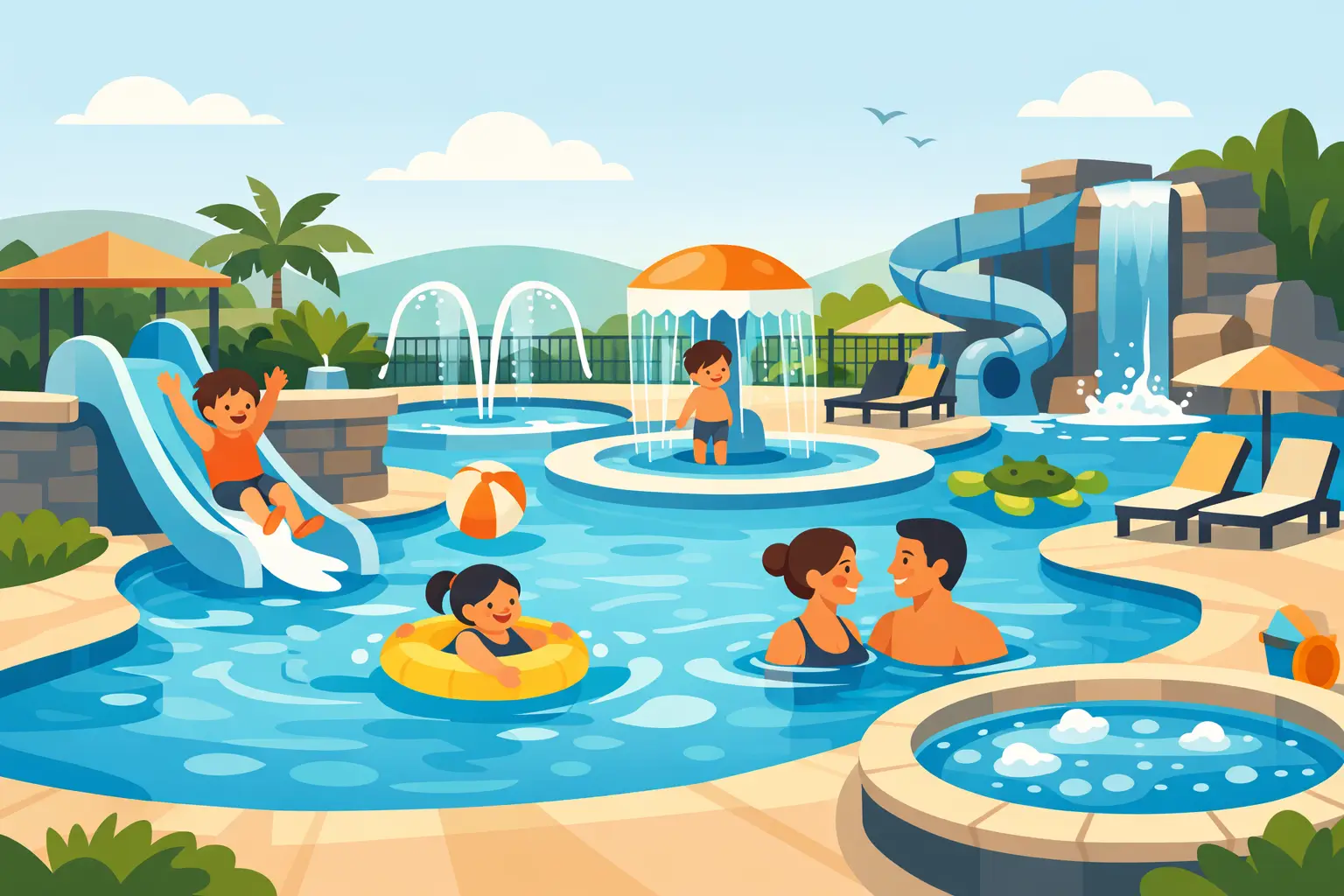
A family pool gets judged fast. If the shallow area is too small, younger kids get crowded out. If there is nowhere to sit in the water, adults end up standing at the edge instead of using the pool. And if the layout looks great on paper but ignores how your family actually moves through the backyard, the space can feel frustrating from day one. The best pool features for families are the ones that make the pool safer, easier to use, and more enjoyable for every age group.
For Texas homeowners, that usually means choosing features that work hard in the heat, hold up over time, and fit the way your family entertains. A beautiful finish matters, but function matters just as much. When a pool is designed around real family use, it becomes more than a showpiece. It becomes the center of the backyard.
What makes the best pool features for families?
The right answer depends on the age of your kids, how often you host, and how much of the yard you want to dedicate to water versus decking, shade, and outdoor living. A family with toddlers needs a different layout than a family with teenagers. A household that loves weekend cookouts may prioritize seating and easy traffic flow, while another may care more about swim space and low maintenance.
That is why feature selection should never be treated like a checklist. The strongest designs balance safety, supervision, comfort, and long-term value. In many cases, the best feature is the one that solves two problems at once.
1. A tanning ledge that actually gets used
A tanning ledge is one of the most requested family-friendly features for a reason. It gives small children a place to splash in shallow water while adults stay close by, and it creates a comfortable zone for loungers, umbrella sleeves, or built-in seating. In a Texas backyard, that shallow platform often becomes the most used part of the pool during hot afternoons.
The key is sizing it properly. A ledge that is too narrow looks nice but does not function well. A ledge that is too large can eat into the swim area. For families, the sweet spot is usually a design that leaves enough room for active play while still creating a clear relaxation zone.
2. Wide entry steps and easy access points
Pool entry matters more than many homeowners expect. Wide, gradual steps make the pool feel inviting and safer for kids, grandparents, and guests alike. They also create a natural transition zone where children tend to gather before moving into deeper water.
From a design standpoint, steps should support visibility and traffic flow. If everyone enters and exits in one tight corner, the pool can feel congested. A well-planned step layout makes the entire pool easier to use and easier to supervise.
3. Built-in benches for rest, conversation, and supervision
Benches are not just for looks. In a family pool, they create places to pause, watch the kids, cool off, or talk without leaving the water. They are especially useful when you host neighbors or extended family because not everyone wants to swim laps or tread water.
Benches also help different age groups use the pool at the same time. Kids can play while adults stay in the water comfortably nearby. That kind of flexibility is what turns a custom pool into a true family space.
4. Smart depth planning instead of one deep end
Many families assume a deep end is essential, but that depends on how the pool will be used. If diving is not part of the plan, a massive deep section can reduce practical swim space for everyday family use. In many backyards, a sport-style depth profile makes more sense.
A pool with thoughtful depth transitions often gives families more usable area, better safety, and easier supervision. Younger swimmers stay comfortable, older kids still have room to play, and adults can move through the pool without huge changes in depth. It is one of the most important design decisions in any family-focused build.
5. Water features that add fun without adding chaos
Deck jets, bubblers, and sheer descents can make a family pool feel more dynamic, but not every water feature improves the experience. Some create too much splash or noise for smaller yards. Others look impressive at first and rarely get turned on.
For families, the best water features usually do one of three things: entertain younger kids, add visual movement, or help create a resort-style feel without overcomplicating the design. Bubblers on a tanning ledge are a strong example because they are playful, simple, and work well for younger children. The goal is not to overload the pool. It is to choose features your family will use consistently.
6. Thoughtful lighting for safety and longer evenings
In Texas, pools get used well beyond daylight hours. Good lighting extends swim time, improves visibility, and makes the backyard feel finished after sunset. It also plays a direct role in safety, especially for families with kids moving between the pool, patio, and outdoor kitchen in the evening.
Underwater LED lighting is the baseline, but the surrounding space matters too. Step lights, patio lighting, and accent lighting around the pool edge can make the whole area easier to navigate. A family pool should look good at night, but it should also help everyone move confidently through the backyard.
7. Safety upgrades built into the design
The best pool features for families always include safety, even when it is not the flashiest part of the project. That can mean perimeter fencing, self-closing gates, slip-resistant decking, handrails where needed, and automation that helps you monitor and control equipment more easily.
Some homeowners worry that safety features will make the pool area feel too restrictive or take away from the design. With the right planning, that does not have to happen. The strongest pool builds integrate safety in a way that feels clean, intentional, and consistent with the overall look of the backyard.
8. Durable decking that stays comfortable in the heat
Families do not just use the pool. They use everything around it. That is why decking is a feature, not an afterthought. In the Houston and Katy area, surface temperature matters. A deck that looks great but gets too hot under bare feet quickly becomes a problem.
Texture matters too. Slippery surfaces can create risk, especially when kids are running in and out of the water. A practical family deck needs traction, comfort, and enough space for seating, supervision, and movement. When the decking is sized correctly, the whole backyard feels easier to use.
9. Shade structures that make the pool usable all day
Texas sun can limit how long a family actually wants to stay outside. That is why shade should be part of the original design conversation, not something added later as an afterthought. Covered patios, pergolas, and strategically placed umbrellas can dramatically improve comfort.
This matters even more for families with young kids or older relatives who need regular breaks from direct sun. Shade near the pool gives everyone a place to reset without leaving the action. It also supports the bigger goal of creating a backyard that works like an outdoor living space, not just a pool with concrete around it.
10. Integrated outdoor living features
The families who get the most value from a new pool usually think beyond the waterline. If your pool is next to a covered patio, outdoor kitchen, fire feature, or lounge area, the whole backyard becomes more functional. Parents can prep food, watch swimmers, and host guests without splitting everyone into separate spaces.
This is where design experience makes a real difference. A pool builder with broader construction knowledge can plan the full environment more effectively, including drainage, layout, traffic flow, and long-term durability. That is especially important if you want a backyard built for Texas livin, where pool time, grilling, and evening entertaining all happen in the same space.
How to choose the right combination
Not every family pool needs all ten features. In fact, trying to include everything can weaken the design. A better approach is to prioritize the features that support how your household really lives.
If your children are young, shallow play zones, wide steps, and strong sightlines may matter most. If you host often, benches, lighting, decking space, and outdoor living integration may deserve more attention. If long-term value is the priority, durable materials and smart structural planning should lead the conversation.
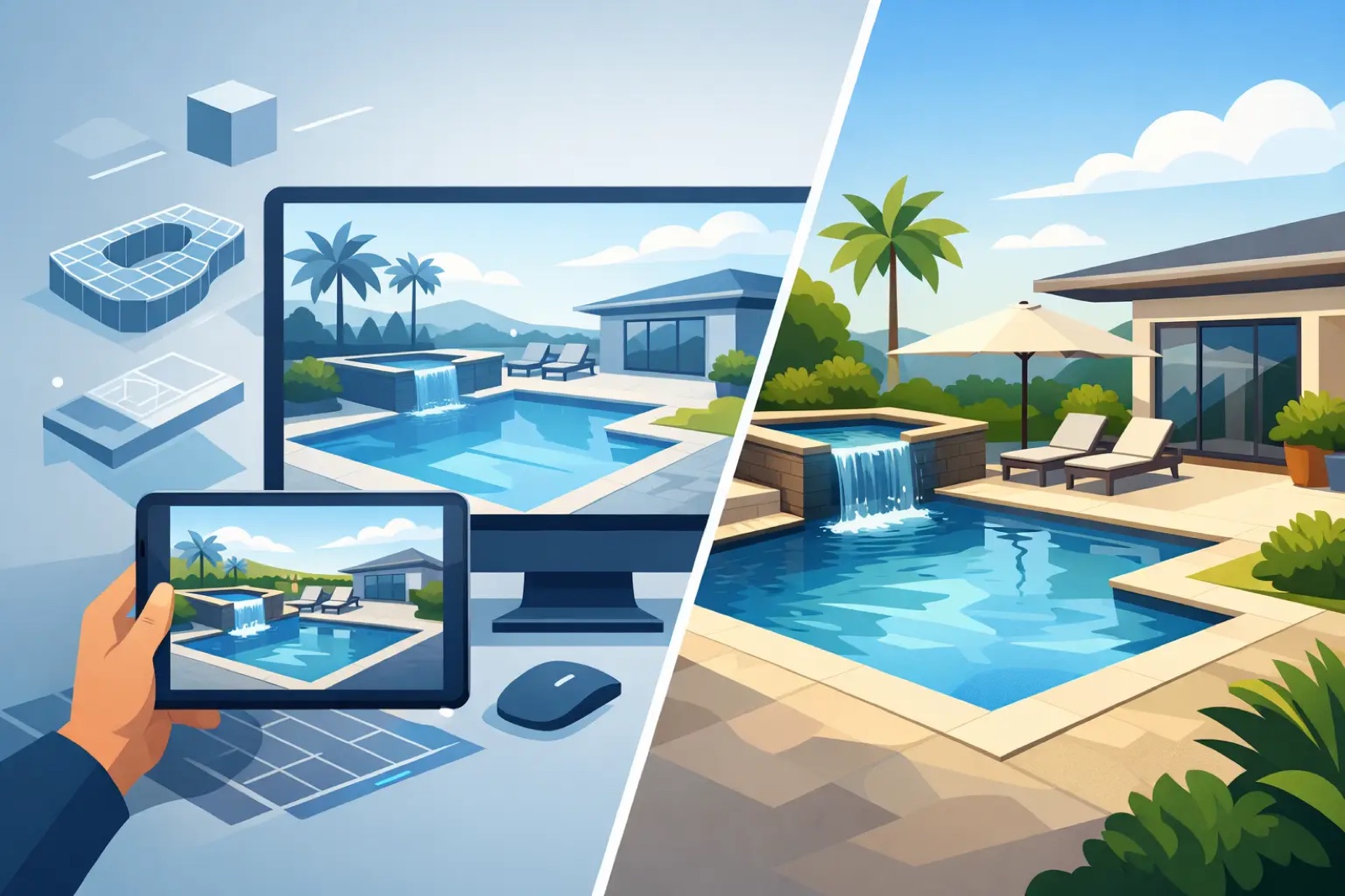
That is also where 3D design becomes useful. Seeing the pool in context helps homeowners understand scale, spacing, and feature placement before construction begins. It can prevent the common mistake of approving a design that looks impressive in isolation but does not function well with the home, yard, and family routines.
A well-built family pool should feel easy from the start. Easy to supervise. Easy to maintain. Easy to enjoy on a random Tuesday, not just on holidays. If a feature adds beauty but complicates the way your family uses the space, it may not be the right feature. The best choice is usually the one that keeps the backyard comfortable, durable, and inviting for years to come.