When homeowners start researching pool types, the gunite vs. fiberglass question comes up early and often. Both are legitimate options, and both have real advantages depending on what you are trying to build and where. In Katy, Houston, and the surrounding communities, that choice deserves a builder's perspective grounded in local experience rather than a generic comparison that could apply anywhere.
Soil movement, long Texas summers, backyard layout, entertaining goals, and long-term maintenance all factor in. A pool is a permanent part of your home and your property value. Getting the decision right matters.
The Core Difference: How Each Pool Is Built
The most fundamental difference between gunite and fiberglass is the construction method.
A fiberglass pool is manufactured off-site as a single pre-formed shell. It is built in a factory to a set of predetermined shapes, sizes, and depths, then transported to your property and lowered into an excavated hole. The installation process is relatively fast once the shell arrives, and the surface is smooth and nonporous from day one.
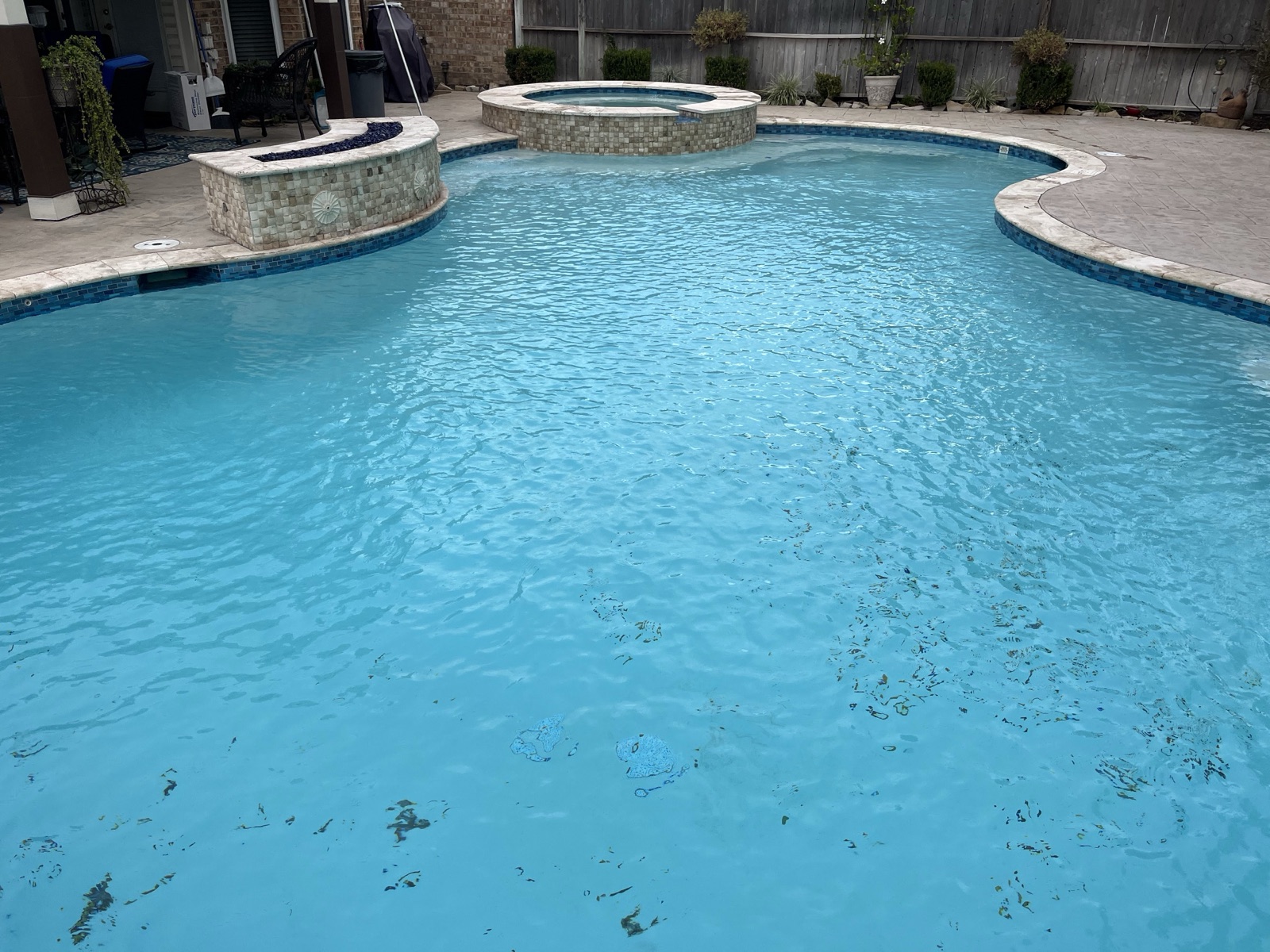
A gunite pool is built on-site, specifically for your property. A rebar framework is formed in the shape of your pool design, and gunite, a high-velocity sprayed concrete mixture, is applied around that framework to create the shell. After curing, the interior is finished with plaster, pebble, or tile. Because the pool is built from the ground up on your specific lot, the shape, size, depth, and every design element can be tailored to your backyard and goals.
That construction difference drives almost every other comparison between the two.
Design Freedom
Fiberglass pools come in a catalog of preset shapes. There are good-looking options available, and for homeowners who want a clean, attractive pool in a standard configuration, fiberglass can meet that need effectively. The shapes have improved significantly over the years, and some offer appealing features like built-in benches or tanning ledges.
But once you start talking about custom dimensions, organic curves that follow the shape of your yard, a spa that integrates naturally with the pool, a perimeter overflow, a beach entry, or a pool that needs to fit an unusual footprint, fiberglass runs out of options quickly. You are choosing from what is available, not designing what you want.
Gunite gives you full design freedom. The shape, depth profile, entry points, bench configurations, and surrounding hardscape can all be designed around your property, your architecture, and your vision. For homeowners building a premium outdoor space, that freedom is often the reason gunite wins the conversation.
How Each Type Handles Texas Conditions
Texas puts real stress on outdoor structures. Intense heat and UV exposure, heavy seasonal rain, and the expansive clay soil that covers much of the Houston region all need to be factored in.
The clay soil in this area is worth discussing specifically because it is a meaningful factor. Expansive clay shrinks when dry and swells when wet. Over years, that repeated movement creates ground shift that can affect any in-ground structure. Fiberglass shells are flexible by nature, which can absorb some movement. However, the fixed dimensions and predetermined shape of a fiberglass pool mean that site-specific engineering is limited. If the shell does not fit the site perfectly, the gap needs to be filled with gravel and managed carefully.
Gunite pools are engineered and built specifically for the site. The structural design, rebar placement, and shell thickness can be adjusted to suit what the soil and drainage conditions of a given property require. In a market like Greater Houston, where lot conditions vary significantly from one neighborhood to the next, that site-specific engineering is a genuine advantage.
Fiberglass also has transportation and access constraints. The shell must be delivered in one piece, which requires adequate access to the backyard. Tight side yards, mature trees, existing fencing, or other obstacles can complicate or in some cases prevent delivery. Gunite has no such constraint because it is built entirely on-site.
Maintenance and Surface Feel
Fiberglass surfaces are smooth and nonporous, which gets a lot of positive attention in maintenance discussions. The surface is harder for algae to grip than traditional plaster, and it can reduce brushing and certain chemical demands in some situations. Many homeowners who prioritize a lower-maintenance surface find this appealing.
Gunite requires more attention to the interior finish, particularly with standard plaster. Plaster is more porous and needs consistent chemistry management and periodic resurfacing over the life of the pool. Premium finishes like pebble aggregate improve durability and reduce porosity significantly, but they still involve maintenance responsibilities.
That said, maintenance in Texas depends heavily on water chemistry regardless of shell type. Hard municipal water, heat, UV exposure, and heavy use all affect how much upkeep any pool requires. Calcium buildup, algae management, and filter care are facts of pool ownership here regardless of whether you have a fiberglass or gunite shell. The surface type is one factor, not the whole picture.
Lifespan and Resale Value
A well-installed fiberglass pool can last for many years. The shell is durable. But the size, shape, and design remain fixed permanently, which limits your ability to change or expand the pool later. Gelcoat wear, color fading, and surface repairs are part of the long-term ownership picture for fiberglass, and specialized repairs can be harder to source in some markets.
Gunite pools have a long track record for structural longevity when built correctly. The shell is expected to last the life of the home. Interior finishes will need periodic updating, but that is planned maintenance, not a sign of failure. The ability to resurface, retile, and update finishes means the pool can look fresh decades after it was built.
From a resale perspective, custom gunite pools tend to command stronger appeal in higher-end residential markets. When the pool, decking, and outdoor living areas are designed together as a cohesive space, the finished result looks integrated and architectural in a way that a pre-formed fiberglass shell often does not. For homeowners planning to stay in their home long-term or investing in a premium outdoor space, that distinction can matter when it is time to sell.
Which Pool Is Right for Your Home?
If you want faster installation, lower initial surface maintenance, and a straightforward pool design that fits within preset configurations, fiberglass is a legitimate option. It can work well for families who want an attractive, functional pool without pursuing a fully custom backyard concept.
If you want a pool designed around your property, your entertaining style, and the way you actually want the space to function, gunite almost always offers more. It is especially compelling when the project includes a spa, water features, custom decking, or outdoor living elements that need to work together as a unified design.
The question worth asking is not just "which pool is cheaper?" but "what do I want this backyard to do for my home and family?" When the conversation shifts to that level, the right choice usually becomes clear. For most homeowners in Katy and the Houston area who are building something they plan to enjoy for years, gunite is the better fit.
Ready to Talk to an Expert?
If you are weighing gunite vs. fiberglass and want a straight conversation about which makes sense for your property and goals, our owner is happy to talk through it on a free 15-minute call. No obligation, no sales pressure. Just a straight conversation with the person who will build your pool.
Call us at (346) 481-3835 or book your free call at chrbuilder.com.