Your pool deck is one of the most used surfaces in your backyard. It takes foot traffic every day during swim season, bakes in direct Texas sun, gets wet constantly, and has to look good while doing all of that. The material you choose affects your comfort, your safety, how much maintenance you are taking on, and how the whole backyard looks when it comes together.
Here is an honest comparison of the most popular options for Katy and Houston homeowners.
The Five Things That Matter Most
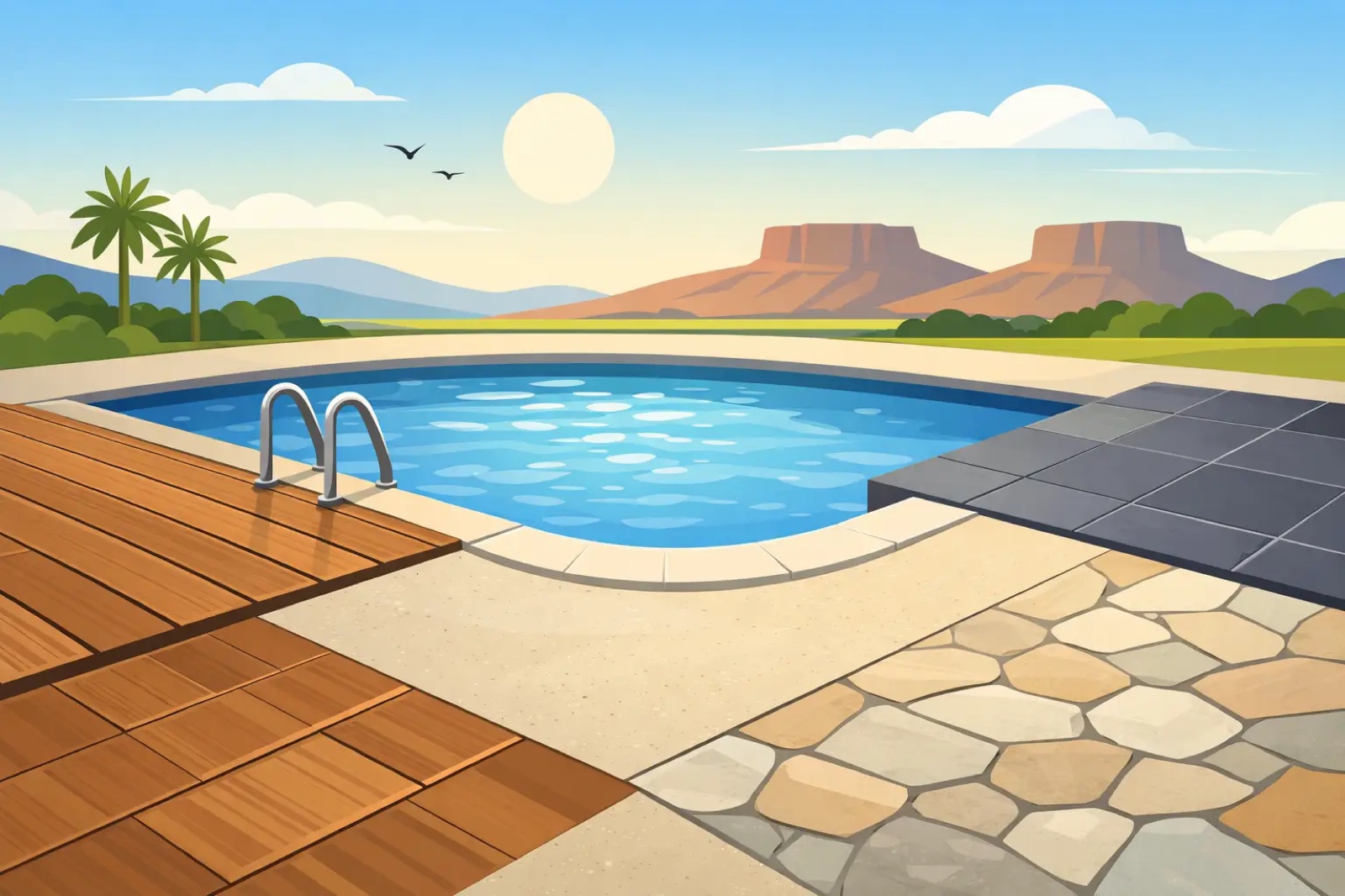
Before getting into specific materials, it helps to know what to evaluate. For a Texas pool deck, you want to think about surface temperature in direct sun, traction when wet, maintenance requirements, durability through hot summers and occasional freezes, and how well it visually connects with your home and pool design.
Budget matters too, but the cheapest option is not always the best value when you factor in lifespan and maintenance costs over ten or fifteen years.
Plain Concrete
Poured concrete is the most affordable pool deck option and the most versatile from a design standpoint. You can stamp it, stain it, score it into patterns, or leave it plain. It handles heavy use well and is straightforward to install.
The main complaint about plain concrete in Texas is heat. Standard concrete in direct sun can become uncomfortably hot to walk on barefoot during peak summer. If your pool deck gets full sun from noon onward, plain concrete may push you toward wearing sandals every time you walk outside, which gets old quickly.
Concrete is also susceptible to cracking over time due to Texas soil movement and root intrusion. With proper expansion joints and base preparation, cracking can be minimized, but it cannot be completely eliminated.
Spray Deck and Cool Deck
Spray deck, also called cool deck or knockdown texture, is a thin concrete overlay applied over a standard concrete base. It has a textured, slightly rough finish that improves traction and, most importantly, stays significantly cooler underfoot than plain concrete in direct sun.
This is the most common pool deck finish in the Houston and Katy area for good reason. It hits the right balance of cost, comfort, durability, and looks. It comes in a range of colors and can be applied in patterns. It is also recoatable, meaning when it starts to show wear in 8 to 12 years, you can add a fresh coat rather than demolishing and replacing the whole deck.
If you are trying to keep costs reasonable while getting a deck that performs well in Texas heat, spray deck is the standard recommendation.
Travertine
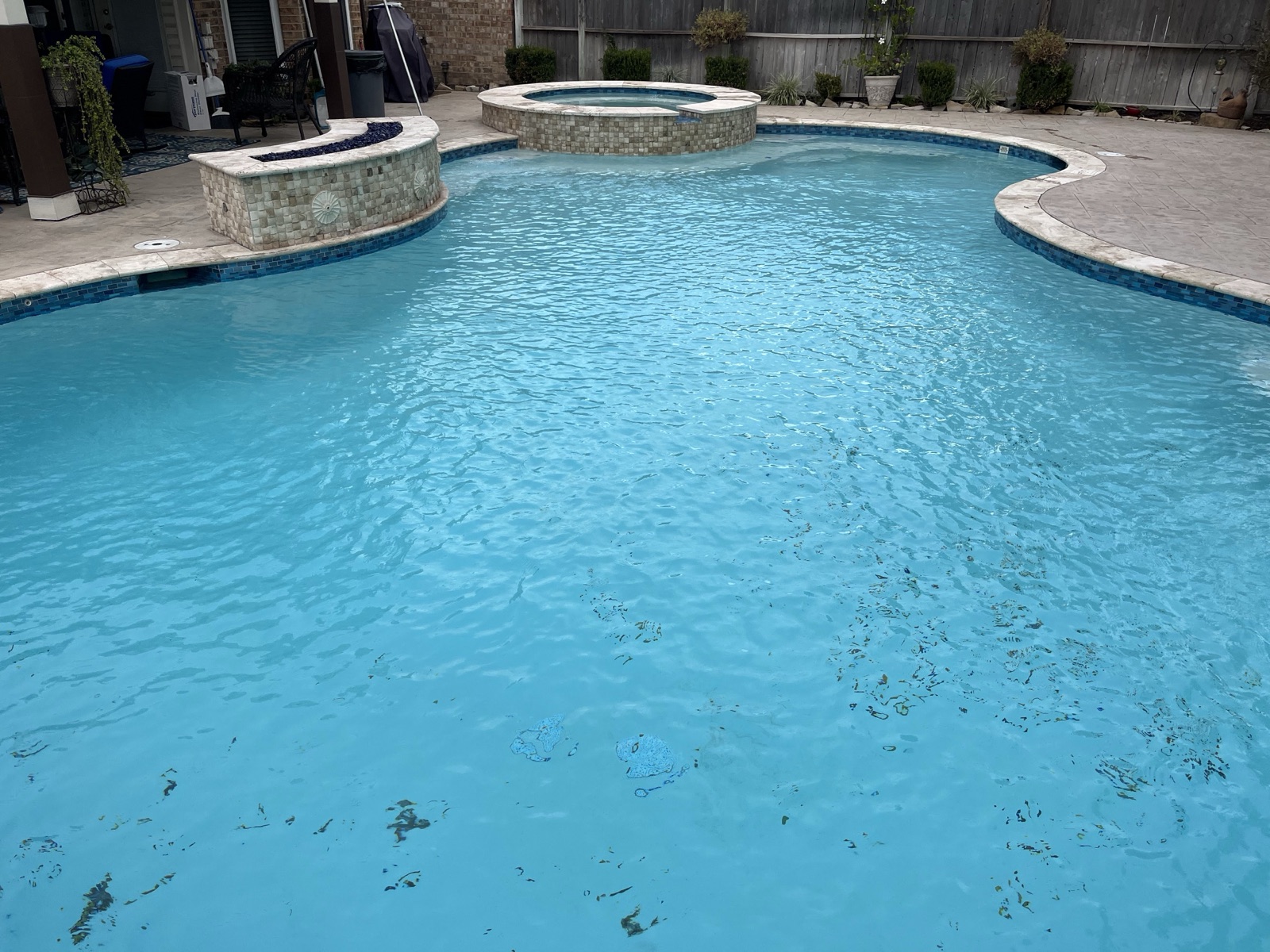
Travertine is a natural stone product that has become very popular for pool decks in recent years. Its biggest advantage in Texas is thermal performance. The stone's natural porosity and light color means it reflects heat rather than absorbing it, staying noticeably cooler underfoot than concrete on hot days.
Travertine also has a natural texture that provides good traction when wet, and the filled-and-honed finish used on most pool-grade travertine is comfortable on bare feet. It looks genuinely premium and adds real value to the home.
The tradeoff is cost. Travertine typically runs two to three times more than spray deck per square foot. It also requires sealing every few years and is susceptible to staining if spills are not cleaned up. Some homeowners also dislike the maintenance of keeping a natural stone surface looking pristine with kids and pool chemicals involved.
Pavers
Concrete or natural stone pavers are another popular option. The main advantage of pavers is repairability. If one section cracks or settles, you can lift and replace individual pavers rather than cutting out and patching a poured surface. They also come in an enormous range of styles, colors, and textures.
The key with pavers is the base preparation. A paver deck is only as good as the compacted base underneath it. Pavers installed over a poorly prepared base will shift, settle unevenly, and create trip hazards. In Southeast Texas where soil moves seasonally, this matters even more. Make sure whoever installs your pavers has experience with Texas soil conditions and does the base work correctly.
Pavers run somewhere between spray deck and travertine in cost, depending on the material chosen.
Wood and Composite
Wood decking, including treated lumber and composite materials, creates a warm, resort-style look that some homeowners love. The honest answer for most Texas homeowners, though, is that wood and composite decking around a pool requires significant maintenance and does not perform as well in Houston's humidity as the other options listed above.
Real wood fades, warps, and splinters over time with constant moisture exposure. Composite materials hold up better but still require periodic cleaning and inspection. They can also get hot underfoot in direct Texas sun. For most of our clients, the aesthetic appeal is not worth the maintenance tradeoff compared to travertine or quality pavers.
How Decking Affects Your Total Budget
Decking is a significant part of any pool project budget. A 1,200-square-foot deck area in spray deck might run $8,000 to $12,000. The same area in travertine could run $20,000 to $30,000. These numbers are rough approximations that depend heavily on site conditions, but the gap between materials is real.
When you are planning your project budget, treat the deck as a major line item from the start rather than an afterthought. Choosing the right material for your budget and lifestyle upfront saves you from either overspending or ending up with a surface you are not happy with.
Ready to Talk to an Expert?
If you have questions about which pool deck material makes sense for your project and budget, our owner is happy to talk through it on a free 15-minute call. No obligation, no sales pressure. Just a straight conversation with the person who will build your pool.
Call us at (346) 481-3835 or book your free call at chrbuilder.com.