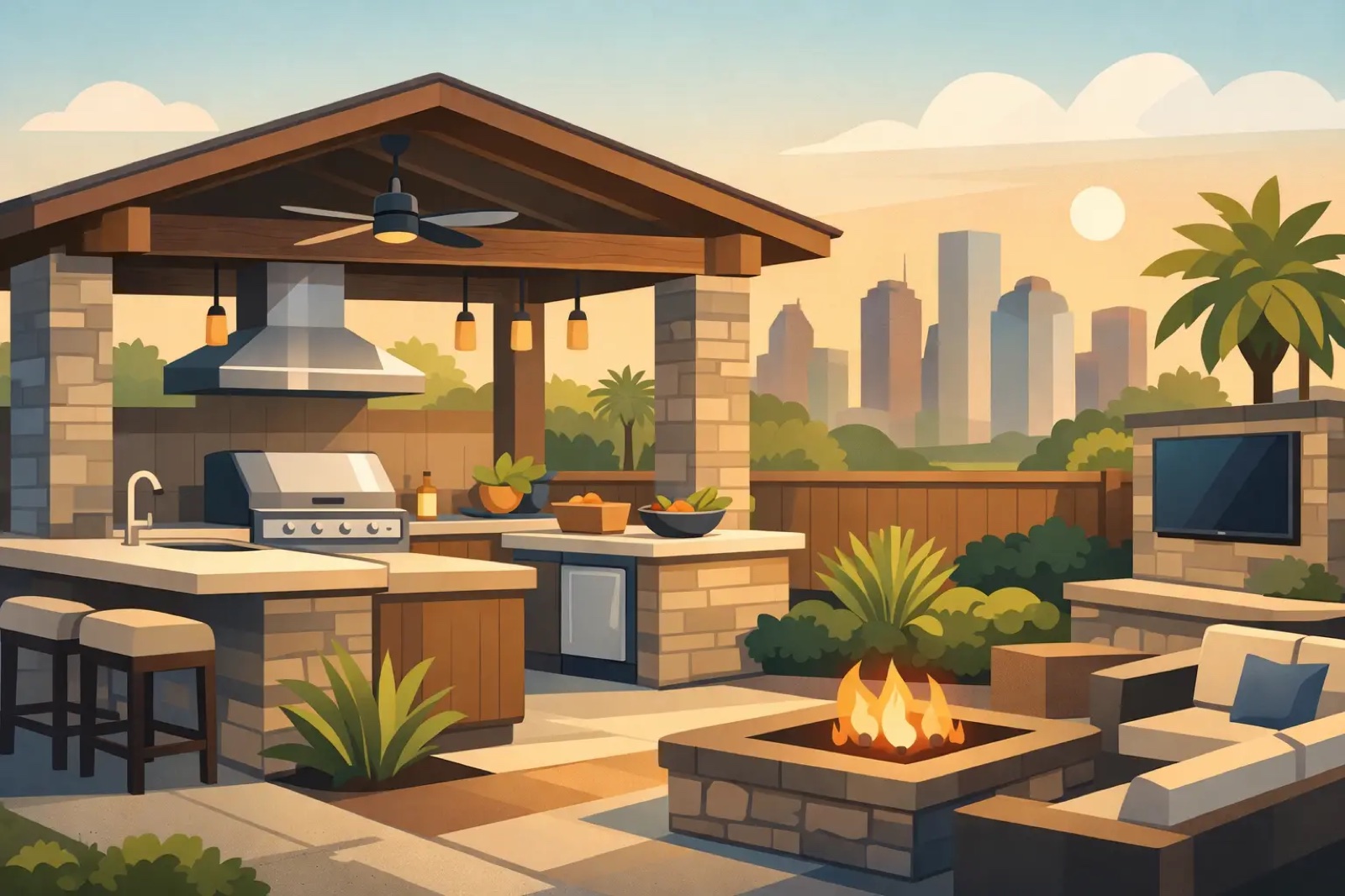
Ask most Houston homeowners what they want in their backyard and an outdoor kitchen comes up quickly. But there is a gap between the idea of an outdoor kitchen and one that actually gets used throughout the year. In this climate, that gap comes down to three things: shade, materials, and layout.
A beautiful grill island baking in full sun at 2pm in July is not going to get used. An outdoor kitchen that was designed for Houston's climate, with proper overhead coverage and materials that can handle the heat, humidity, and sudden downpours, is a different story entirely.
What Makes Outdoor Kitchens in Houston Different
Houston is not a mild climate. Summer heat regularly pushes into the upper 90s with humidity that makes it feel ten degrees hotter. Afternoon thunderstorms roll in fast and soak everything within minutes. Winters bring occasional hard freezes that can crack water lines and damage improperly installed fixtures.
This means material selection is not just an aesthetic choice. Stainless steel appliances rated for outdoor use, sealed natural stone or concrete countertops, masonry construction that does not absorb moisture, and weatherproof cabinet systems are not optional upgrades here. They are the baseline for an outdoor kitchen that will last more than a few seasons.
The same goes for shade. Any outdoor kitchen in this area that is not under a covered patio, pergola, or pavilion is going to be uncomfortable for most of the year. Shade planning needs to happen in the design phase, not as an afterthought after the kitchen is already built.
Start With How You Actually Entertain
The most common mistake is designing an outdoor kitchen based on what looks impressive rather than how the family actually uses the space. Before deciding on features, think about a few questions. Do you cook for two people most nights or do you host large groups regularly? Do you want to cook while guests are around you, or do you prefer the kitchen to face away from the entertaining area? Do you need serious cooking capability or mainly a place for grilling and drinks?
The answers shape the layout, the size, and the feature set. A kitchen designed around your actual habits will get used every week. One designed around an aspirational version of your life will get used twice and then sit idle.
The Features That Add Real Value
A built-in gas grill is the anchor of almost every outdoor kitchen. Invest in a quality one. The difference between a mid-grade and a quality commercial-grade grill shows up in cooking performance, heat distribution, and longevity under daily Texas use.
Beyond the grill, the features that consistently add value are:
- Dedicated prep area: A countertop space of at least 18 to 24 inches on each side of the grill for food prep and plating makes the kitchen functional, not just decorative.
- Refrigeration: An outdoor-rated mini fridge or refrigerator drawer near the grill keeps drinks and proteins cold without trips inside.
- Sink with running water: A sink is the feature most homeowners wish they had added if they left it out. Washing hands, rinsing produce, and cleaning up without going inside makes a real difference.
- Side burner: Useful for sauces, side dishes, and anything that does not go on the grill.
- Seating: Bar stools along the countertop edge facing the pool or entertaining area turn the kitchen from an appliance station into a gathering spot.
Why Layout Matters More Than Square Footage
A smaller kitchen with a well-planned layout works better than a large kitchen with a poor one. The cook needs to move between the grill, the prep area, and the sink without backing into guests or making extra trips around obstacles. Guests should be able to gather at the counter without blocking the work zones.
Common layouts include the straight island, which works well for smaller spaces and pools that are visible from the kitchen side. The L-shaped layout adds a seating run perpendicular to the cooking area, creating natural separation between the cook and the guests. The U-shape is the largest option and works best when you have the space to make it feel open rather than enclosed.
If you are working with a contractor who offers 3D visualization, use it. Spatial relationships in an outdoor kitchen are hard to judge from a flat drawing, and seeing the layout in three dimensions before construction begins prevents expensive changes later.
Pairing Your Kitchen With a Pool
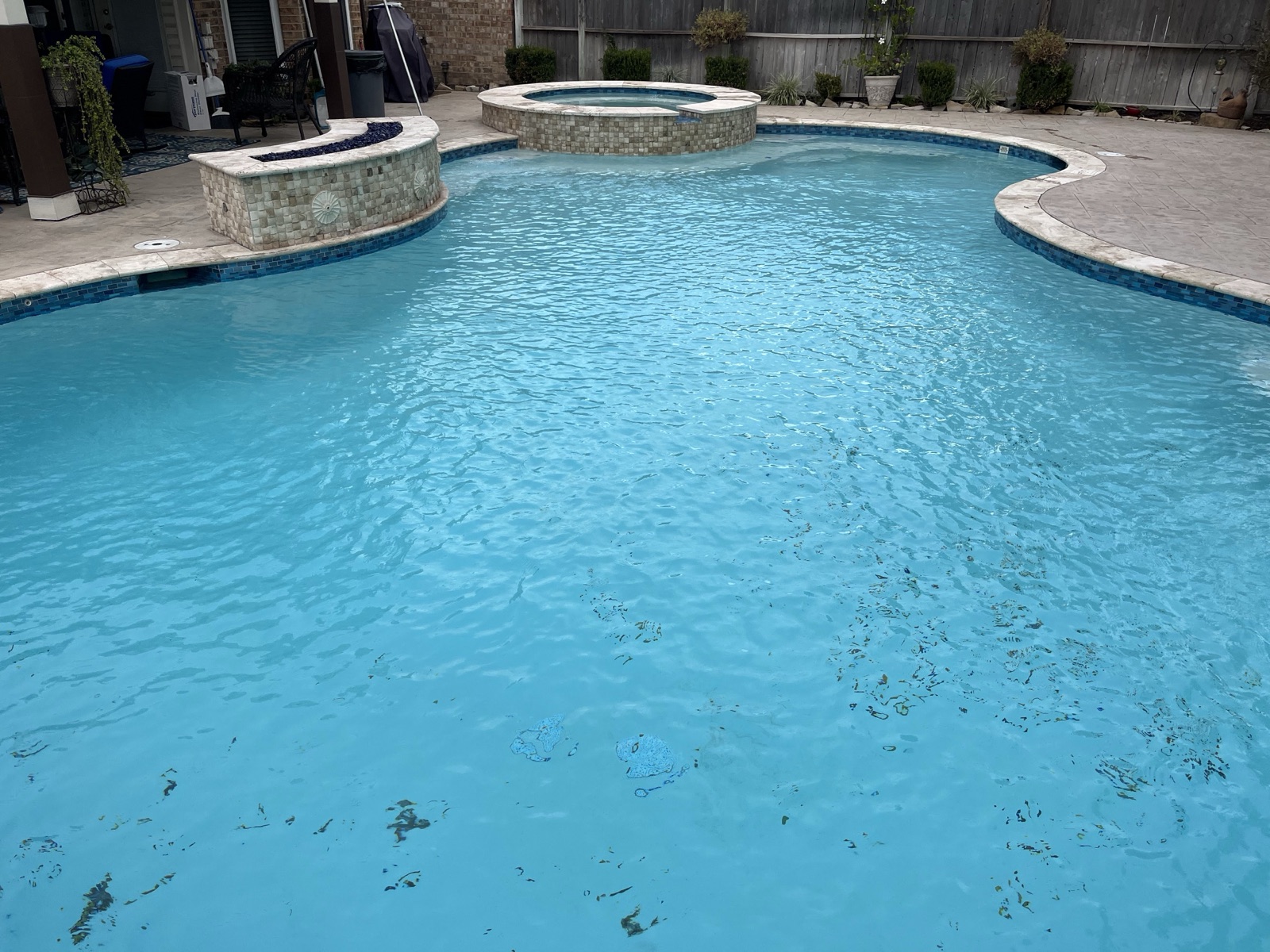
When an outdoor kitchen is planned alongside a pool, the two need to work together. The kitchen should face the pool so whoever is cooking can see the water and the kids. Circulation paths should not require guests to squeeze past the grill to get from the kitchen to the pool area. Drainage for the kitchen sink should be designed as part of the overall backyard drainage plan, not as an afterthought.
At CHR Builder, we design pools and outdoor living features together from the start when clients want both. The result is a backyard that flows and functions as a complete space rather than a collection of separate features.
Ready to Talk to an Expert?
If you have questions about planning an outdoor kitchen for your Houston or Katy backyard, our owner is happy to talk through it on a free 15-minute call. No obligation, no sales pressure. Just a straight conversation with the person who will build your pool.
Call us at (346) 481-3835 or book your free call at chrbuilder.com.