A patio extension should feel like it was always part of your home, not like a slab that was added later. When homeowners search for a patio extension contractor near me, they are usually looking for more room to host, grill, relax by the pool, or keep family gatherings comfortable under the Texas sun. The right contractor can turn that idea into a durable outdoor living space that complements your home, drainage conditions, and long-term plans.
For homeowners in Katy, Houston, and surrounding communities, the decision is bigger than choosing a concrete finish. A patio extension affects water flow, foundations, access around a pool, outdoor kitchen placement, and how your backyard performs through heat, rain, and heavy use. Here is what to look for before you build.
Start With How You Want to Use the Space
The best patio extensions begin with lifestyle, not square footage. A small extension may be all you need for a dining table and a clear path around the pool. A larger design can create dedicated zones for lounge seating, a fire feature, an outdoor kitchen, or a covered entertainment area.
Think about the way your family actually spends time outside. If you host often, the patio needs enough open circulation for guests moving between the kitchen, pool, seating, and grill. If your goal is quiet evenings outdoors, shade, privacy, and furniture placement may matter more than creating a large gathering area.
This is also the right time to consider what comes next. Adding a patio today can be the foundation for a future pool, pergola, outdoor kitchen, or screened enclosure. A contractor with broader outdoor construction experience can help you avoid placing concrete where it will complicate a later upgrade.
What a Patio Extension Contractor Near Me Should Evaluate
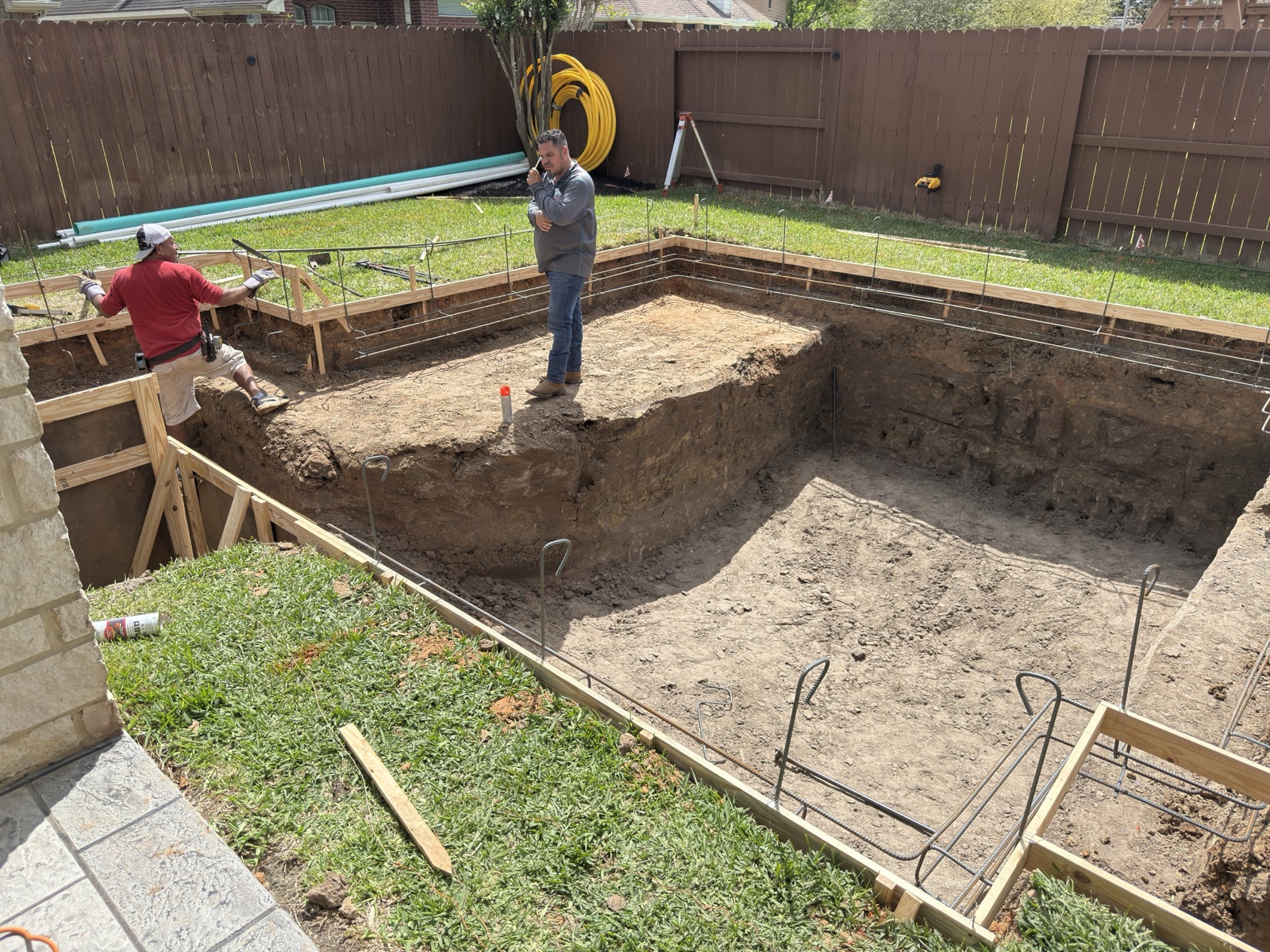
A quality patio project is not simply poured against the existing slab. The contractor should inspect the existing patio, yard elevation, soil conditions, drainage paths, and any nearby structures before recommending a plan. Houston-area clay soils and intense rain can make this planning especially important.
Drainage Is Part of the Design
Standing water is one of the fastest ways to make a new patio frustrating. Water should drain away from the home without creating pooling near the foundation, pool deck, or yard access points. Depending on the property, the solution may involve proper slope, channel drains, catch basins, or adjustments to surrounding landscaping.
A low price can be tempting, but it may leave little room for the preparation work that protects the finished surface. Ask how the contractor will manage slope and runoff before approving a design. The answer should be specific to your yard, not a generic promise that it will drain correctly.
The New Surface Must Work With the Existing One
Color, texture, and elevation all matter when extending an older patio. In some cases, an exact match is possible. In others, especially where original materials have faded or are no longer available, a complementary finish creates a more intentional result than trying to disguise a mismatch.
The connection between the existing and new surfaces also needs careful planning. Expansion joints, transitions, and proper base preparation help the extension accommodate normal movement and reduce the risk of cracking. Concrete can crack over time, particularly in Texas soils, but experienced planning can make a meaningful difference in performance and appearance.
Poolside Work Requires Pool-Specific Knowledge
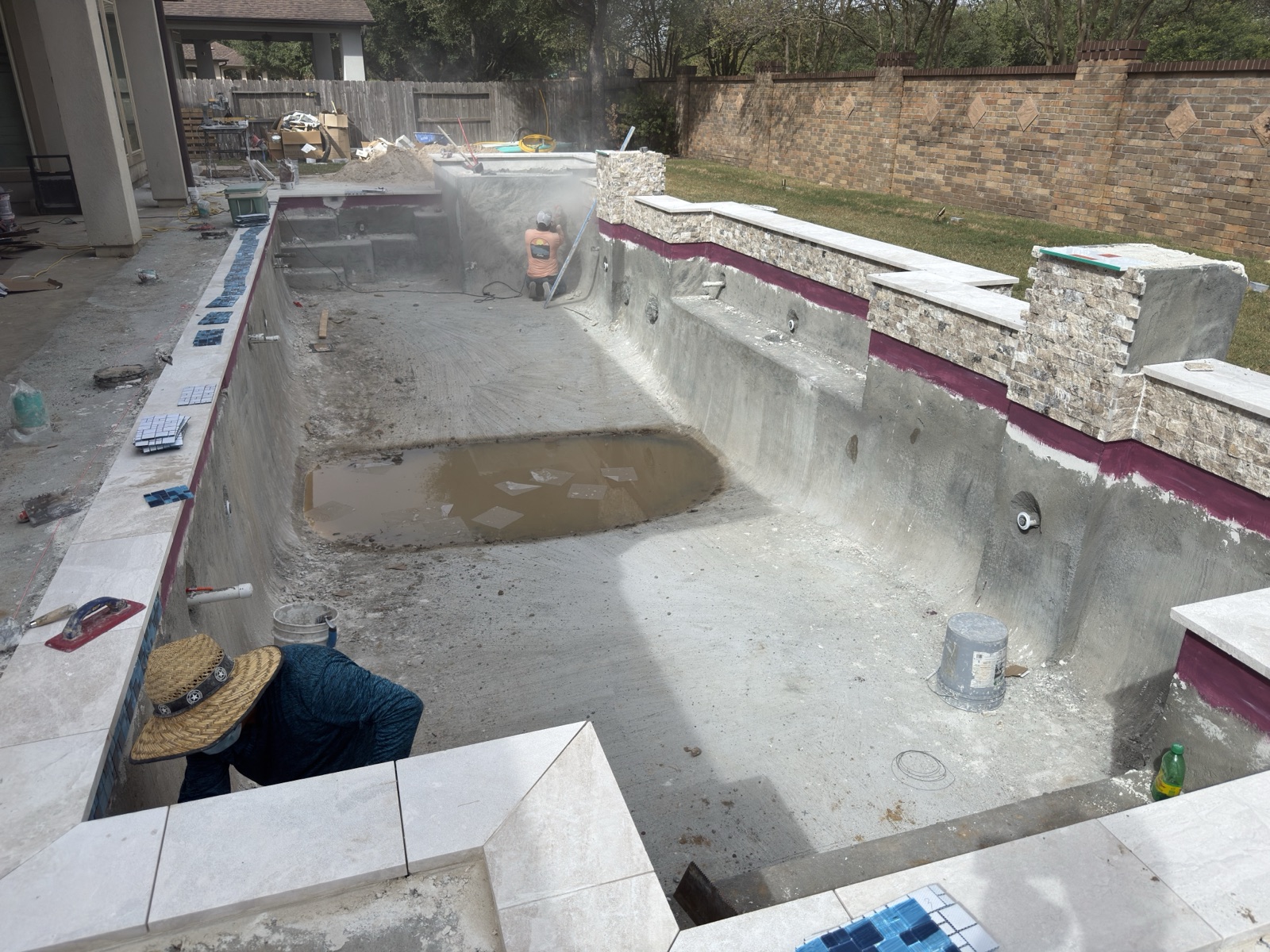
If your patio extension connects to a pool deck, the project should be handled with more than general concrete experience. Pool coping, deck drainage, equipment access, and the relationship between the waterline and patio elevation all need to be considered.
A poolside patio should also be designed for wet feet, direct sun, and regular cleaning. Some finishes offer better traction and a cooler feel underfoot, while others prioritize a particular visual style. There is no single best material for every home. Your choices should reflect where the patio sits, how much shade it receives, and whether children, pets, or frequent guests will use the area.
Look Beyond the Lowest Estimate
A detailed estimate is one of the clearest signs that a contractor understands the project. It should explain the scope of work, materials, surface finish, drainage approach, demolition if needed, and any elements that are excluded. If an estimate is vague, it can be difficult to compare bids or identify where surprise costs may appear later.
When reviewing proposals, ask what is included in site preparation and whether the contractor will address access constraints, utility lines, or grading changes. A backyard with tight side-yard access or existing landscaping may require additional coordination. That does not mean the project is a poor fit. It means the price and timeline should reflect the real work involved.
You should also ask about licensing, insurance, warranty coverage, and who will manage the job from start to finish. A patio extension is a permanent improvement to your property. Homeowners deserve clear communication and accountability, not a disappearing crew after the concrete is poured.
Choose Materials for Texas Living
Your patio must stand up to more than weekend barbecues. It needs to handle UV exposure, heat, humidity, rain, and seasonal soil movement. The most suitable finish depends on your budget, architectural style, and how the patio will be used.
Broom-finished concrete is practical, durable, and provides useful traction. Stamped concrete can add the appearance of stone or pavers while maintaining a continuous surface. Travertine and other natural stone options create a premium look and can stay more comfortable underfoot, though they require a different investment level and installation approach. Pavers offer design flexibility and can be easier to repair in isolated areas, but they need a properly prepared base to remain level over time.
Your contractor should show you samples or past projects in similar conditions. Photos are helpful, but seeing a finish in natural light can reveal color variation, texture, and scale far better than a screen image.
Ask for a Design, Not Just a Price
A patio extension can change the entire feel of a backyard when it is planned as part of the full outdoor environment. The placement of a dining area may affect where you want lighting. A future outdoor kitchen needs utility planning. A covered patio may need to align with rooflines, columns, or drainage systems.
This is where visual planning becomes valuable. A 3D design can help you see whether the patio has enough room for furniture, how it connects to a new or existing pool, and whether the layout supports the way you entertain. It can also prevent the common mistake of building too small, then needing another extension a few years later.
CHR Builder brings more than 25 years of construction-led experience to custom backyard projects, combining patio design with pools, outdoor kitchens, and the structural details that make a finished space last. Free 3D design and a clear estimate give homeowners a better way to make decisions before construction begins.
Questions Worth Asking Before You Hire
Before selecting a contractor, have a direct conversation about the work. The strongest candidates can explain their process without avoiding specifics. Ask how they will prepare the base, manage drainage, connect the extension to existing hardscape, and protect nearby landscaping or pool features.
It is also reasonable to ask about project scheduling, payment milestones, cleanup, and communication during construction. If you are considering financing, discuss options early so the design can reflect your priorities rather than an arbitrary starting budget.
Most importantly, ask to see completed projects that resemble yours. A contractor who has built outdoor spaces for Texas homeowners should be able to show work that demonstrates craftsmanship, clean transitions, and thoughtful design.
A patio extension is an investment in the way your home is lived in, not just the amount of concrete behind it. Choose a builder who listens to your plans, accounts for the realities of your property, and gives you a design you can picture yourself enjoying long after the work is complete.