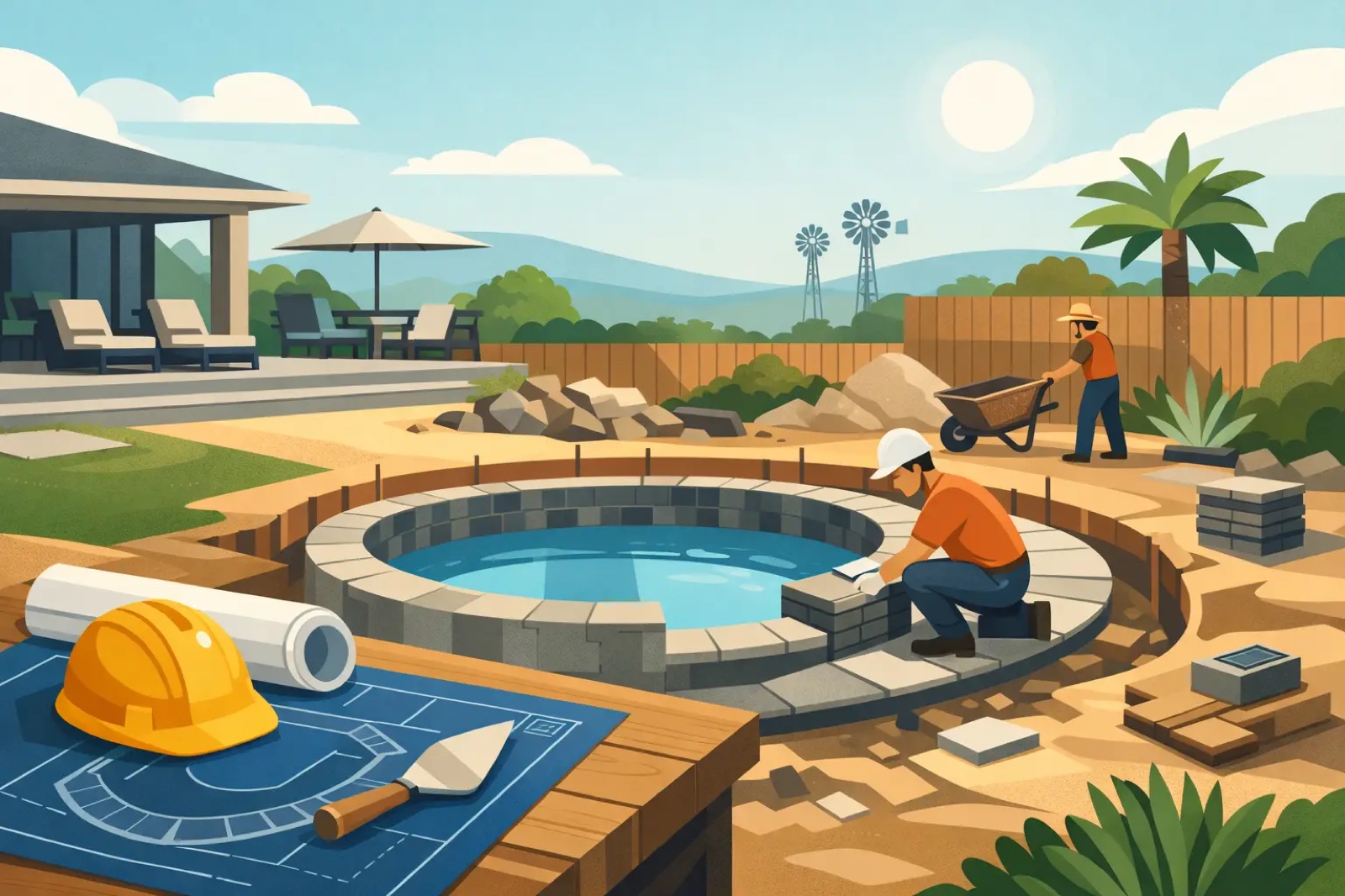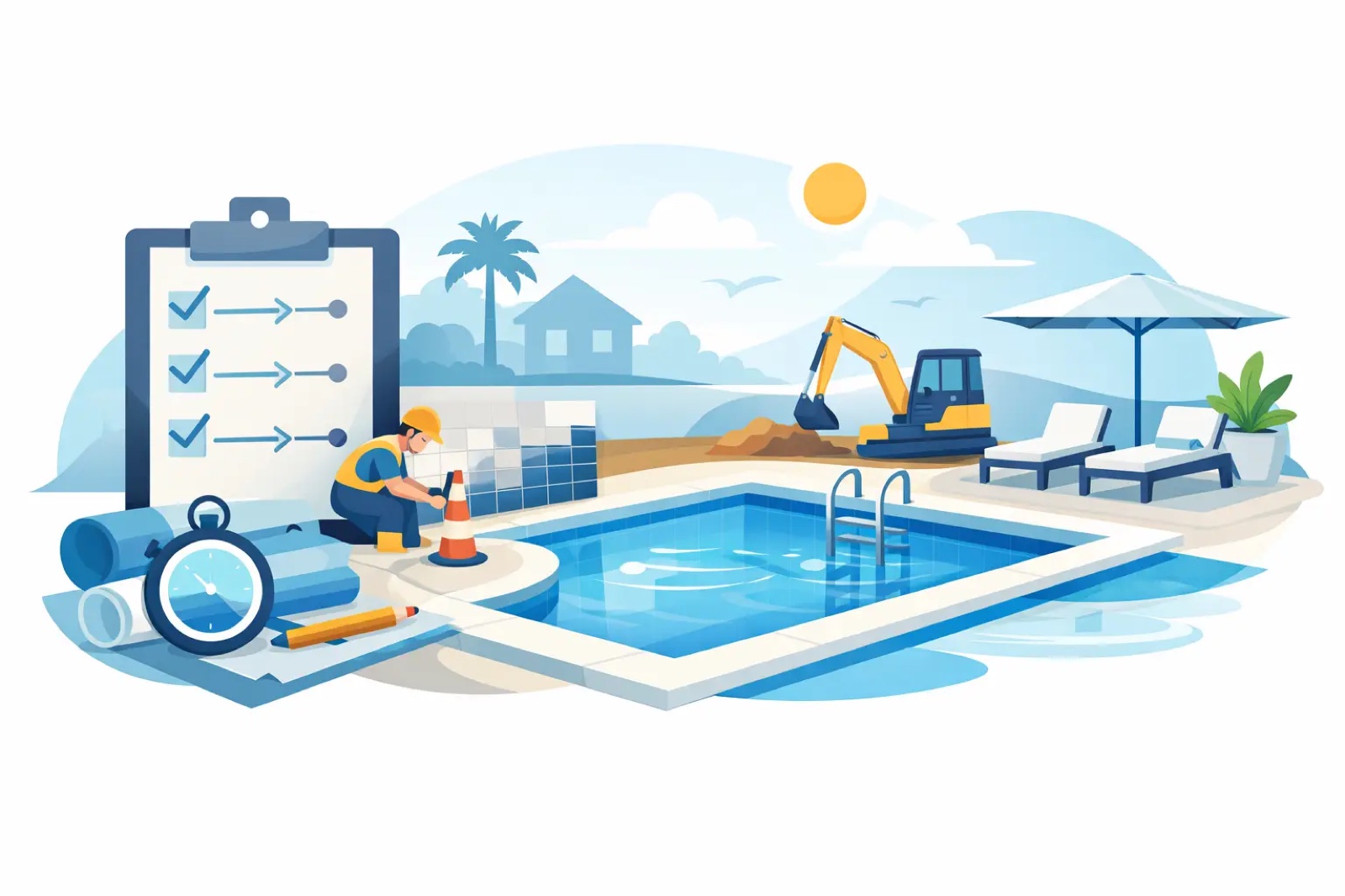
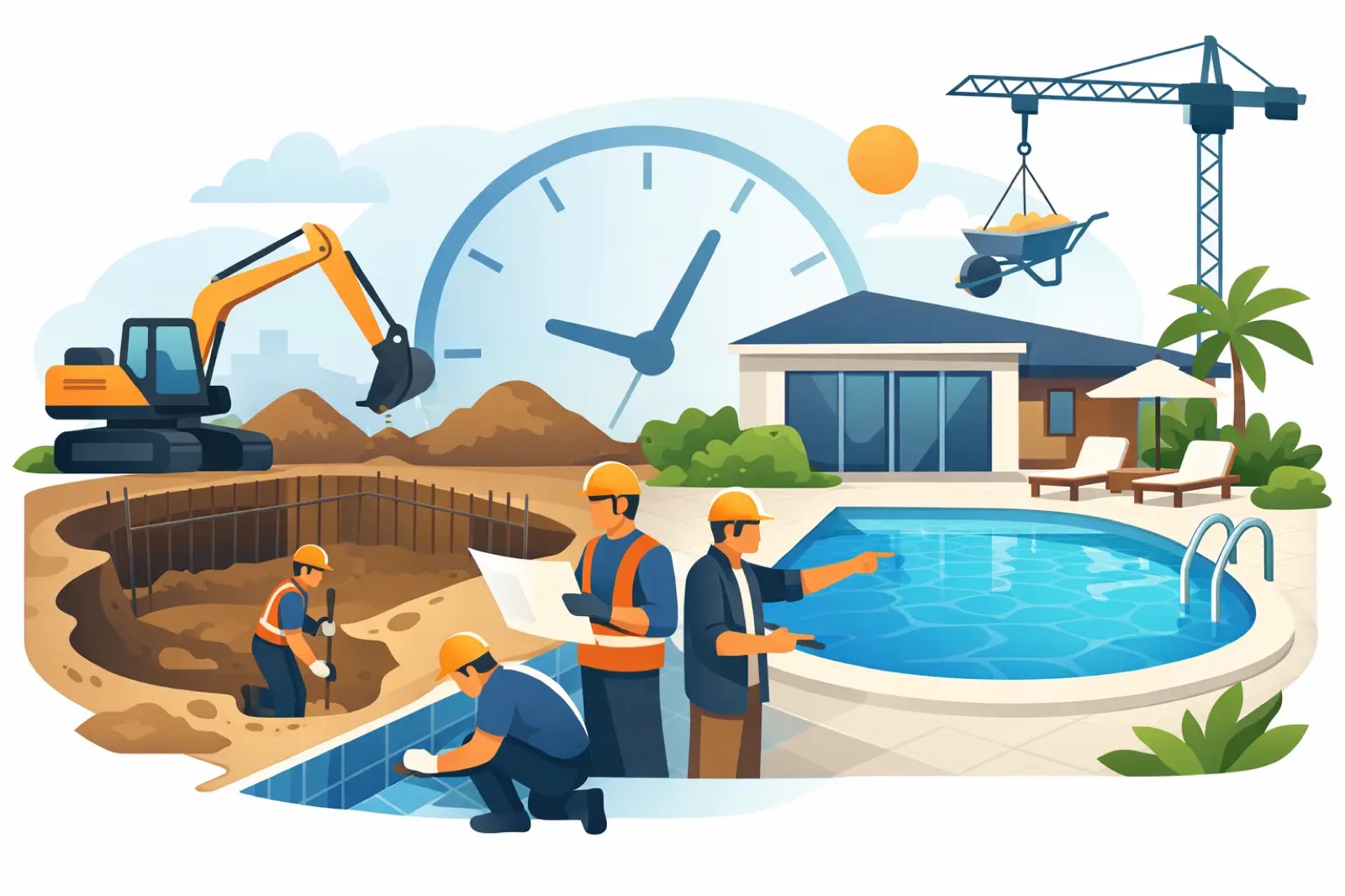
One of the first questions people ask when they start thinking about a pool is how long the whole process will take. It is a fair question, and the honest answer requires more than a single number. From your first conversation with a builder to the day you actually swim, expect the full process to take somewhere between 10 and 16 weeks for most projects. The construction phase itself, once permits are approved, typically runs 8 to 12 weeks. What happens inside that window depends on your design, your lot, the permitting jurisdiction, and factors neither you nor the builder fully controls.
Here is a realistic walkthrough of each phase so you know what to expect.
Design and Planning
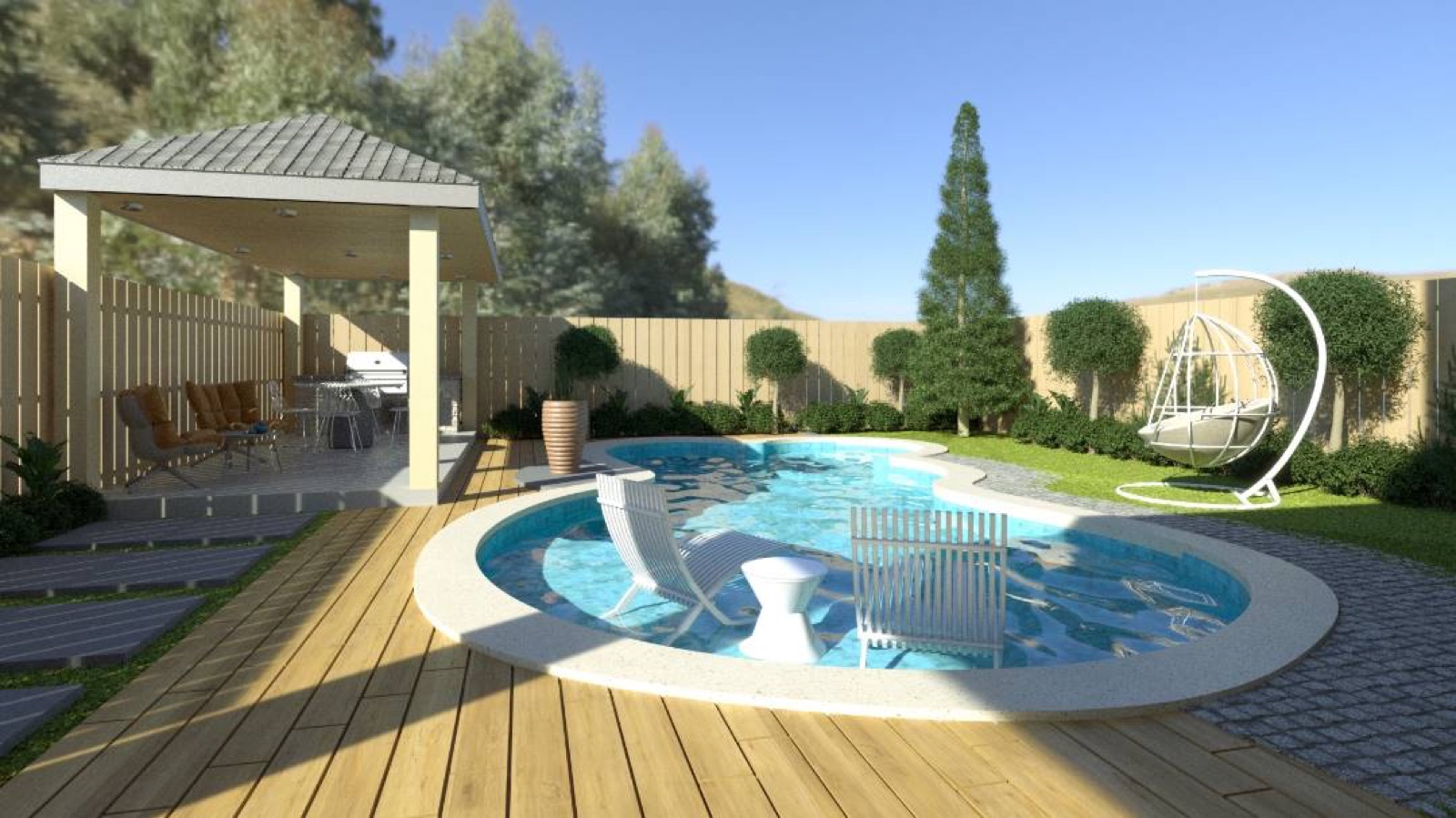
Before construction can begin, you need a finalized design. For straightforward projects, this phase can move in a matter of days. For more complex backyard concepts involving a pool, spa, outdoor kitchen, covered patio, and integrated hardscaping, the design process may take a few weeks as you review 3D renderings, make adjustments, and arrive at a plan that reflects both what you want and what the site can support.
This time is worth taking. Changes made on paper cost nothing. Changes made after excavation starts cost real money. Rushing through design to start digging faster is a false savings.
Permits and Approvals
Permitting is the phase that is most outside anyone's direct control. In the greater Houston area, permit timelines vary significantly by municipality. Some jurisdictions process pool permits in a week or two. Others can take four weeks or longer, especially during spring when applications stack up as homeowners all rush to start summer builds.
At CHR Builder, we handle the permit process entirely. You do not need to interact with the city or county directly. If your property has an HOA, you will need HOA approval before we can begin. We provide all the documentation and support you need for that process, but the HOA review itself is in your court. Getting HOA approval started early, ideally while permitting is in progress, avoids unnecessary delays.
Excavation
Once permits are in hand, excavation is usually the fastest phase. A standard residential pool can typically be excavated in one to two days. The equipment comes in, the outline is staked, and the hole is dug to the planned dimensions and depth. Rocky or clay-heavy soil can slow this phase, and in certain areas of the Houston region, hard subsurface conditions do add time and cost.
Access matters here. If your backyard has limited equipment access because of fencing, mature landscaping, or a tight side yard, the excavation may require different equipment or take longer. This is something to discuss during the design phase, not on excavation day.
Steel, Plumbing, and Electrical Rough-In
After excavation, the structural skeleton of the pool takes shape. Rebar is bent and tied into the shape of the pool shell, creating the reinforcement framework that gunite will be sprayed around. Plumbing lines and fittings for returns, suctions, lights, and water features are set in place. Electrical conduit is run. This phase typically takes one to two weeks depending on the complexity of the design.
Inspections from the city or county happen at this stage before concrete can be applied. The inspector verifies that the steel and plumbing meet the requirements of the permit before work continues. The timing of these inspections is one of the factors that can add a day or two to the schedule depending on how quickly your jurisdiction schedules them.
Gunite Shell
Gunite is the concrete mixture that gets sprayed at high velocity around the rebar framework to form the pool shell. The application itself happens in one day for most pools. A crew arrives with the gunite equipment, and the shell is formed from bottom to walls to floor.
After application, the shell needs to cure. This takes a minimum of 28 days for the concrete to reach full structural strength, though the pool does not stay empty for that entire period. Crews will wet cure the shell during this window by keeping it moist, which is part of proper concrete curing. Work on other phases continues during this time.
Tile, Coping, and Decking
Once the shell has cured sufficiently, the finishing elements are installed. Waterline tile is set, coping is laid around the pool perimeter, and decking takes shape around the pool. This phase typically runs one to three weeks depending on the materials specified and the square footage of decking involved.
Complex tile patterns, large custom decking areas, or premium materials like travertine can extend this phase. This is also when any additional features, raised walls, tanning ledges, water feature structures, fire elements, are typically formed and finished. If the project includes an outdoor kitchen, pergola, or covered patio, those are often being constructed in parallel during this phase.
Equipment, Plaster, and Startup
The final phase covers everything from plumbing the equipment pad and setting the pump, filter, heater, and automation system, to applying the interior plaster finish and filling the pool. The plaster is applied as a final coat over the cured gunite shell and defines the color and texture you see inside the pool. After plaster, the pool is immediately filled with water to prevent cracking as the finish cures.
Startup involves balancing the water chemistry precisely and running the equipment through its initial cycles. This phase requires attention because the plaster is actively curing in the water for the first two to four weeks. The water chemistry during this period directly affects the long-term appearance of the plaster. Your builder should walk you through startup procedures and what to watch for during the cure period before they hand the pool over to you.
What Can Extend the Timeline
Weather is the most common delay factor in Texas. Heavy rain can shut down excavation, delay concrete pours, and prevent tile and decking work for days at a time. Spring in particular brings unpredictable weather that affects scheduling across the board.
Material lead times for specialty items like custom tile, specific coping materials, or certain automation equipment can add time if those items are backordered or have extended lead times from suppliers. Discussing material selections early and confirming availability before finalizing the design helps reduce this risk.
Design complexity is the other major variable. A simple rectangular pool with standard finishes moves through construction faster than a resort-style design with a perimeter overflow, custom tile patterns, and multiple water features. Both are buildable, but the schedule reflects the scope.
Good pool construction follows a sequence, and certain stages cannot be rushed without affecting quality. An honest builder builds a schedule around what the project actually requires, not the fastest possible scenario on the best possible day.
Ready to Talk to an Expert?
If you want to understand what a realistic timeline looks like for your specific project, our owner is happy to walk through it on a free 15-minute call. No obligation, no sales pressure. Just a straight conversation with the person who will build your pool.
Call us at (346) 481-3835 or book your free call at chrbuilder.com.