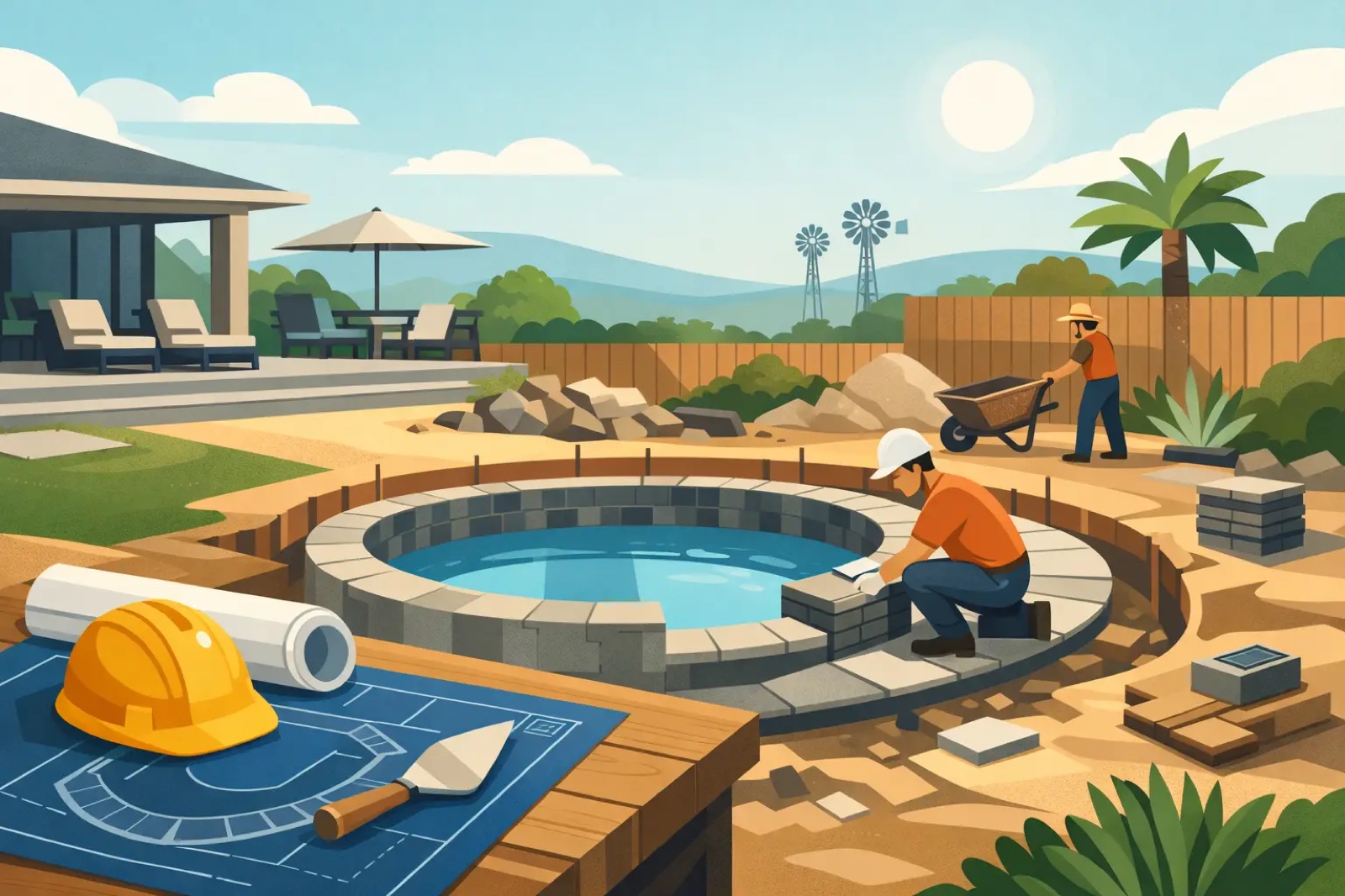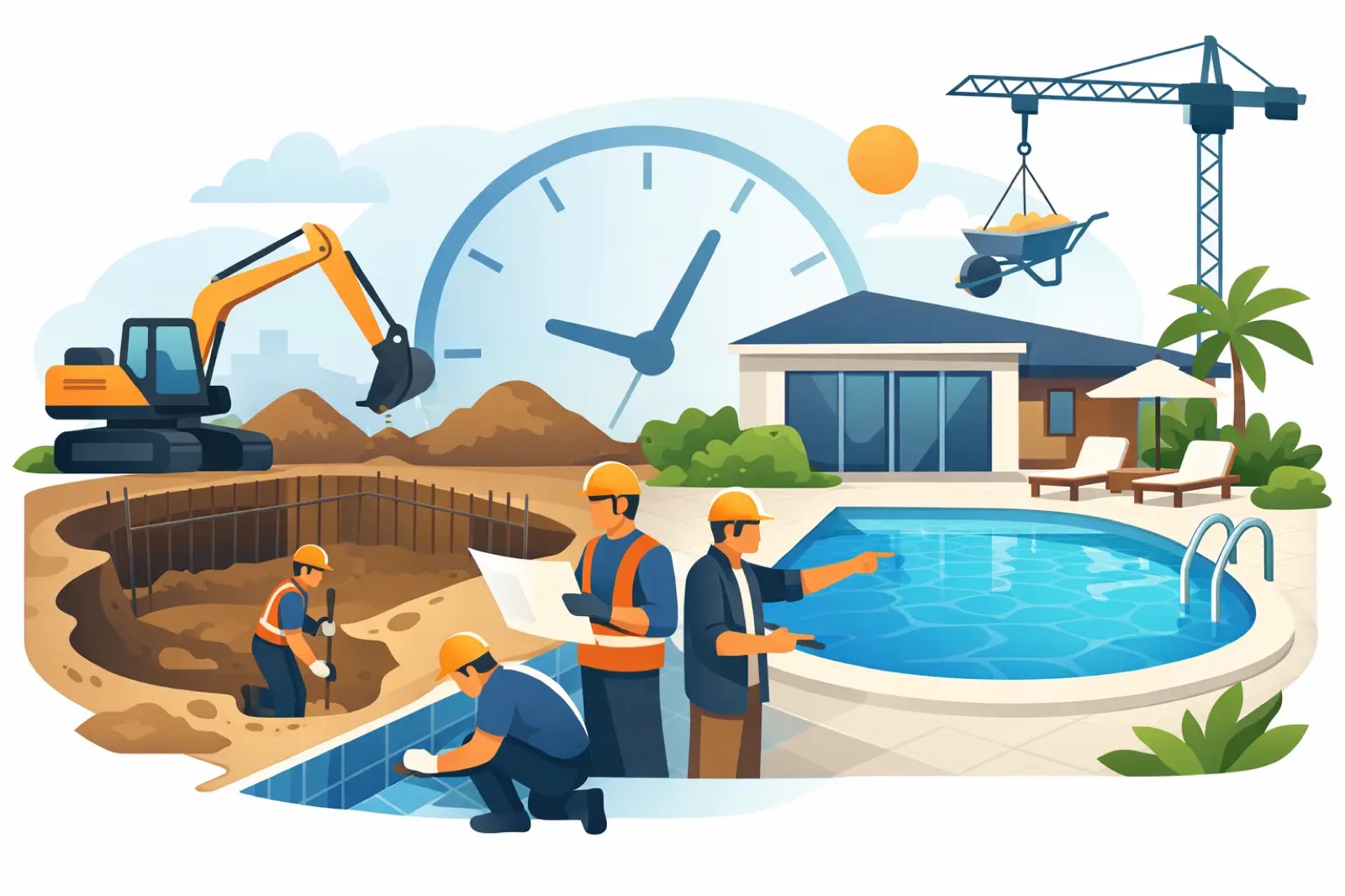
Planning a pool layout is more than picking a shape out of a catalog. The decisions you make before a single hole is dug will determine whether your backyard feels open and easy to use or crowded and awkward for years to come. In the Houston and Katy area, where heat, drainage, and outdoor entertaining are all real factors, getting the layout right is worth spending real time on.
Start with How You Actually Use Your Backyard
Before you think about pool shapes, water features, or materials, figure out what you actually want from the space. This sounds obvious, but most people jump to product selection before answering the real question: how do we want to live out here?
Families with young kids need clear sightlines from the house to the pool. You want to be able to see the water from the kitchen or the covered patio without having to walk outside. That shapes where the pool goes relative to the home. Families focused on entertaining want room for guests to move around, space for seating, and a connection between the pool and wherever food and drinks are happening. People who want a private retreat want shade, privacy from neighbors, and a layout that feels separate from the rest of the house.
None of these are wrong. They are just different, and they lead to genuinely different layouts. Knowing which one fits your life is the first decision you should make.
Work Within Your Lot
Every lot has physical constraints that limit what is possible. Property lines, setback requirements, utility easements, and existing structures all shape where a pool can go. In most Katy and Houston area municipalities, pools must be set back a certain distance from the property line and from the home itself. Fencing requirements add another layer. These are not flexible, so they need to be mapped out early.
Underground utilities are a practical concern that builders have to work around. Water lines, gas lines, and sewer connections can all affect pool placement. A good builder will locate these before finalizing a design, not after.
Drainage is a Texas-specific issue that deserves serious attention. The Houston area gets heavy rain, and your pool and deck need to drain water away from the home and into the yard in a way that does not create pooling or erosion problems. The grade of your lot plays a big role here, and it should inform where the pool and hardscape sit relative to the rest of the yard.
Sun Exposure and Wind
In a hot Texas climate, sun exposure affects how comfortable your pool deck is going to be. Morning sun warms the water and the deck at a comfortable temperature. Afternoon sun from the west can make an exposed deck brutal in July and August. Understanding which direction your lot faces and where shadows fall from the home, trees, and neighboring structures helps you position the pool and shade structures to get the most comfortable outdoor environment.
Wind patterns matter too. Prevailing winds in the Houston area typically come from the south or southeast. Pool placement and patio furniture arrangement should account for wind so that seating areas are sheltered and debris does not constantly blow into the water.
Connect the Pool to the Rest of the Backyard
The pool is one part of the backyard, not the whole thing. A layout that treats the pool as an island in the middle of the yard misses the opportunity to create a space that actually works for living. The pool should connect physically and visually to the home through door locations, windows, and natural walking paths.
Decking width matters. You need enough room around the pool for people to walk safely, sit in chairs, and move between the water and any outdoor kitchen or seating area without feeling cramped. A minimum of 4 to 6 feet of deck around the pool is usually workable, but wider is better for entertaining.
Covered patios and outdoor kitchens should be planned at the same time as the pool, not added later. When these elements are designed together, the proportions are right and the flow between areas feels natural. When a patio or kitchen is added as an afterthought, it often ends up in the wrong spot or the wrong size relative to the pool.
Equipment Placement and Maintenance Access
Pool equipment needs a home. The pump, filter, and heater require a dedicated pad with proper clearance for service access. Where this equipment goes affects noise, visibility, and plumbing run lengths. A good layout puts the equipment somewhere functional but out of the main sight lines, with a gate or screen that keeps it from being an eyesore.
Maintenance access is something many homeowners do not think about until they are trying to sweep a corner with a pole and realize there is nowhere to stand. Leave room for the work that needs to happen on an ongoing basis.
3D Design Makes the Difference
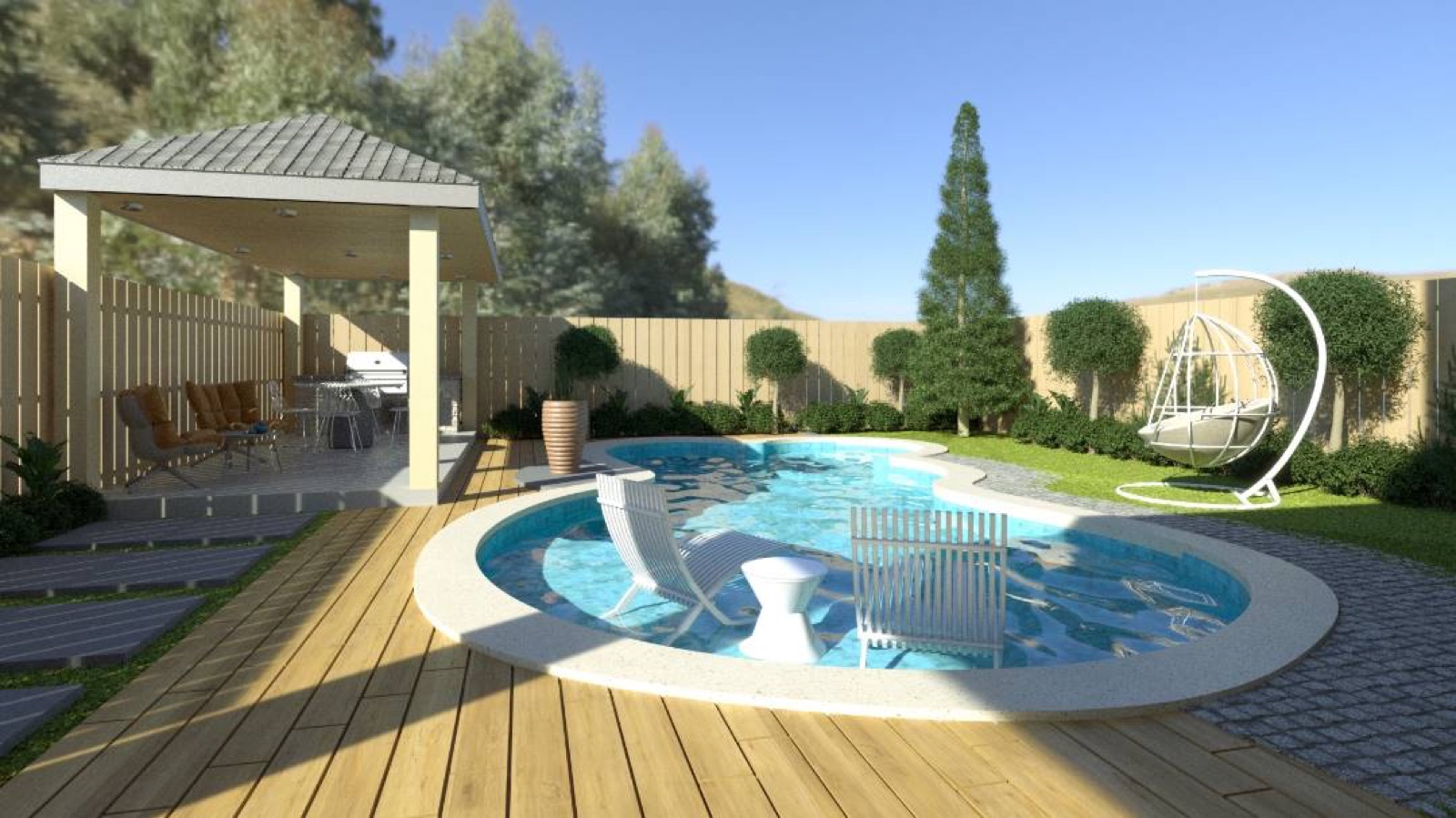
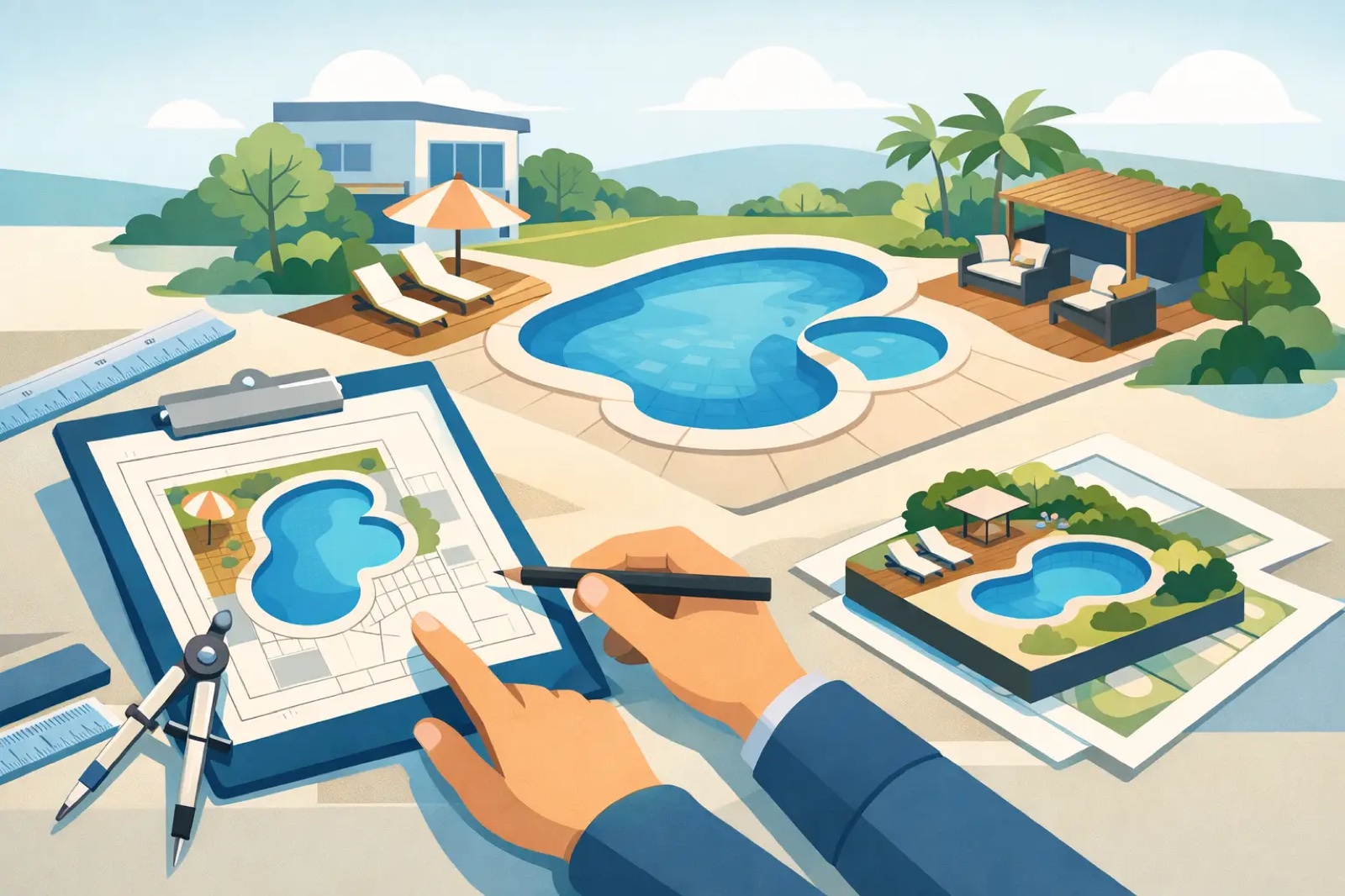
Reviewing a pool design on a flat drawing is genuinely difficult for most people. A shape that looks proportionate in a top-down view can feel overwhelming in person once it is actually in the yard. Three-dimensional design tools let you see how the pool, deck, patio, and landscaping will look together before anything is built. This is not a luxury step. It is one of the most practical tools available for making sure the plan actually matches your expectations.
At CHR Builder, we use 3D visualization as part of our design process so that clients can walk through the plan, see proportions in context, and make adjustments before construction begins. Changes on screen cost nothing. Changes in the field cost real money.
Ready to Talk to an Expert?
If you have questions about planning your pool layout and want to talk through what makes sense for your specific lot, our owner is happy to walk through it on a free 15-minute call. No obligation, no sales pressure. Just a straight conversation with the person who will build your pool.
Call us at (346) 481-3835 or book your free call at chrbuilder.com.