Building a custom pool in the Houston and Katy area is one of the most significant investments a homeowner can make in their property. Done right, it adds years of enjoyment, increases home value, and transforms how you use your outdoor space. Done wrong, it creates headaches that outlast the excitement of having a pool. This guide covers every phase of the process so you know what to expect and what to watch for from the first planning conversation through the day you step in for the first swim.
Start with Lifestyle, Not Aesthetics
The most common mistake early in the planning process is jumping straight to features and materials before defining how the pool will actually be used. The best-looking pool in the neighborhood is not worth much if it does not fit how your household lives outside.
Start by asking what you want the backyard to do for your family. Families with young children need to think about shallow entries, visibility from inside the house, and safety features around the perimeter. Households that entertain regularly think about tanning ledges, bar seating, lighting that works at night, and how the pool connects to a kitchen or seating area. Homeowners who want a retreat from the workday have different priorities than those planning weekend parties. The design should reflect those realities.
Budget planning belongs in this early phase too. Think about the full outdoor space, not just the pool shell. Decking, fencing or privacy screening, landscaping around the pool perimeter, lighting, and any outdoor living structures are all part of the project budget. A quote that covers only the pool will leave you surprised by the total cost. A clear budget that accounts for everything helps the design process stay grounded.
Site Assessment and What Texas Conditions Require
The Houston and Katy area has specific site conditions that any pool builder in this market needs to take seriously. Expansive clay soil is the defining ground condition across much of the region. This soil shrinks in dry weather and swells when wet, creating movement that can affect any in-ground structure over time. Proper pool engineering in this soil means the structural design, rebar placement, and drainage plan all need to account for soil behavior, not just standard residential pool specifications.
Drainage deserves special attention. Houston is one of the wettest major cities in the country. Heavy rain events can overwhelm sites that were not designed with drainage in mind. When a pool is installed without a coordinated drainage plan, runoff ends up on the deck, against the coping, and potentially against the pool shell, which creates problems over time. A good site assessment identifies where water flows across the property and incorporates drainage infrastructure into the design before construction begins.
Lot-specific factors also include setback requirements from property lines and structures, utility easements that affect where equipment can be placed, existing trees and their root zones, and access routes for construction equipment. These details shape the design in practical ways that a template approach to pool planning cannot account for.
Design and 3D Visualization
A well-designed pool looks like it belongs on your property. It fits the scale of the lot, works with the architecture of the house, and connects naturally to the outdoor living areas around it. Achieving that takes a design process that starts with your property and your goals, not a standard shape dropped into a backyard.
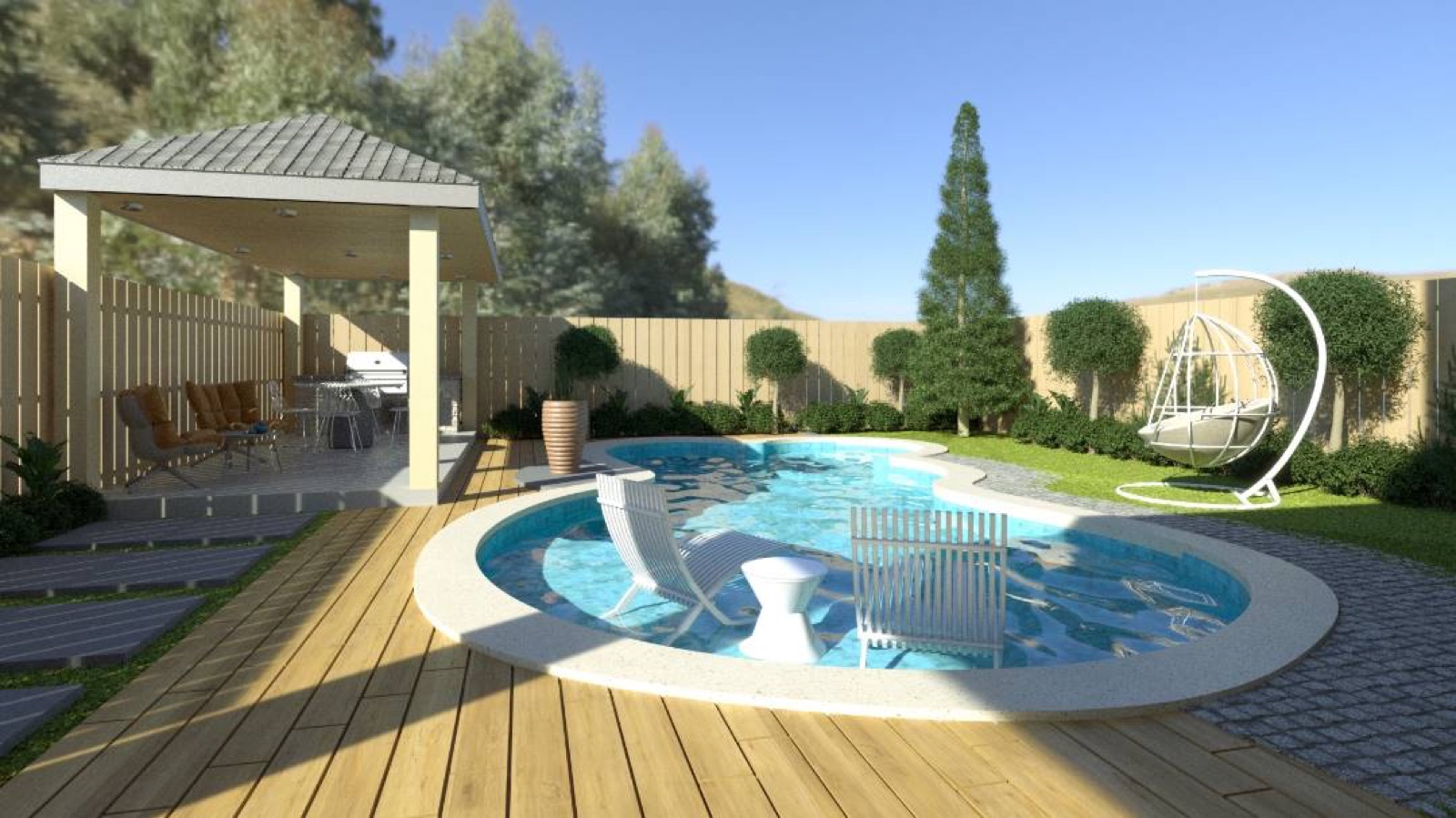
3D design rendering is part of every project at CHR Builder and it is provided at no charge. Before construction begins, you see the full space in three dimensions: the pool shape and depth, the deck layout, the spa position, the surrounding features, and how everything connects to the house. This visualization step makes design decisions much easier because you are evaluating what the space will actually look like rather than interpreting flat drawings.
The design phase is the right time to make changes. Moving the spa, adjusting the pool shape, modifying the deck size, or adding a water feature costs nothing in the design stage. Once excavation has started, those same changes become expensive. Spending time getting the design right before breaking ground is the most cost-effective investment you can make in the project.
Permits: What Is Required in Texas
Pool construction in Texas requires city or county permits that cover structural, electrical, and plumbing work. The specific requirements vary by municipality, but most jurisdictions require a permit application with structural drawings, and inspections at multiple stages of construction: before gunite is applied, after electrical rough-in, and at final completion.
At CHR Builder, we manage the entire permit process. You do not need to visit the permit office or track down inspectors. We prepare and submit the application, coordinate required inspections, and stay on top of the timeline. The one exception is HOA approval, which is the homeowner's responsibility. If your property is in an HOA-governed community, HOA approval is required before construction can begin. We provide all the documentation your HOA needs and will support that process, but the submission and follow-up with the HOA is yours to manage. Starting that process early avoids delays in the overall project timeline.
Construction Phases
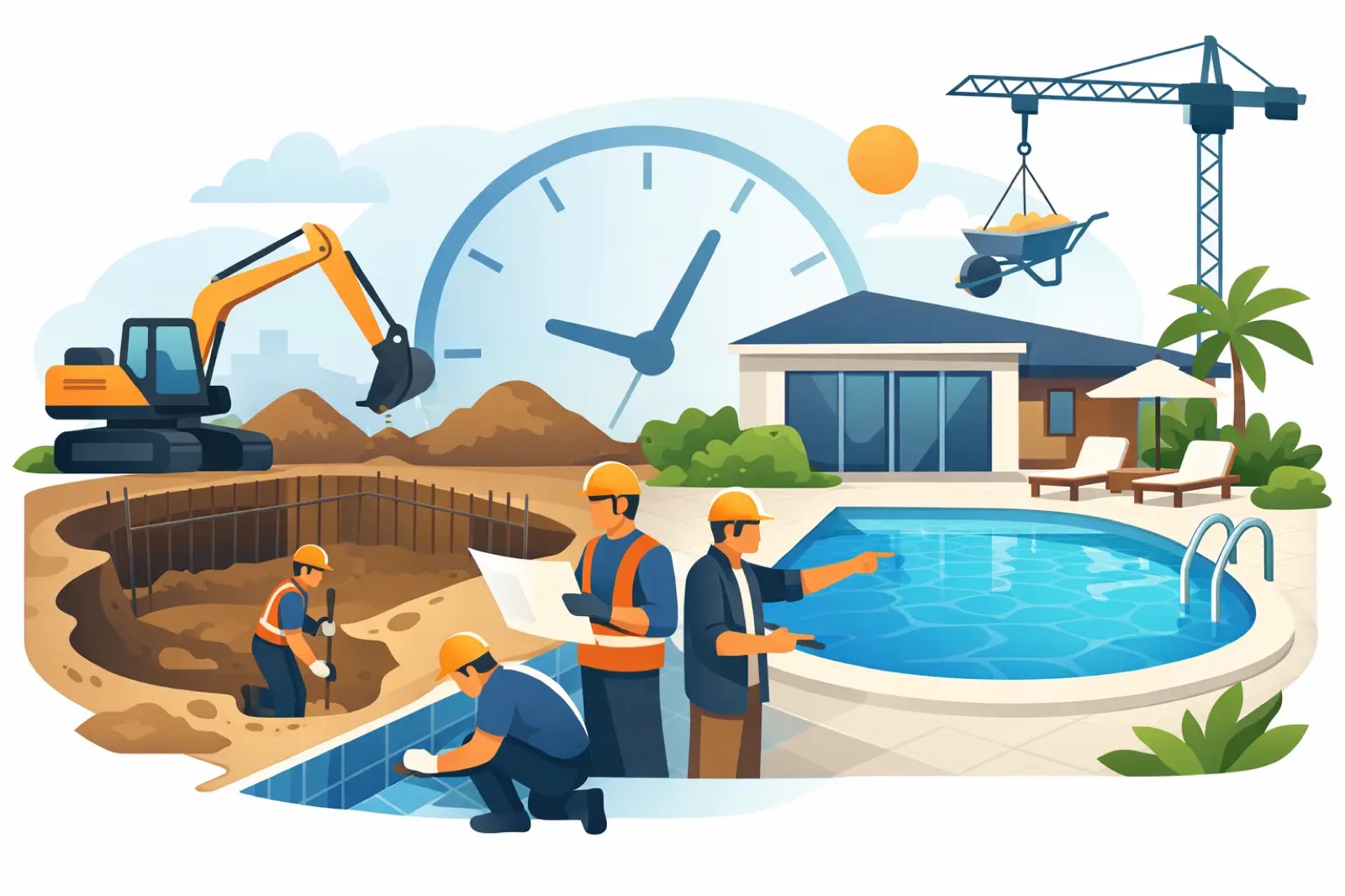
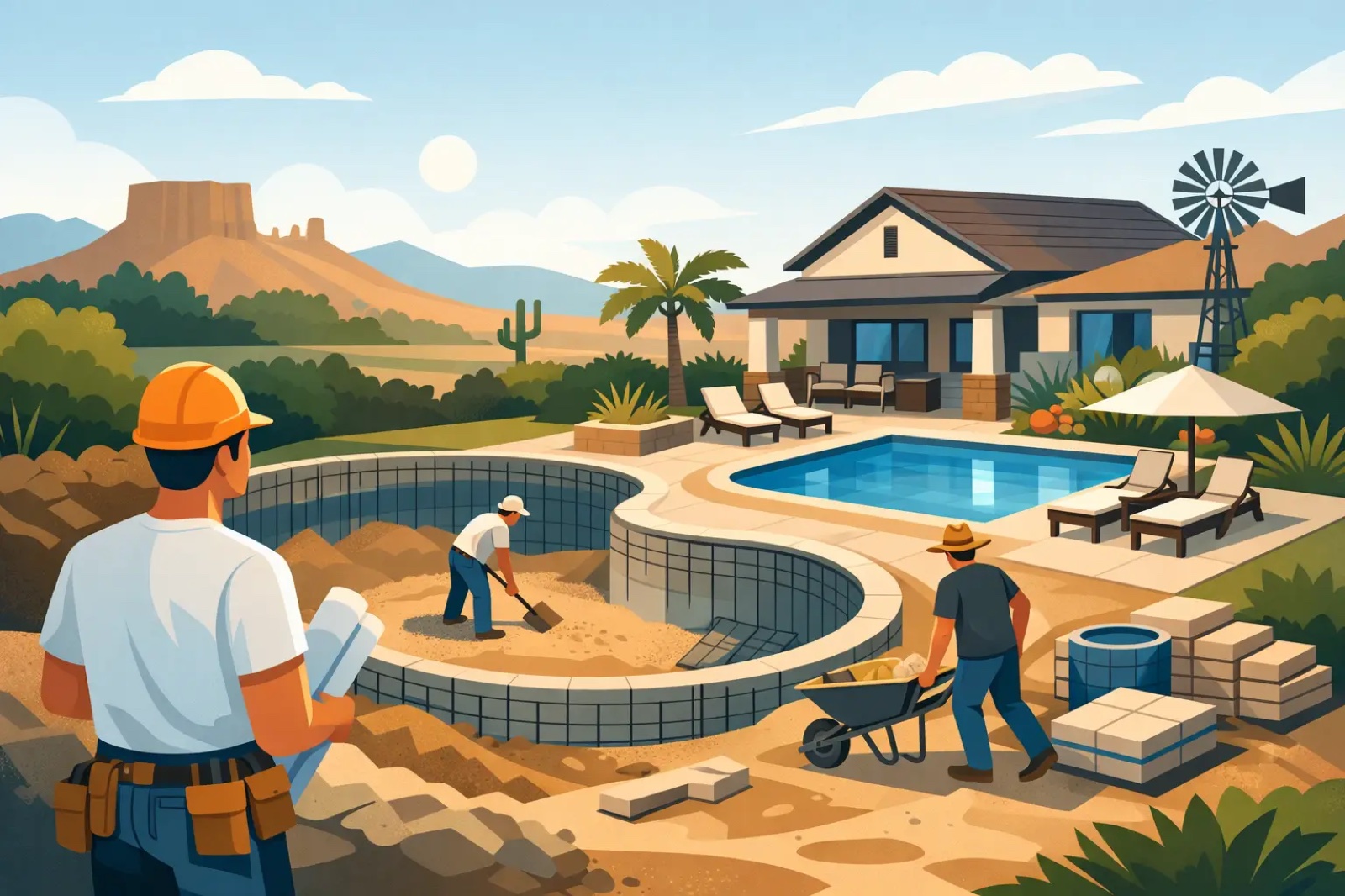
Once permits are in hand, construction follows a defined sequence that cannot be rushed without affecting quality. Understanding each phase helps you follow the progress and know what to expect.
Excavation
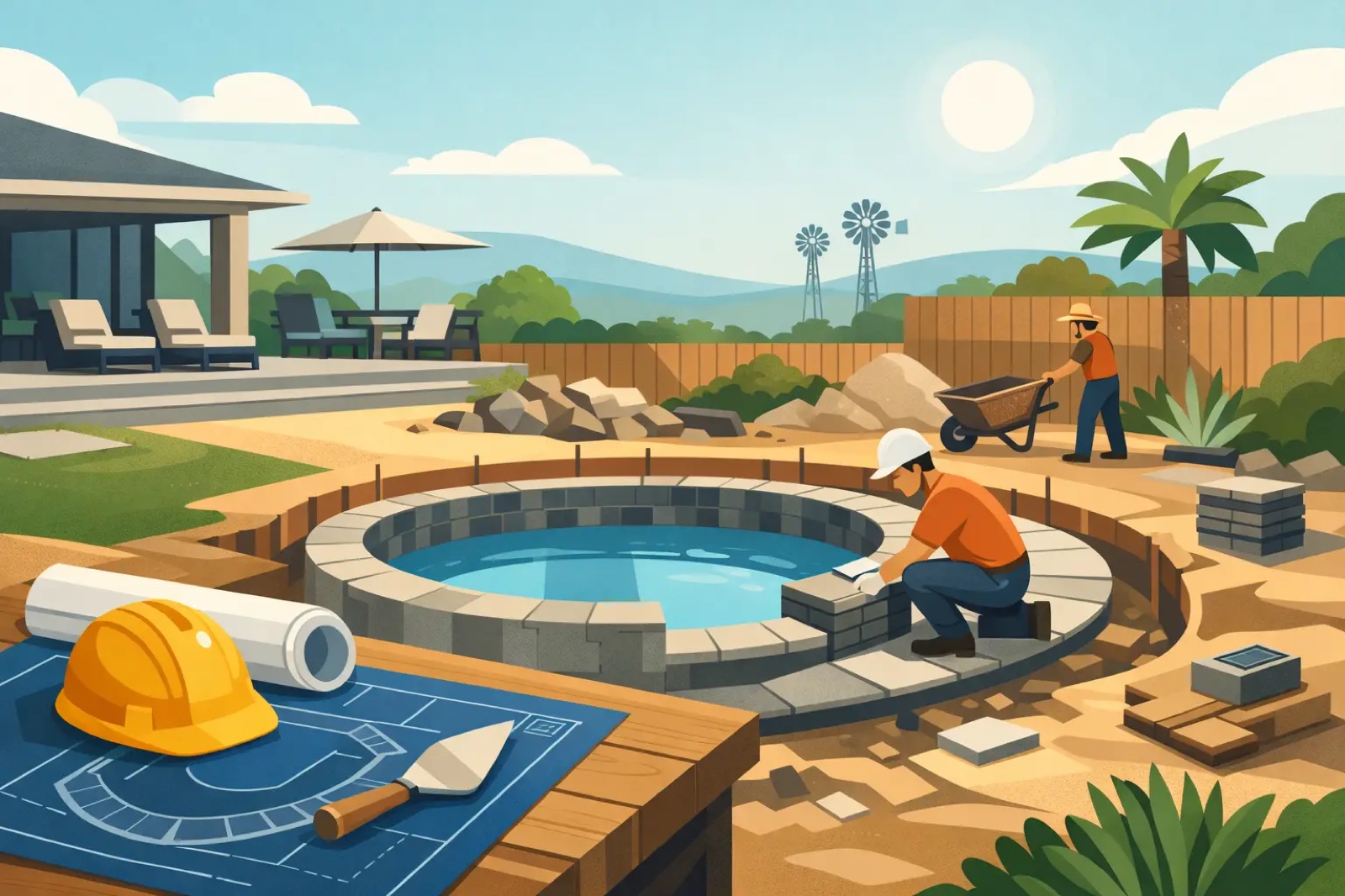
Excavation is typically one to two days for a standard residential pool. The area is staked, the hole is dug to the planned dimensions, and any necessary grading is done around the pool footprint. Access for equipment is a factor here. Tight side yards or mature landscaping can affect timing and approach.
Steel, Plumbing, and Electrical
After excavation, the structural rebar framework is formed, and plumbing lines and electrical conduit are run in place. This phase typically takes one to two weeks. City inspections occur at this stage before work continues. The inspector verifies that the structural and mechanical work meets permit requirements.
Gunite Shell
The gunite, or shotcrete, application creates the pool shell in a single day. A crew arrives with the equipment, and the concrete mixture is sprayed at high velocity around the rebar framework. After application, the shell is wet-cured for several weeks. This curing period is not optional or adjustable. Proper curing is what gives the shell its structural strength.
Tile, Coping, and Decking
With the shell cured, the finishing elements are installed. Waterline tile is set, coping goes around the pool perimeter, and the deck surface is formed. This phase runs one to three weeks depending on materials and scope. If the project includes outdoor living elements like a covered patio, pergola, or outdoor kitchen, those are typically being built in parallel during this phase.
Equipment, Plaster, and Startup
The final phase covers equipment installation, plumbing connections, interior plaster application, and pool startup. The pump, filter, heater, and any automation or salt system are set and connected. Interior plaster is applied as the finish coat and the pool is immediately filled. Water chemistry during the cure period is critical. The plaster is actively curing for the first few weeks after filling, and how the water is balanced during that window directly affects the long-term appearance of the finish.
After the Water Is In: Startup and Warranty
Before we consider a project complete, we walk the homeowner through pool school: how to operate the equipment, what the automation system controls, how to test and adjust water chemistry, and what to watch for in the first few months of ownership. You should leave that walkthrough confident, not confused.
Every pool we build carries our full warranty. The structural shell carries a 25-year warranty that is transferable to a new owner. The plaster finish is covered for 10 years, also transferable. Equipment carries a 3-year warranty. Workmanship is warranted for 2 years. These warranties are not marketing language. They reflect what we stand behind on every project.
Choosing the Right Builder
The final element in any successful pool build is the builder you choose. A beautiful rendering does not guarantee a well-built pool. What matters is whether the company behind the design has the construction experience, the licensing, and the commitment to follow through on what they proposed.
Ask about licensing and insurance, look at completed projects, read reviews from real customers, and pay attention to how the company communicates during the sales process. If they are difficult to reach or vague with answers before you sign anything, that tells you something. At CHR Builder, our owner has 20+ years of construction experience and founded this company in Katy in 2021. With 100+ completed projects and 40+ five-star Google reviews, the track record speaks for itself.
Ready to Talk to an Expert?
If you are ready to start planning a custom pool in the Houston or Katy area, our owner is happy to walk through the process on a free 15-minute call. No obligation, no sales pressure. Just a straight conversation with the person who will build your pool.
Call us at (346) 481-3835 or book your free call at chrbuilder.com.