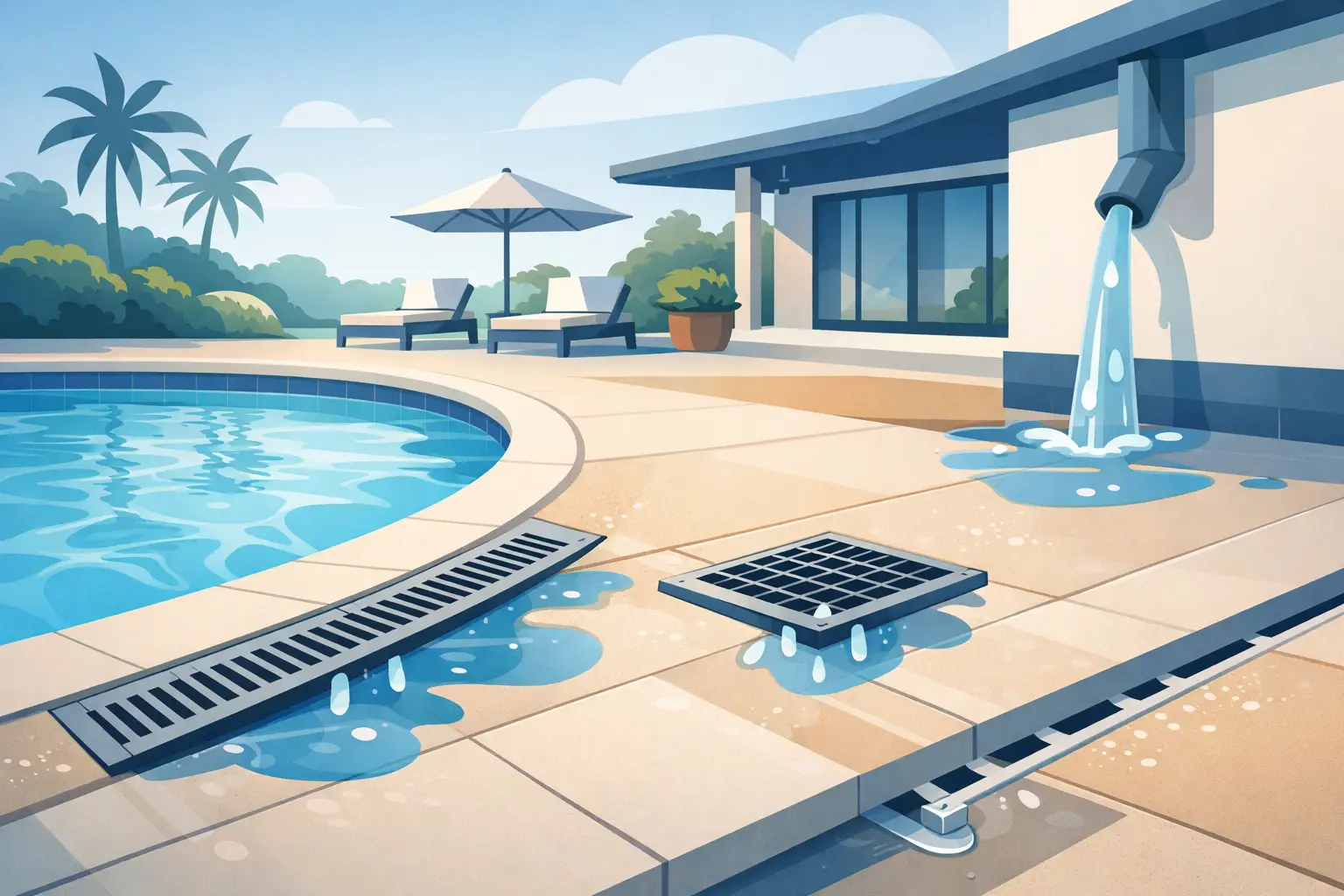
A beautiful pool deck can start looking like a problem fast when water has nowhere to go. Slippery spots, puddling near lounge areas, erosion at the deck edge, and water pushing back toward the house are all signs that your pool deck drainage solutions need just as much attention as the finish, tile, and coping.
For homeowners in Katy, Houston, and surrounding Texas communities, drainage is not a cosmetic detail. It is a structural and lifestyle decision. Heavy rain, expansive clay soils, and long stretches of pool use can expose weak planning quickly. If the deck was built without proper slope, drain placement, or runoff control, you feel it every time water sits where your family walks.
Why pool deck drainage solutions matter
Most homeowners first notice drainage problems in simple ways. Water lingers after a storm. Splash-out collects near steps. Furniture leaves damp rings on the deck for hours. But the bigger issue is what that water does over time.
Poor drainage can shorten the life of decorative concrete, pavers, and decking coatings. It can stain surfaces, wash out joints, and create settlement around the pool shell or patio. In some layouts, runoff can even move toward the home’s foundation or leave landscaped areas constantly saturated.
There is also the daily use factor. A premium backyard should feel clean, safe, and easy to enjoy. Standing water works against all of that. It creates slip hazards, attracts debris, and turns a finished outdoor space into a maintenance headache.
That is why the right drainage plan should be built into the design from the start, not patched in after the fact.
The most effective pool deck drainage solutions
There is no single drain system that fits every pool. The best choice depends on deck size, elevation, surface material, nearby structures, and where the water can legally and safely discharge.
Deck slope and grading
The first solution is often the most overlooked. A pool deck should be pitched intentionally so water moves away from the pool edge where needed, away from the home, and toward a collection point. If the slope is too flat, water lingers. If it is too aggressive, the deck can feel awkward underfoot and visually off.
Good grading does a lot of the work before a drain ever comes into play. On a new build, this is one of the easiest ways to prevent future issues. On a remodel, correcting slope can be more involved, but it may be the only real fix when puddling is widespread.
Trench drains and channel drains
For many pool layouts, trench drains are one of the most practical pool deck drainage solutions. These drains run in a straight line across or along sections of the deck and collect sheet flow before it spreads into seating areas, outdoor kitchens, or access paths.
They work especially well between the pool deck and the house, along broad patio transitions, or in areas where large hardscape surfaces gather runoff quickly. The trade-off is appearance and placement. A poorly planned drain can interrupt the visual flow of the deck. A well-designed one blends into the layout and feels intentional.
Drain grate style also matters. Some homeowners want a low-profile look that complements modern decking. Others prioritize heavy-duty performance in larger entertaining spaces. The right answer depends on how the backyard is used and how much water the system needs to handle.
Slot drains for a cleaner look
Slot drains are popular when homeowners want drainage performance without a more visible grate line. These systems create a narrow opening that captures runoff while maintaining a cleaner architectural appearance.
They are often a strong fit for higher-end pool projects where visual detail matters. If you are investing in custom coping, upgraded deck finishes, or a streamlined patio design, a slot drain can preserve that polished look.
That said, appearance should not outweigh function. If the deck has major runoff demands, the drainage system still has to be sized correctly. A sleek drain that cannot keep up in a Texas downpour is not a premium solution.
Area drains and catch basins
Some yards need more than a deck-level system. When the surrounding grade pushes water toward the pool or patio, area drains and catch basins can help intercept runoff from adjacent lawn, planter beds, or hardscape surfaces.
These are common in backyards with multiple elevations or where the pool sits lower than other parts of the property. They can be highly effective, but only when tied into a broader drainage plan. A catch basin alone will not solve water problems if discharge lines are undersized or if the rest of the yard still funnels stormwater into the same area.
Perimeter drainage and subsurface solutions
In some projects, surface drains are only part of the answer. If the soil stays wet for long periods or erosion is affecting deck support, subsurface drainage may be needed. This can include perimeter systems that move groundwater or trapped moisture away from structural areas.
These solutions are less visible, but they matter in yards where drainage problems go beyond splash-out and rain sitting on the deck. When soil movement becomes part of the equation, construction experience matters as much as drainage knowledge.
New construction vs. remodeling
If you are building a new pool, drainage should be addressed before the first deck form is set. This is the best time to coordinate elevations, drain locations, pipe routing, and discharge points. It is also the easiest time to make sure drainage supports the full outdoor plan, including patios, kitchens, walkways, and landscaping.
With an existing pool, the process is more selective. Sometimes adding a trench drain or reworking a small deck section is enough. In other cases, persistent puddling points to a bigger slope or grading issue that requires more substantial correction.
This is where honest assessment matters. Some contractors will suggest the simplest visible fix. The better approach is identifying why the water collects in the first place. Surface symptoms do not always reveal the real cause.
What homeowners in Texas should watch for
Houston-area backyards bring a few extra drainage challenges. Sudden heavy rain can overwhelm undersized systems. Clay-heavy soils can shift and affect deck performance over time. Large custom patios can create broad runoff areas that need careful management, especially when paired with outdoor kitchens, covered structures, and turf transitions.
Another factor is the way many families use the space. In a backyard built for Texas livin, the pool deck is not just a walkway around the water. It is an entertainment zone, a dining area, a sun shelf access route, and part of the home’s outdoor living experience. That means water control has to work during storms and on a normal Saturday when kids are in and out of the pool all afternoon.
How to tell if your drainage design is working
A well-drained deck should clear water efficiently after regular use and after rain. You should not see recurring puddles in the same spots, runoff heading toward the house, soft areas along the deck perimeter, or staining patterns that suggest water sits too long.
It should also feel integrated into the design. Good drainage does not call attention to itself. It protects the materials, supports the layout, and helps the whole space stay cleaner and safer.
If your deck stays wet long after nearby surfaces dry, or if you are planning a pool remodel and already know drainage has been an issue, it is worth addressing before new finishes go in. Fresh materials installed over unresolved drainage problems rarely stay fresh for long.
Choosing the right builder for pool deck drainage solutions
Drainage is one of those details that separates surface-level pool work from true construction planning. The right builder looks at elevations, surrounding structures, discharge routes, soil conditions, and how every part of the backyard works together.
That matters even more in custom projects. A luxury outdoor space should not force you to choose between appearance and performance. The best pool deck drainage solutions protect your investment while supporting the look and feel you want.
At CHR Builder, that means designing with the full property in mind, not just the waterline and tile selection. A deck should be attractive, durable, and built to handle real Texas conditions.
If you are planning a new pool or updating an older backyard, drainage deserves a place in the conversation early. The right solution is rarely the flashiest one. It is the one that keeps your space safer, cleaner, and ready to enjoy long after the concrete cures.