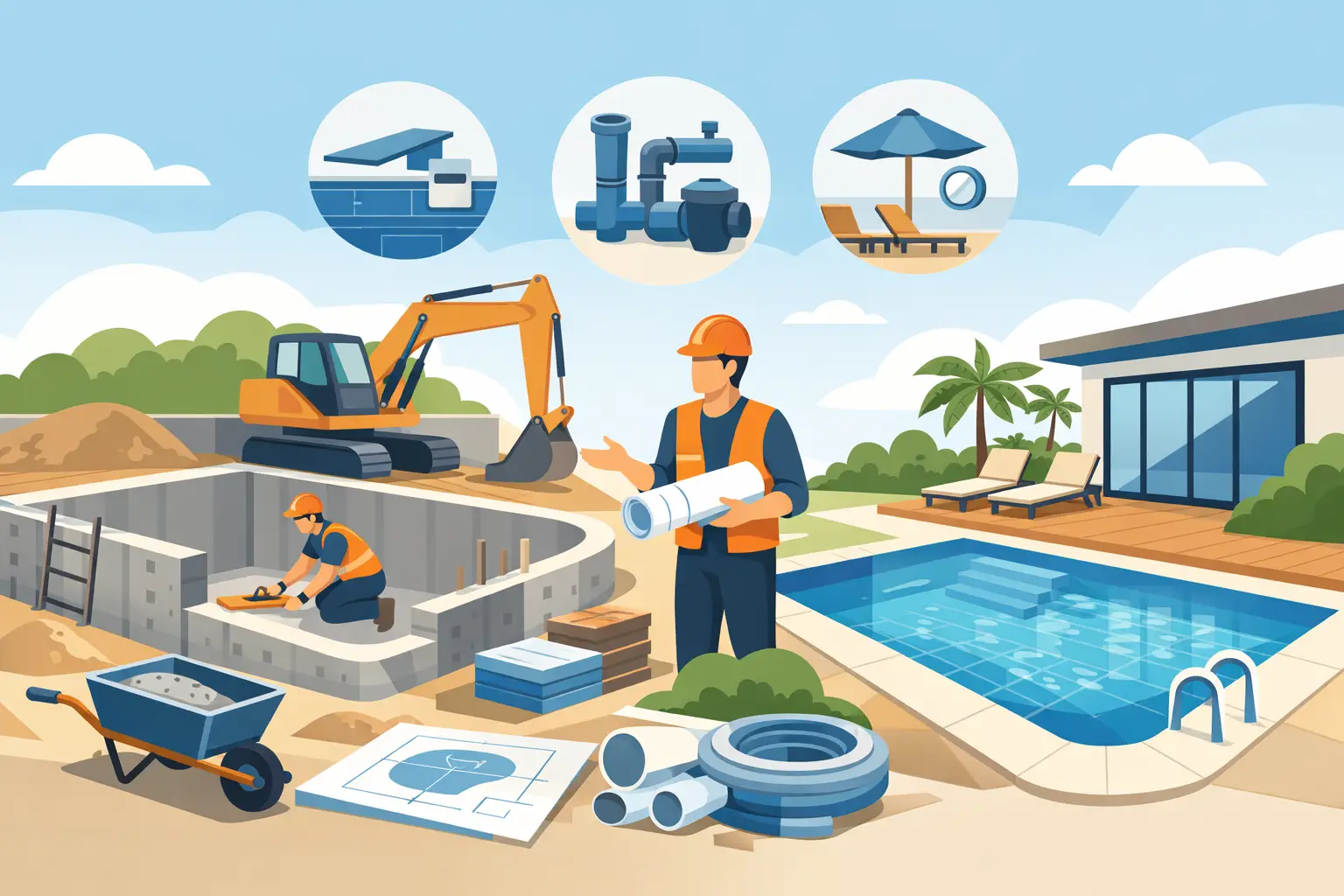
A custom pool is not one purchase or one crew showing up with an excavator. It is a coordinated construction project that shapes how your family relaxes, hosts, and spends time outdoors for years. So, what is included in pool construction? The right answer is a complete process: thoughtful design, site planning, structural work, plumbing, electrical systems, finishes, equipment, and the details that make the pool feel at home in your backyard.
For Katy and Houston-area homeowners, the exact scope depends on the pool design, site access, drainage conditions, city requirements, and the outdoor living features you want around it. A clear proposal should identify what is included, what is optional, and where allowances or upgrades may affect the final investment.
What Is Included in Pool Construction From Start to Finish?
A professionally managed pool build begins long before excavation and continues beyond the day water first fills the pool. Each phase affects the pool's appearance, safety, operating costs, and long-term durability.
Consultation, backyard planning, and custom design
The first stage is about turning the way you want to live outdoors into a buildable plan. A builder evaluates the backyard's dimensions, access points, grade, existing utilities, drainage patterns, and the placement of the home. This is where practical needs matter just as much as aesthetics. A family that wants shallow-water play may prioritize a tanning ledge and broad steps, while frequent entertainers may want a larger deck, swim-up seating, a fire feature, or an outdoor kitchen nearby.
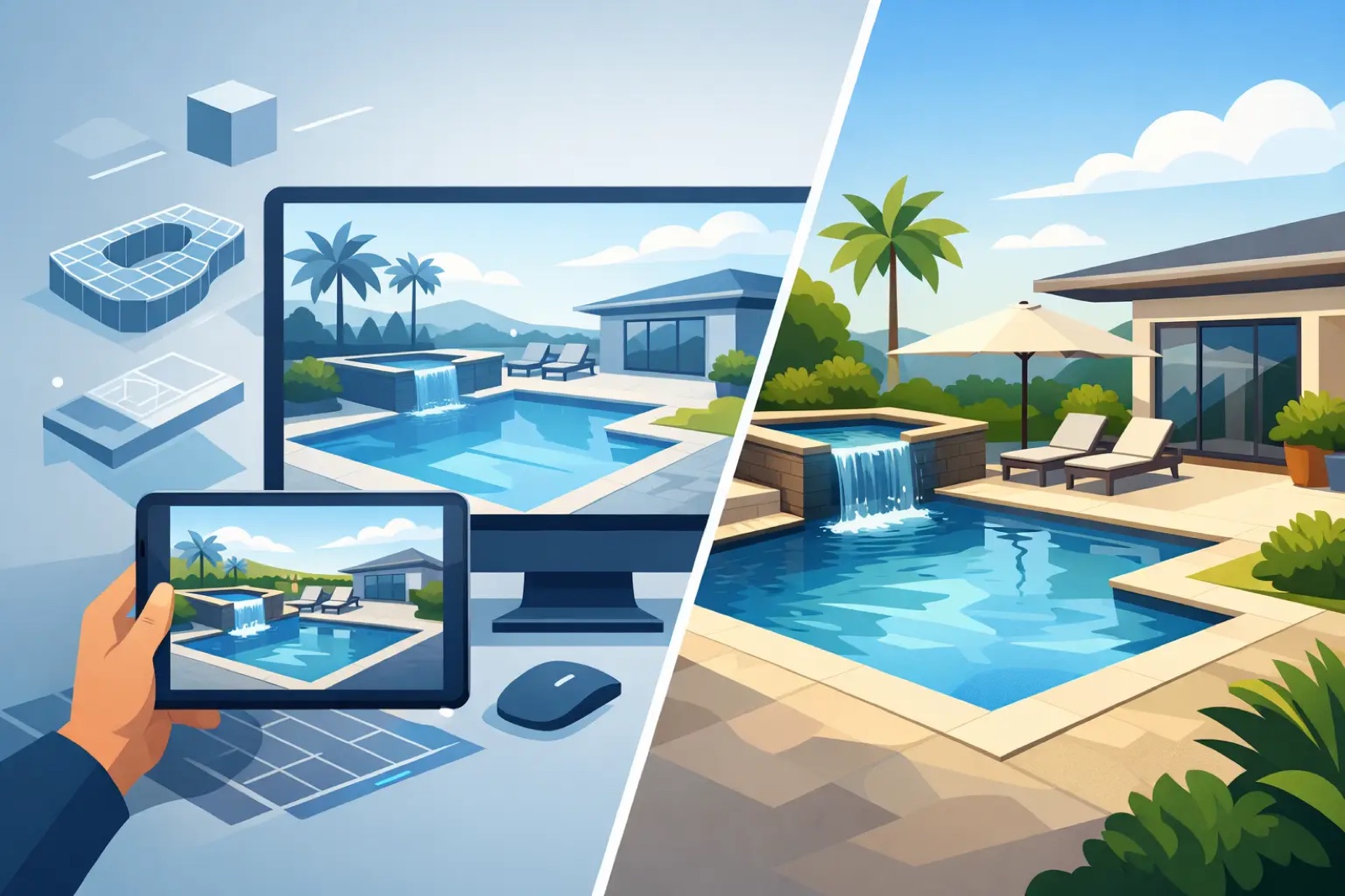
A custom design typically establishes the pool shape, depth profile, spa placement, entry points, water features, deck layout, and equipment location. At CHR Builder, free 3D design gives homeowners a way to see how the pool and surrounding spaces will relate to the house before construction begins. That visual planning can prevent costly changes later, especially when adding patios, shade structures, or cooking areas.
The proposal should also spell out materials and specifications. “Custom pool” can mean very different things depending on the size, finish, tile, coping, automation package, and included features. The more specific the plan, the easier it is to compare options fairly.
Engineering, permits, and approvals
Many pool projects require permits, inspections, and plan review through the applicable city, county, or local authority. Depending on the property, construction may also involve HOA review, setback requirements, easements, utility considerations, or drainage rules.
Structural engineering may be part of the process when conditions call for it. Houston-area clay soils, elevation changes, nearby structures, and unusual pool designs can all influence the structural plan. A qualified builder accounts for these realities instead of applying the same layout and construction method to every backyard.
Permit fees, engineering costs, HOA fees, and required surveys are not always bundled the same way. Ask early whether they are included in the contract price or listed separately. This is not a minor paperwork question - it is part of responsible project planning.
Layout, excavation, and site preparation
Once approvals are in place, crews mark the pool location and prepare the site. This phase often includes temporary access protection, removal of selected landscaping or hardscape, and excavation of the pool shell. Soil is hauled away or redistributed according to the site plan and local conditions.
Excavation is where hidden site conditions can become visible. Rock, unstable soil, unexpected utility lines, groundwater, and limited equipment access can change the work required. A detailed builder will explain how unforeseen conditions are handled before they become a surprise on the job.
Access deserves special attention in established neighborhoods. If machinery must pass through a side yard, fencing, gates, irrigation, landscaping, and existing concrete may need temporary removal or protection. Restoring areas outside the defined pool scope may be an added item, so homeowners should confirm that boundary before construction begins.
Steel, plumbing, electrical, and the pool shell
After excavation, the pool begins to take its permanent shape. Steel reinforcement is installed to form the structural framework. Properly placed rebar helps the shell withstand soil movement and the forces created by water pressure. This is one reason pool construction is more than a landscaping project.
Next comes the underground plumbing. Skimmers, main drains, returns, spa jets, water features, and cleaner lines are connected according to the design. Pressure testing is generally performed before the pipes are covered, helping verify the system before the next construction stages.
Electrical work supports lighting, pumps, automation, heaters, and code-required safety components. The equipment pad is planned for access and serviceability, not simply tucked into the closest available corner. A well-considered location can reduce noise near gathering areas while keeping the system easy to maintain.
The shell itself is commonly formed with pneumatically applied concrete, often called gunite or shotcrete. It creates the durable structural body of a custom concrete pool. This stage must cure properly before later finishes are installed. Rushing the schedule here is not a shortcut worth taking.
The Materials That Define the Finished Pool
Once the shell has cured, the visible details begin to transform the construction site into a designed outdoor space. These selections affect both style and maintenance.
Tile, coping, and interior finish
Waterline tile provides a clean transition between the pool finish and the surrounding edge. Coping caps the pool perimeter and can be selected in natural stone, porcelain, concrete, or other approved materials that fit the home's architecture. It should look refined, but it also needs to perform in intense Texas heat and changing weather.
The interior finish is the surface swimmers see and feel underwater. Options can range from plaster-based finishes to exposed aggregate materials in a wide range of colors. The choice influences water color, texture, durability, and budget. A light finish may produce a brighter blue appearance, while a deeper tone can create a more dramatic look. Neither is automatically better; the best fit depends on the design, sun exposure, and the homeowner's priorities.
Decking, drainage, and safety features
Pool construction frequently includes surrounding decking, but the amount and material should be defined. Concrete, pavers, travertine, porcelain, and other surfaces each have trade-offs involving appearance, heat retention, traction, maintenance, and cost.
Drainage is equally important. Decks should direct water away from the home and manage runoff appropriately. In the Houston area, where hard rain can arrive quickly, this planning protects the patio, foundation area, and finished landscape. A beautiful deck that holds water or drains toward the house is not a finished solution.
Code-compliant safety requirements may include barriers, self-closing or self-latching gates, door alarms, and approved drain covers. Requirements vary by jurisdiction and property condition. If fencing is existing, homeowners should ask whether it meets current standards or whether modifications are needed.
Equipment, automation, and water features
A complete pool system includes circulation and filtration equipment. Depending on the design, that may include a variable-speed pump, filter, heater or heat pump, sanitation system, valves, plumbing controls, and automation. The right equipment package is sized for the pool, spa, and water features rather than chosen solely by brand name or initial price.
Automation lets homeowners manage pump schedules, lighting, heating, and certain features from a wall control or mobile device. It is especially useful for a pool and spa combination, where temperature and circulation needs change throughout the week.
Features such as tanning ledges, bubblers, deck jets, sheer descents, scuppers, waterfalls, fire bowls, and LED lighting are typically optional design selections. They can elevate the experience, but they also affect plumbing, electrical capacity, equipment sizing, and the construction budget. Decide on them during design whenever possible. Adding a water feature after the shell and deck are complete is much more disruptive.
What May Not Be Included Without a Clear Scope
Homeowners should never assume every backyard element is part of a pool contract. Landscaping, sod, irrigation repair, fencing, pergolas, outdoor kitchens, furniture, utility upgrades, and removal of unexpected site obstacles may be separate from the base pool price.
That does not mean these elements should be left until later. The strongest projects are planned as one backyard environment. For example, installing a future outdoor kitchen may require gas, electrical, plumbing, drainage, or structural preparation before the deck is poured. Planning it early protects the finished space from unnecessary demolition later.
Before signing, request clear answers about allowances, change orders, equipment models, finish materials, deck square footage, drainage work, cleanup, start-up service, and warranty coverage. A lower initial quote can omit items that are necessary for a truly usable backyard. Value comes from a well-defined scope, sound construction, and a design that fits the way you live.
Startup, Orientation, and the First Weeks of Ownership
After the interior finish is applied and the pool is filled, the builder starts the equipment, checks operation, and explains the system. This is often called pool start-up. The first weeks are important because new finishes need balanced water chemistry and careful brushing or maintenance according to the selected material.
Your orientation should cover pump operation, filtration, heating, lighting, automation, basic water care, and any special requirements for the spa or water features. Ask who is responsible for start-up visits, how long they continue, and when routine maintenance becomes the homeowner's responsibility. Good handoff service turns a finished build into a pool you can use with confidence.
The best pool construction plan does more than list materials. It gives you a clear view of how design decisions, structural work, outdoor features, and long-term care fit together. When the scope is defined upfront, you can invest in a backyard that looks exceptional on day one and remains built for Texas livin long after the first swim.