A crack across a pool shell can turn a relaxing backyard into a real concern quickly. To repair pool structural cracks correctly, homeowners need more than a surface patch. The right solution starts with identifying why the crack formed, whether the structure is still moving, and how water is traveling behind the finish.
For Katy and Houston-area pools, expansive clay soil, heavy rain, drought cycles, drainage issues, and aging construction can all contribute to structural movement. A repair that only makes the crack disappear cosmetically may fail again if the underlying cause is left untouched.
Not Every Pool Crack Is Structural
Small cracks in plaster are common as a pool ages. These are often called craze cracks or checking, and they may be limited to the finish layer. While they can affect appearance and eventually allow staining or deterioration, they do not always mean the concrete shell itself has failed.
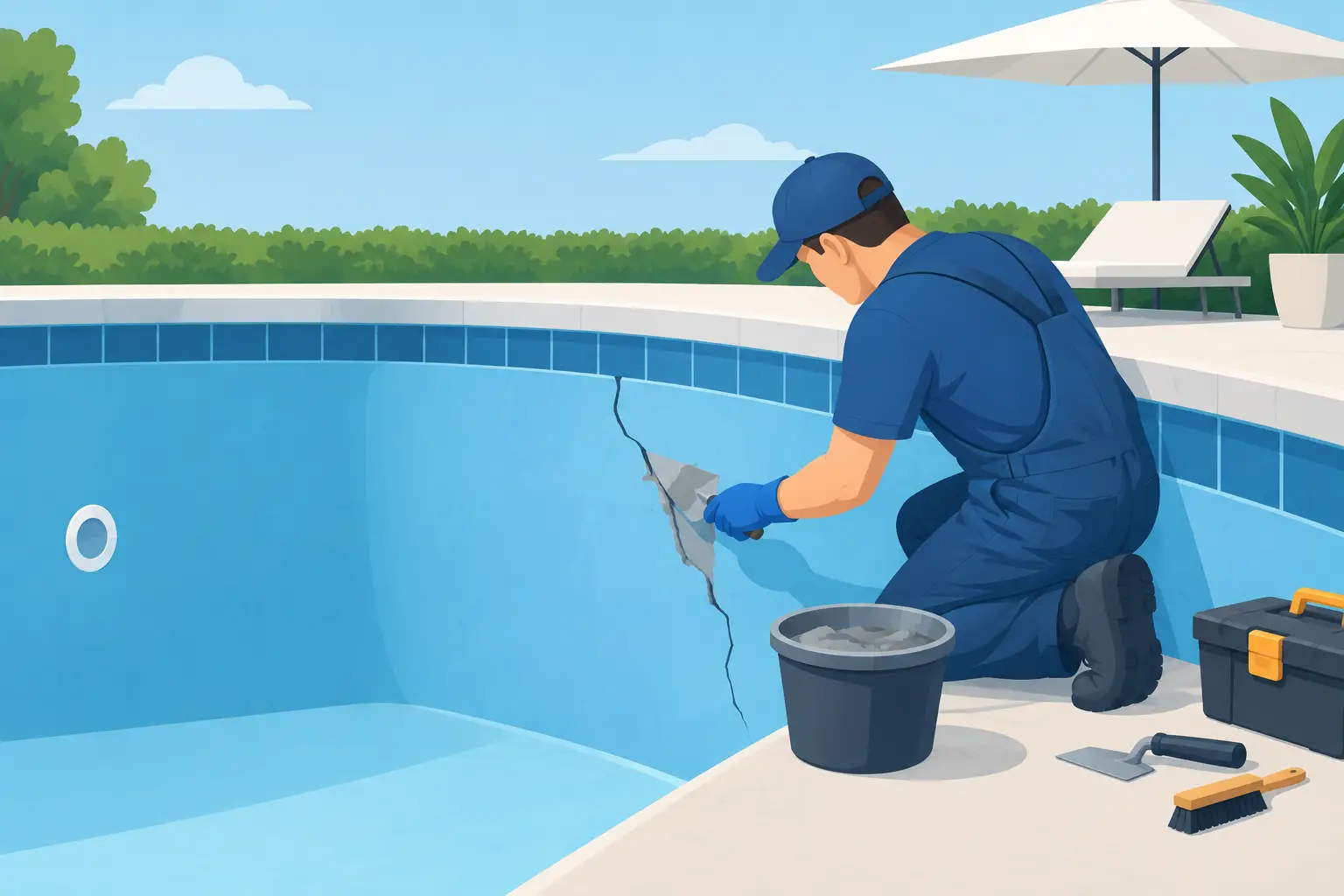
Structural cracks are different. They extend into the gunite or shotcrete shell and can create a path for water loss. They may appear as a continuous line through plaster and tile, run from the coping toward the pool floor, or show up alongside deck settlement and changes in the surrounding landscape.
The most useful question is not simply, “Is there a crack?” It is, “What is moving, and is it still moving?” A professional assessment should examine the crack pattern, the pool’s age, water-loss history, soil conditions, plumbing, drainage, and any recent work around the pool.
Signs Your Pool Needs More Than a Cosmetic Patch
A visible crack deserves attention, but certain symptoms raise the urgency. Watch for a water level that drops faster than normal evaporation, loose or separated tile, cracking that returns after previous repairs, deck sections pulling away from the coping, or a crack that grows longer or wider over time.
Also pay attention to where the crack is located. A crack near a skimmer, return line, light niche, spa wall, raised beam, or water feature can involve more than the shell. Water may be escaping through a fitting or plumbing penetration, making a leak test and pressure test part of the investigation.
Houston’s climate can make these issues harder to read. Summer evaporation is real, especially during hot, windy periods, but a pool that repeatedly needs significant refilling may have a leak. That added water loss can wash out supporting soil, worsen settlement, and increase repair costs if it is ignored.
Why Texas Soil and Drainage Matter
Many homes across the Houston region sit on clay-rich soils that expand when saturated and shrink during dry stretches. That seasonal movement places stress on decks, patios, pool plumbing, and concrete shells. A well-built pool is designed to perform in local conditions, but even a quality structure can be affected by poor drainage, major landscaping changes, nearby excavation, or a long-term leak.
Water should move away from the pool area without collecting against the deck or behind raised walls. Downspouts, yard grading, irrigation overspray, and overflowing planters can all direct water where it does not belong. On the other hand, severely dry soil around a pool can also contribute to movement.
This is why structural repair is rarely just a crack-filling service. The strongest long-term plan may include shell repair, plumbing repair, drainage corrections, deck work, coping replacement, and a new interior finish. The scope depends on the actual source of the problem, not just what is easiest to see.
How to Repair Pool Structural Cracks the Right Way
A durable repair follows a sequence. Skipping steps may lower the initial price, but it can leave the homeowner paying twice when the same crack reopens.
Start With a Thorough Evaluation
The pool should be inspected before anyone recommends a material or price. A contractor may document crack width and direction, perform leak detection, pressure-test plumbing lines, inspect the equipment pad, and evaluate coping, decking, and nearby drainage. In more complex cases, an engineer may be appropriate, particularly when there is major settlement, wall displacement, or concern about surrounding structures.
This evaluation separates a stable crack from an active one. A stable crack can often be repaired with proven concrete restoration methods. An actively moving crack may require a different approach, along with work to address the forces causing movement.
Expose Sound Concrete
Repairing only the top of a crack is not enough. The damaged area is typically opened and prepared so weak material, loose plaster, and debris can be removed. The repair zone must reach sound concrete and provide a clean, solid surface for bonding.
Depending on the crack and shell condition, the contractor may use structural epoxy injection, specialty repair mortars, hydraulic cement, carbon fiber reinforcement, or other engineered methods. There is no one product that solves every pool crack. The right material depends on whether the crack is dry, actively leaking, accessible, stable, and located in a high-stress part of the pool.
Repair Leaks and Reinforce Where Needed
If the crack has allowed water through the shell, the repair needs to stop the water path before the finish is restored. Where a crack affects a plumbing penetration or fitting, the plumbing issue must be corrected as part of the project.
Some pools benefit from added reinforcement across a repaired area. That decision should be based on the pool’s construction, crack location, and the level of movement observed. Reinforcement can improve performance, but it is not a substitute for solving drainage, soil, or leak conditions around the pool.
Restore the Interior Finish
Once structural repairs have cured and been tested, the pool finish can be restored. A small, isolated repair may be blended into an existing finish, though color and texture differences are possible. If the plaster is already stained, etched, delaminating, or near the end of its service life, resurfacing the full interior often creates a cleaner and more valuable result.
This is also an opportunity to update waterline tile, coping, lighting, or surrounding deck materials. When planned well, a structural repair can become part of a thoughtful pool renovation instead of a temporary disruption to the backyard.
What Homeowners Should Not Do
Do not rely on a quick caulk, paint, or plaster-only patch for a suspected structural crack. These products may temporarily hide the line, but they do not establish whether water is moving through the shell or why the crack formed. They can also make later diagnosis more difficult.
Avoid draining a pool without professional direction. In parts of Southeast Texas, groundwater conditions can create hydrostatic pressure beneath an empty pool. Improper draining can damage the pool shell or create serious safety concerns. A pool professional should determine whether draining is necessary and manage the process correctly.
It is also wise not to assume a warranty or insurance claim automatically applies. Coverage depends on the policy, the pool’s age, the cause of damage, prior repairs, and documentation. Clear photos, water-loss records, and a professional inspection can help homeowners make better decisions.
Choosing a Contractor for Structural Pool Repairs
Structural pool work requires construction knowledge, not just pool cleaning or surface refinishing experience. Ask how the contractor will determine the source of the crack, whether plumbing and leak testing are included, what repair system is proposed, and how drainage or movement concerns will be addressed.
Look for a licensed and insured team with experience in both pool construction and remodeling. You want a contractor who can explain the trade-offs clearly. For example, an isolated stable crack may justify a focused repair, while repeated cracking across multiple areas may make a larger restoration the smarter investment.
CHR Builder brings more than 25 years of construction-led experience to custom pools and backyard renovations throughout Katy, Houston, and nearby communities. A detailed evaluation and clear scope give homeowners a practical path forward, whether the project calls for targeted repair or a complete pool restoration.
A crack does not automatically mean your pool is beyond repair. But waiting until water loss, soil movement, or finish failure spreads can make a manageable project far more involved. Address the cause early, protect the structure, and keep your backyard built for Texas livin for years to come.