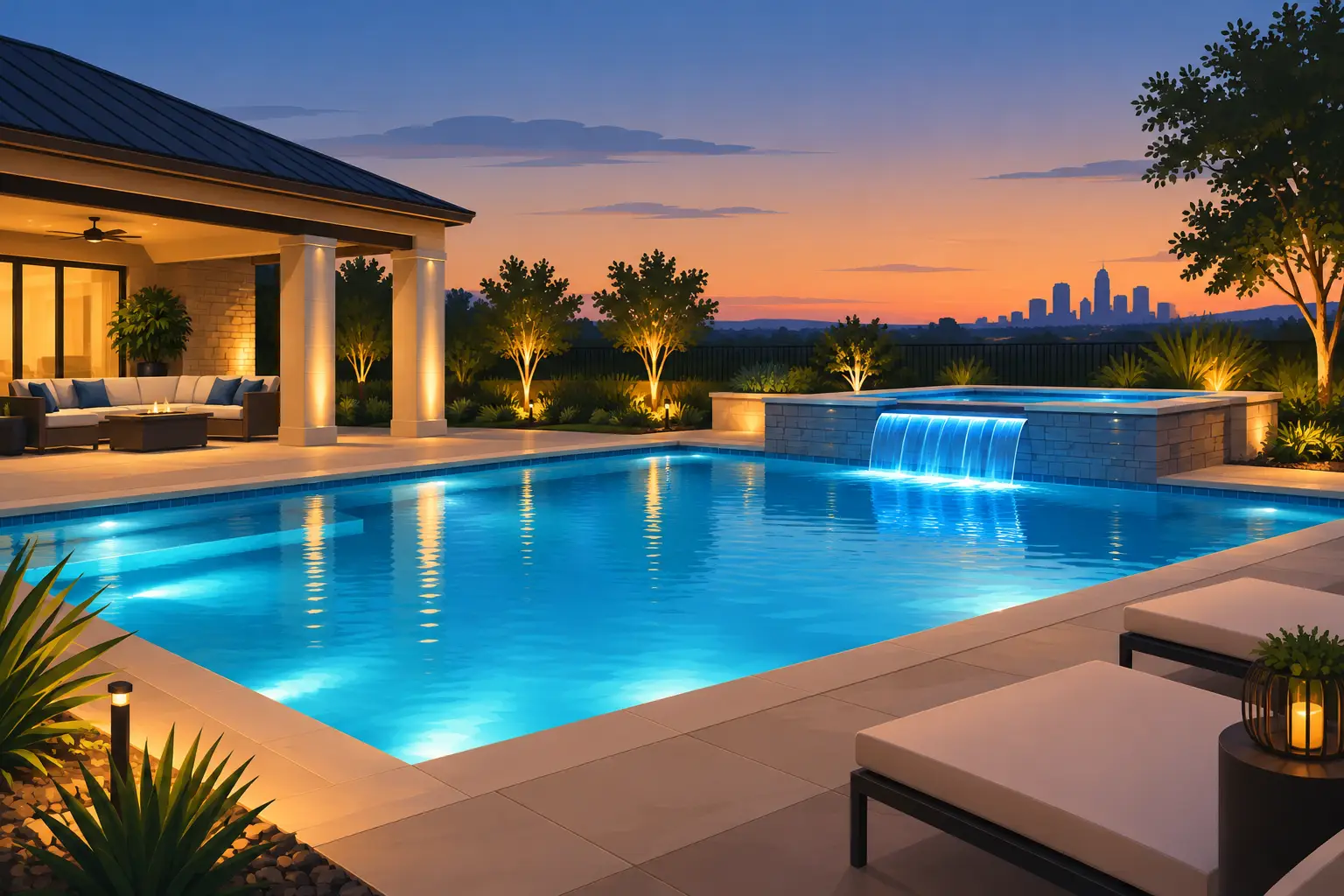
A custom pool can look impressive in the afternoon and become the centerpiece of the property after sunset. The right luxury pool lighting ideas do more than make the water visible. They shape the mood of an outdoor dinner, improve safety around wet surfaces, highlight architectural details, and make a Houston-area backyard feel designed rather than simply illuminated.
For Katy and Houston homeowners, lighting also has to work hard. It needs to stand up to long summers, humidity, active family use, and the occasional backyard gathering that stretches well past dark. A luxury result comes from a complete lighting plan - not from adding a few bright fixtures at the end of construction.
Start With a Layered Lighting Plan
The strongest pool lighting designs use layers. Pool lights provide the foundation, but they should work alongside lighting for the patio, landscape, water features, outdoor kitchen, and paths. When every element has the same intensity, the yard can feel flat or overly bright. When each layer is planned for a purpose, the space gains depth.
Begin with the view from inside the home. Many homeowners spend as much time looking at the pool through rear windows as they do swimming in it. Underwater lighting should reveal the pool’s shape and water movement without shining directly into the house. From there, consider where guests will walk, sit, cook, and gather.
A professional design also accounts for what should remain dark. A mature tree canopy, a property line, or a quiet seating corner may need only a soft wash of light, if any. Darkness creates contrast, and contrast is what makes illuminated water features and clean pool lines stand out.
Use LED Pool Lights to Define the Water
LED pool lights are the starting point for most premium projects because they offer efficient operation, long service life, and flexible color control. White LED lighting remains a classic choice for homeowners who want water to look clean, calm, and upscale every night. It pairs well with modern tile, natural stone coping, and traditional Texas limestone.
Color-changing LEDs add another dimension. They can shift a family swim night into a celebration setting with blues, greens, purples, or programmed color shows. The trade-off is restraint. A pool cycling through every color may feel exciting for a party, but it can distract from a refined backyard design on an ordinary evening.
For most luxury pools, white should be the everyday setting, with color available when the occasion calls for it. Controls that let homeowners manage zones and scenes from a wall panel or mobile device make this much more practical. You may want a relaxed dinner setting, a brighter swim setting, and an event setting without adjusting individual fixtures each time.
Place Fixtures for Even Light, Not Maximum Brightness
Fixture placement matters as much as fixture selection. Lights should be positioned to carry illumination across the water while minimizing glare from the main viewing areas. On a freeform pool, that often means following curves and illuminating deeper sections thoughtfully. On geometric pools, fixture placement can reinforce symmetry and crisp lines.
Spa lighting deserves its own attention. A softly lit spa becomes a destination after dark, especially when it is visually separated from the main pool by a raised wall, spillway, or contrasting tile. A bright light aimed toward the patio, however, can make a relaxing spa feel exposed. The goal is inviting water, not a spotlight.
Make Water Features Glow
Water features offer some of the best opportunities for high-impact lighting. Sheer descents, scuppers, bubblers, deck jets, waterfalls, and raised spa spillways all become more dramatic when lit correctly. Instead of lighting only the pool basin, illuminate the moving water or the wall behind it so the feature has definition.
A raised feature wall finished in stone can be washed with warm, low-level light to show its texture. Scuppers can be accented from below or behind, making each water stream visible against the wall. Bubblers in a tanning ledge create a lively effect that children enjoy and adults appreciate during evening entertaining.
It depends on the feature. A broad waterfall may need a subtle grazing light to bring out the stone, while a clean modern sheer descent often looks best with a concealed linear light that emphasizes the uninterrupted sheet of water. Too many competing colors or overly bright fixtures can turn a beautiful feature into visual clutter.
Light the Tanning Ledge and Steps for Safety
Luxury should always include practical safety. Tanning ledges, steps, benches, and transitions between deck elevations need clear but comfortable illumination. These areas are where people enter and exit the pool, set down drinks, supervise children, and move between the water and patio.
Integrated pool lighting helps define steps and benches beneath the surface. On the deck, low-voltage path lights, recessed step lights, or carefully aimed landscape fixtures can guide movement without casting harsh shadows. Avoid relying on a single floodlight near the back door. It may brighten the immediate area, but it will create glare and leave other portions of the backyard feeling disconnected.
For homeowners remodeling an older pool, improving step visibility is often one of the most valuable upgrades. It improves nighttime usability while giving the entire pool a more current appearance.
Add Warm Light Around Patios and Outdoor Kitchens
The water may be the visual focal point, but the patio is where Texas livin happens. Warm-white lighting around a covered patio, lounge area, dining table, or outdoor kitchen makes the backyard more usable throughout the year. The best designs balance task lighting with ambience.
An outdoor kitchen needs enough light for food prep and grilling, particularly around counters and cooking surfaces. Recessed ceiling lights, under-counter lighting, and focused fixtures can provide function without making the seating area feel commercial. A dining zone benefits from softer overhead lighting, while a fire feature may need very little supplemental light to retain its natural atmosphere.
Consider color temperature carefully. Warm light generally complements travertine, limestone, wood details, and traditional outdoor furnishings. Cooler light can support a more contemporary look with sleek porcelain, polished concrete, and geometric pool forms. Mixing drastically different light temperatures is a common design mistake because the materials can suddenly appear mismatched at night.
Highlight Landscaping Without Overlighting It
Well-placed landscape lighting frames the pool and gives the yard a sense of scale. Uplighting a specimen palm, washing a hedge with soft light, or illuminating ornamental grasses can create a private resort feel. It also helps the pool look connected to the broader property instead of sitting in a dark void.
Less is usually more. One dramatic tree can be more effective than lighting every trunk around the fence line. Fixtures should be shielded and aimed away from neighboring homes, bedroom windows, and seating areas. In closely spaced Katy and Houston neighborhoods, this is both a courtesy and a design consideration.
Low-voltage LED landscape systems are a dependable choice for energy efficiency and control. They can be zoned separately from pool lights, allowing the landscape to remain softly illuminated after the pool is turned off for the night.
Plan Lighting Before Construction Begins
The best time to make decisions about luxury pool lighting is during the design phase. Conduit routes, fixture locations, control equipment, electrical capacity, and future outdoor living features all need coordination before concrete is poured and finishes are installed. Trying to add everything later can limit options and increase the cost of a clean installation.
This is especially true when a project includes an outdoor kitchen, patio cover, fire feature, landscaping, or a future expansion. A thoughtful plan can include provisions for additional fixtures and controls, even if every feature is not installed on day one. That protects flexibility without compromising the finished appearance.
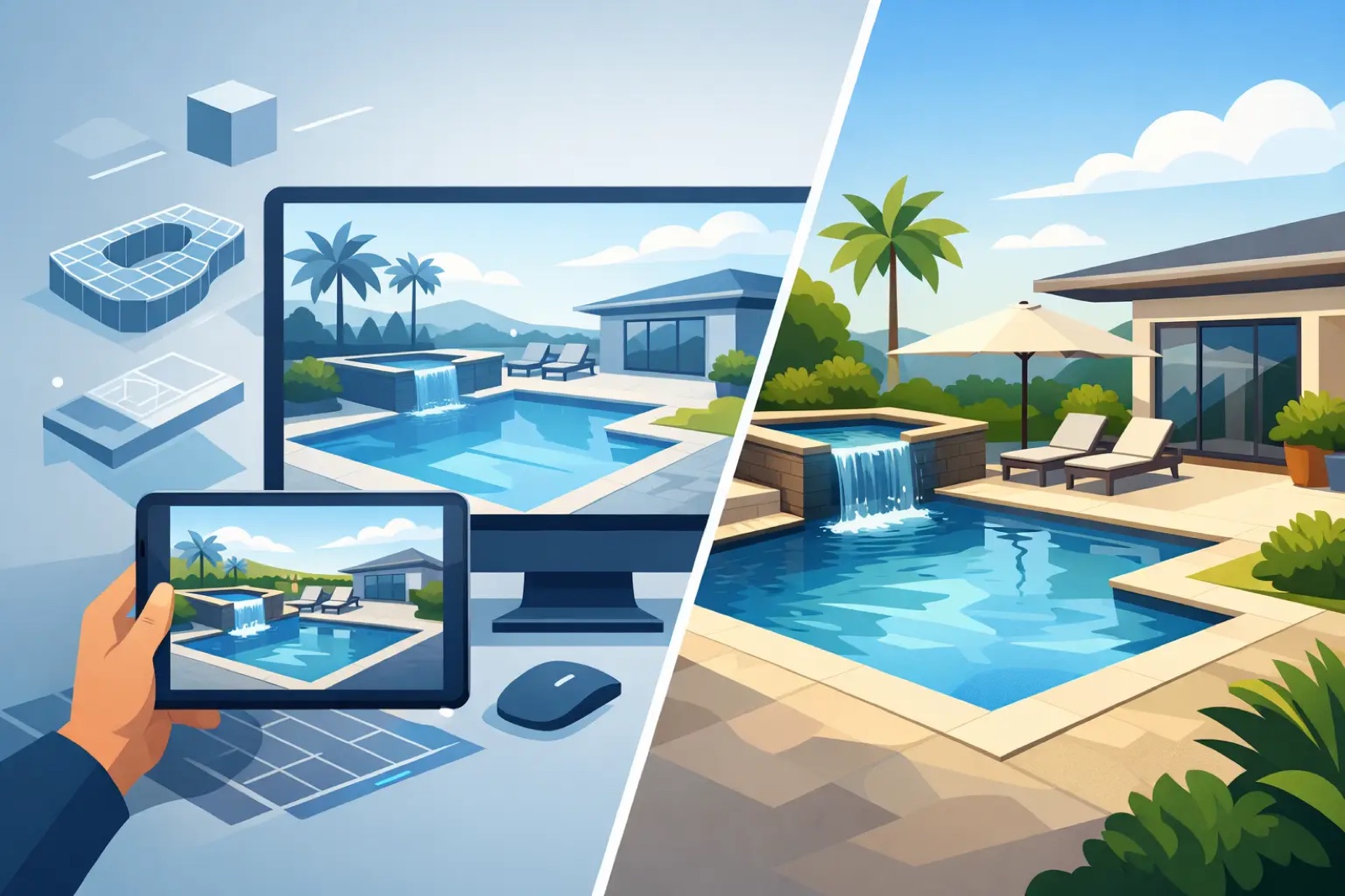
At CHR Builder, a free 3D pool design can help homeowners see how lighting, water features, decking, and outdoor living areas will work together before construction starts. With more than 25 years of construction experience behind the planning process, the focus stays on both visual impact and the structural details that support long-term performance.
Choose Controls That Fit How You Live
A lighting system should be easy enough to use that it becomes part of everyday life. Scene-based controls are particularly useful for custom backyards. One setting can illuminate the pool, spa, paths, and kitchen for entertaining. Another can reduce the system to quiet pool and landscape lighting for a weeknight view from indoors.
Automation offers convenience, but it should not replace good design. The most sophisticated controller cannot fix poorly placed fixtures, excessive brightness, or a plan that ignores the way your family uses the backyard. Start with the right lighting layers, then select controls that make those layers simple to enjoy.
A well-lit pool should make people want to stay outside a little longer. Plan it with the same care as the pool itself, and your backyard will feel as inviting at 9 p.m. as it does at noon.