Choosing a pool finish is one of the decisions homeowners think the least about and end up caring the most about later. It affects the color of your water, the feel under your feet, how often you need to replaster, and how much time you spend fighting calcium stains. In Texas, these factors matter more than in most other parts of the country because of hard water, intense sun, and extreme temperature swings.
Here is an honest breakdown of the main finish options and how they hold up in this climate.
What Texas Pools Are Up Against
Before we get into the finishes themselves, it helps to understand what they are dealing with. Texas pool water is notoriously hard, meaning it carries high mineral content. That mineral content, mostly calcium, deposits on your pool finish over time and causes the chalky white buildup you see on the waterline and on rougher surfaces.
Add in long, hot summers where the water temperature pushes into the 90s and the chemical balance shifts constantly, plus UV exposure that fades and degrades softer finishes faster, and you have a tough environment for any pool surface. The finish you choose needs to handle all of that while still looking good.
White Plaster
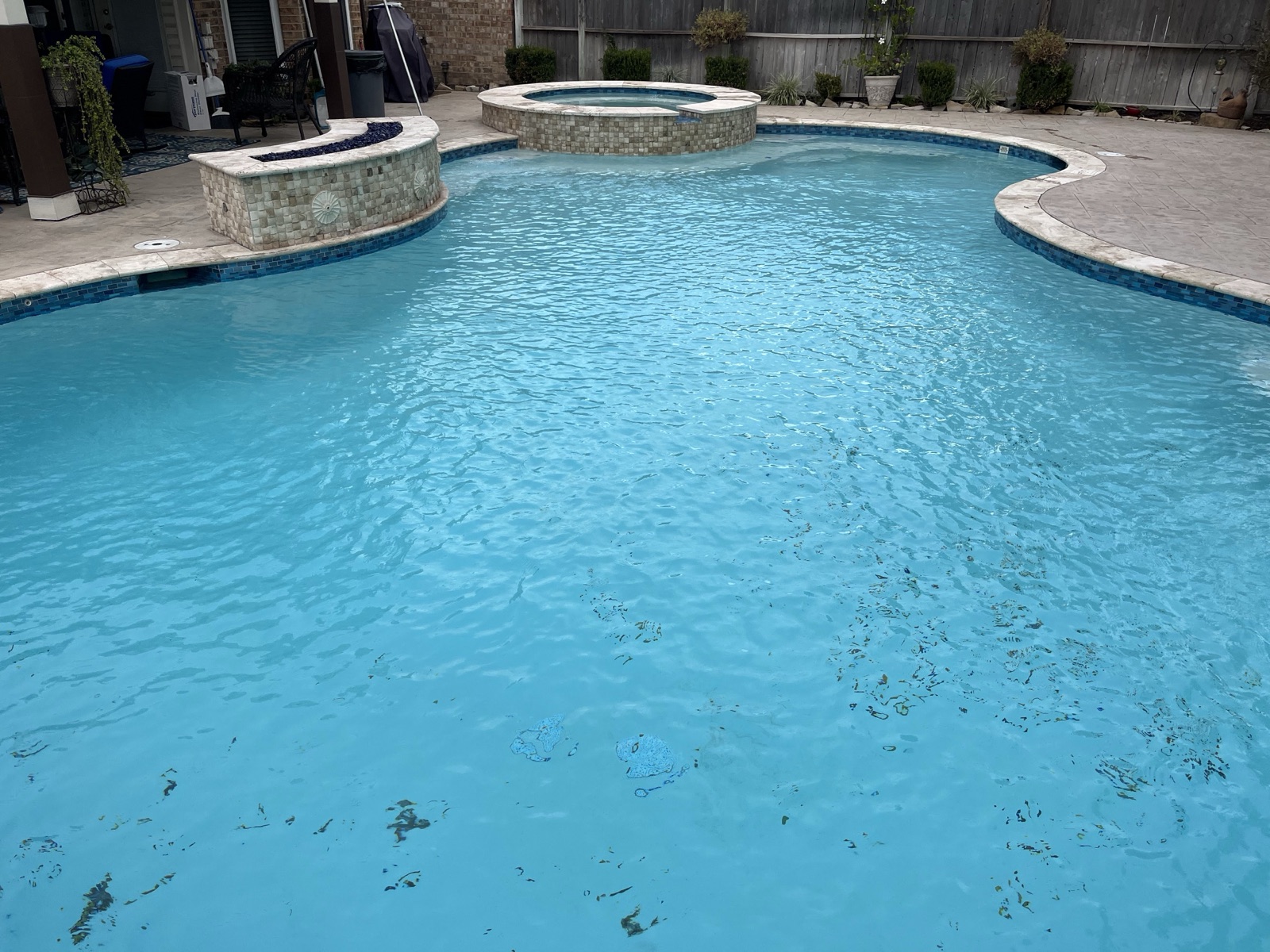
White plaster is the traditional pool finish and the least expensive option. It is a mixture of white cement and marble dust applied over the gunite shell. It gives you that classic bright blue-green water color and a smooth surface underfoot.
The downside in Texas is that white plaster is the most vulnerable to staining and etching. Hard water calcium deposits show up more visibly on white surfaces, and the finish is more porous, which means it absorbs stains from algae, iron, and copper more easily. You can expect to replaster a white plaster pool every 8 to 12 years with proper maintenance, and possibly sooner if your water chemistry is not kept tight.
White plaster still makes sense for homeowners on a tight budget who understand the maintenance commitment. Just go in with realistic expectations about what it takes to keep it looking good.
Quartz Finishes
Quartz finishes blend white cement with crushed quartz aggregate. The quartz particles make the surface harder, smoother, and more resistant to chemical etching and calcium buildup than plain plaster. You also get a wider range of colors, from whites and grays to blues and greens.
This is what we often describe as the sweet spot for Texas homeowners. It costs more than white plaster, typically in the range of $2,000 to $5,000 more depending on pool size, but it lasts significantly longer. You can expect a quartz finish to hold up well for 12 to 18 years with reasonable maintenance.
The color options with quartz also let you influence the water's appearance. A mid-range blue quartz creates a deep, rich blue-green water color that most homeowners find more visually appealing than the bright turquoise of white plaster.
Pebble Finishes
Pebble finishes, including brands like StoneScape and QuartzScape, embed small natural pebbles into the plaster mix. The exposed aggregate surface is the most durable option available and holds up extremely well in Texas hard water. Calcium deposits are less visible on the textured surface, and the finish itself is far more resistant to etching and staining than smoother options.
The tradeoff is texture. Pebble surfaces can be rough on bare feet, especially on the steps, the tanning ledge, and any areas where you stand or sit. Some manufacturers offer smoother pebble blends, but even the smoothest pebble finish is rougher than quartz. If you have kids who are hard on pool surfaces or you spend a lot of time on the steps, this is something to consider carefully.
Pebble finishes typically last 15 to 25 years, making them the longest-lasting option. The upfront cost is the highest of the three, but the long lifespan and low maintenance requirements make the math work out well over time.
Polished Aggregate
Polished aggregate takes the same exposed stone or quartz aggregate used in pebble finishes and grinds the surface smooth after it cures. The result is a finish that looks closer to polished stone than traditional pool plaster, with the durability of an exposed aggregate surface but without the rough, textured feel underfoot.
This is the premium option in terms of both appearance and cost. It is a good fit for homeowners who want the long-term performance of a pebble finish but prefer the smoother, more refined look and feel. The polishing process adds labor and cost to the application, so it sits at the top of the price range, but for a pool meant to be a centerpiece of the backyard, the look is hard to match with the other options.
Matching Your Finish to Your Design
The finish you choose should coordinate with your tile, coping, and deck. A dark charcoal pebble finish looks stunning with travertine coping and matching glass tile at the waterline. A lighter quartz finish might pair better with a lighter deck material and simpler tile.
This is worth thinking through before you commit. The finish is what gives your pool its water color, and that color should complement the rest of the materials in your backyard. Bring photos of pool finishes you like to your consultation so we can match them to what you are trying to achieve.
A Word on Water Chemistry
No finish, regardless of quality, will hold up well under poor water chemistry. Calcium buildup accelerates when pH runs high. Acid etching happens when pH runs low. Both damage pool finishes prematurely and void most manufacturer warranties.
If you are investing in a premium finish, invest equally in a quality automation system that monitors and doses your pool automatically, or commit to a reliable weekly service. The finish is only as good as the maintenance program behind it.
Ready to Talk to an Expert?
If you have questions about which pool finish is right for your project and climate, our owner is happy to talk through it on a free 15-minute call. No obligation, no sales pressure. Just a straight conversation with the person who will build your pool.
Call us at (346) 481-3835 or book your free call at chrbuilder.com.