A pool that needs water added every few days is more than an inconvenience. In Houston-area backyards, persistent water loss can lead to higher utility bills, chemical imbalance, soil movement, and damage around the deck or equipment pad. A professional pool leak repair process identifies the true source before repairs begin, protecting the long-term value of your pool and outdoor living space.
When Water Loss Is More Than Evaporation
Texas heat can make normal evaporation seem dramatic, especially during a long stretch of hot, dry weather. Most pools will lose some water naturally, and splash-out from kids, pets, and pool parties adds to it. But if the water level is dropping noticeably every day, if you see damp areas near the pool, or if your chemical use has increased without a clear reason, a leak should be considered.
A simple bucket test can help separate evaporation from a potential leak. Fill a bucket with pool water, place it on a pool step so the water inside and outside the bucket sit at similar levels, then mark both water lines. After 24 hours with the pump off, compare the loss. If the pool water drops more than the water in the bucket, further inspection is warranted.
The Pool Leak Repair Process: Diagnosis Before Repair
The right repair starts with accurate detection. Sealing a visible crack or replacing a fitting without locating the actual leak can waste time and money, especially when the water loss originates in underground plumbing or a hidden structural detail.
1. Inspect the pool shell, fittings, and equipment
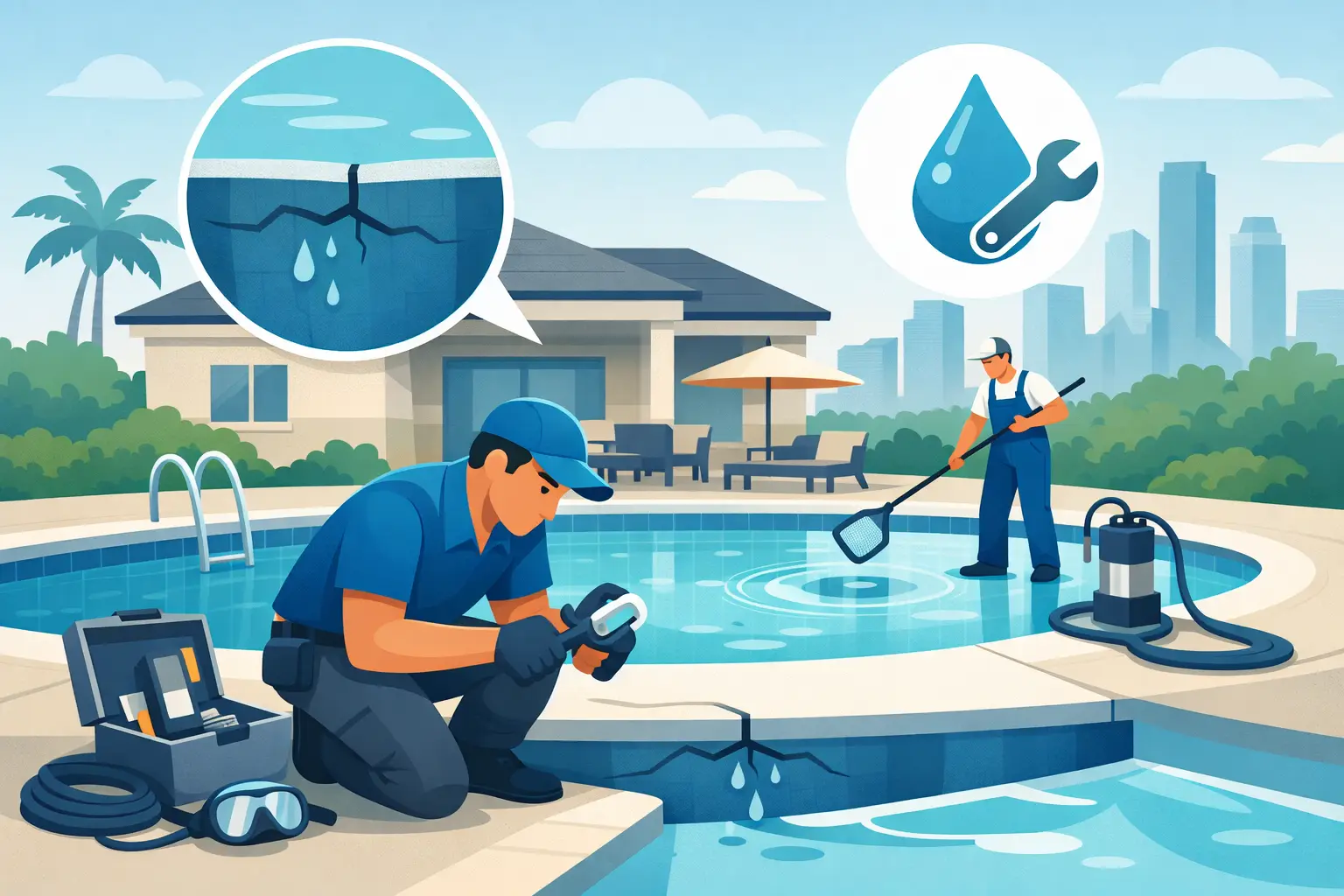
A technician begins with a visual inspection of the pool interior, tile line, skimmers, returns, lights, drains, and expansion joints. They also inspect the pump, filter, heater, valves, plumbing connections, and equipment pad for drips or pressure-related issues.
In plaster or pebble-finish pools, small cracks, hollow spots, deteriorated sealant, or worn fittings may allow water to escape. In some cases, the problem is as straightforward as a failed skimmer throat or a leaking light niche. In others, the visible signs only point toward a more involved plumbing test.
2. Test whether the leak changes with the pump on or off
The operating condition of the pool provides useful clues. Water loss that becomes worse while the pump runs may indicate a pressure-side plumbing leak, often in a return line after the pump. Loss that continues or increases with the pump off can point to a suction-side line, the pool shell, or a fitting below the waterline.
This is not a final diagnosis, but it helps narrow the search and keeps the repair process focused.
3. Pressure-test plumbing lines and isolate the source
When underground plumbing is suspected, individual lines may be isolated and pressure-tested. This helps determine whether a skimmer line, main drain line, return line, spa line, or water feature line is holding pressure as it should.
Advanced leak detection may also involve electronic listening equipment, dye testing around suspected cracks and fittings, or targeted testing at penetrations in the pool shell. The goal is to locate the leak precisely enough to avoid unnecessary demolition of decking, landscaping, or finished outdoor features.
4. Choose a repair that matches the failure
A lasting repair depends on what failed. A worn gasket, cracked fitting, damaged pipe, deteriorated expansion joint, or structural crack each requires a different approach. Minor surface repairs may be completed without disturbing surrounding areas. Underground plumbing repairs may require carefully opening a small section of deck or landscape to access and replace the damaged section.
For older pools, the leak investigation can also reveal larger restoration needs. If plaster is failing, tile is loose, or the deck has shifted, addressing the leak as part of a planned pool remodel may provide a better long-term result than making isolated repairs year after year.
5. Verify the repair before restoring the area
After repairs are completed, the affected line or component should be retested. The pool water level is monitored, equipment is run, and any opened deck or landscape area is restored only after the repair is confirmed. Verification matters because a pool can have more than one source of water loss, particularly in aging systems.
Why Fast Leak Repair Protects Your Backyard Investment
A leak does not always stay small. Escaping water can wash out soil around the pool, contribute to deck settling, and place stress on nearby hardscape. In expansive Texas clay soils, moisture changes around a structure deserve attention. The longer a leak continues, the greater the chance that a straightforward repair becomes a larger restoration project.
Prompt action also protects water quality. A leaking pool needs more frequent refilling, which dilutes chemicals and can make balancing more difficult. That means more maintenance, more chemical expense, and less time enjoying the pool.
What to Do Before Scheduling Service
Avoid draining the pool unless a qualified professional specifically recommends it. Water helps support the pool structure, and draining can create serious risks in certain conditions. Instead, document how quickly the water level drops, note whether the loss changes when the equipment runs, and take photos of wet areas, cracks, or visible drips.
For homeowners in Katy, Houston, and surrounding communities, a precise diagnosis is the best first step toward a repair that lasts. CHR Builder brings construction-led pool expertise to the details that protect your pool, patio, and the backyard built for Texas livin.