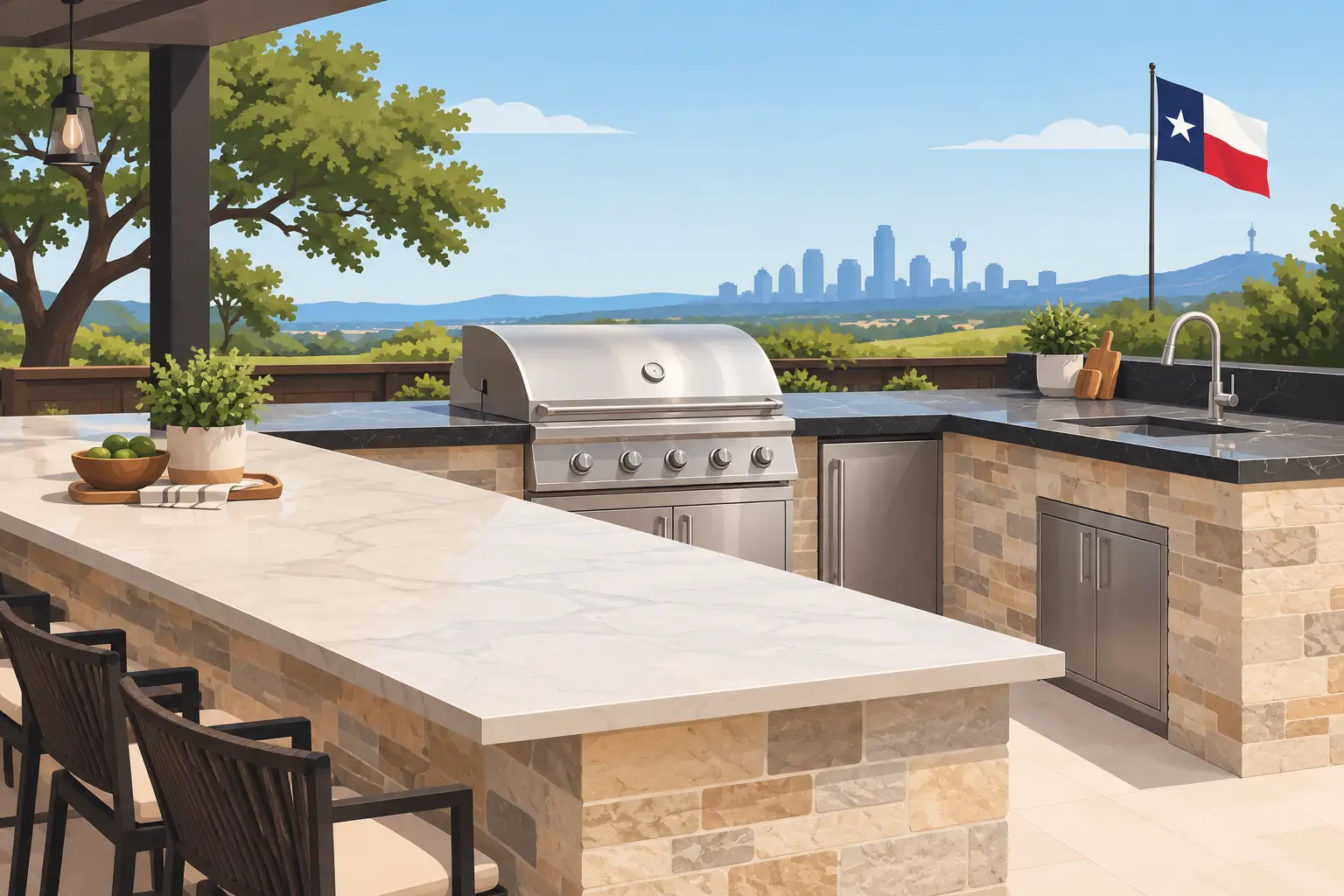
A beautiful outdoor kitchen can lose its appeal fast when the countertop fades, stains, cracks, or becomes too hot to use. The best outdoor kitchen countertops for Houston-area homes need to handle more than weekend cookouts. They must stand up to direct Texas sun, sudden downpours, humidity, pool splashes, grease, and the steady use that comes with a backyard built for gathering.
For most custom outdoor kitchens, the right surface is not simply the one with the best showroom appearance. It is the material that fits your cooking habits, maintenance expectations, design style, and the way your patio connects to the pool and home. A polished surface that looks perfect indoors may not perform well in an uncovered Katy backyard. On the other hand, a material chosen specifically for outdoor conditions can stay attractive and functional for years.
What the Best Outdoor Kitchen Countertops Must Handle
Houston-area weather makes material selection a construction decision, not just a design decision. Summer heat can make darker surfaces uncomfortable to touch in full sun. Heavy rain tests drainage and sealing. Humidity encourages mildew in grout lines and neglected seams. Chlorinated pool water, barbecue grease, citrus, wine, and cleaning products can all leave their mark on the wrong countertop.
A quality countertop also needs a solid base. Large spans around a grill, sink, refrigerator, or bar seating require proper support and careful cutouts. Natural stone and porcelain are durable, but neither can compensate for inadequate framing, shifting foundations, or an outdoor kitchen island that was not built for the load.
When planning a complete backyard project, countertop selection should happen alongside the layout, shade strategy, appliance plan, and pool design. This creates cleaner transitions, better work zones, and a finished space that feels intentional rather than added on later.
Granite: A Proven Choice for Outdoor Kitchens
Granite remains one of the best choices for outdoor kitchen countertops because it offers natural beauty, strong heat resistance, and reliable outdoor durability when it is properly selected and sealed. It works especially well for homeowners who want a substantial, upscale look that complements stone coping, pavers, travertine, or a custom pool surround.
Not every granite slab performs the same. Denser stones with lower porosity generally require less maintenance and resist staining better than softer, more porous selections. A leathered or honed finish can be more forgiving than a highly polished finish because it helps conceal fingerprints, water spots, and minor wear.
Granite does require periodic sealing. The schedule depends on the specific stone, exposure, and use, but sealing is a manageable part of long-term ownership. If your outdoor kitchen will be fully exposed, ask about slabs that are suited for exterior applications and avoid making the choice based on color alone.
Light and medium granite colors are often practical in Texas. They tend to stay more comfortable under the sun than very dark colors while still hiding normal outdoor dust better than bright white surfaces.
Porcelain and Sintered Stone: Modern and Low-Maintenance
For a clean contemporary look with minimal maintenance, porcelain slabs and sintered stone are strong contenders. These engineered surfaces are made for high performance. They are highly resistant to UV exposure, heat, moisture, stains, and scratching, which makes them especially appealing for uncovered patios and busy outdoor kitchens.
Porcelain can closely resemble marble, limestone, concrete, metal, or natural stone without many of the maintenance demands associated with those materials. It is a smart choice for homeowners who want a pale marble-inspired kitchen but do not want to worry about etching from lemons, sauces, or drinks during a party.
The trade-off is fabrication. Porcelain slabs require experienced handling, precise cuts, and proper installation. Edges, seams, and appliance openings need special attention because the material is thinner than many natural stone slabs and can chip if it is mishandled. A low material price does not always mean a low installed price.
Sintered stone offers similar benefits and is often available in thicker formats designed for countertop use. Both options bring a tailored, architectural feel to an outdoor kitchen, especially when paired with sleek cabinetry, a linear fire feature, or a modern pool.
Quartzite: Natural Luxury With Real-World Durability
Quartzite is a natural stone that delivers dramatic veining and a high-end appearance while generally offering better outdoor performance than marble. It is hard, heat-resistant, and well suited to homeowners who want their countertop to be a central design feature.
The key word is generally. Quartzite needs to be evaluated slab by slab. Some stones are more porous than others, and many require sealing to prevent stains. It can also be a premium investment, particularly when a project calls for large waterfall edges, bookmatched slabs, or complex fabrication.
If you love the appearance of natural marble but plan to host pool parties, cook often, or use the kitchen year-round, quartzite can be a more practical direction. Choose it with clear expectations about sealing and natural variation. The veins, mineral movement, and small imperfections are part of what makes real stone distinctive.
Concrete: Custom Shapes and a Crafted Look
Concrete countertops offer flexibility that is difficult to match with slab materials. They can be poured to fit curved bars, oversized islands, integrated drainboards, and one-of-a-kind seating areas. For a backyard with a modern, industrial, or organic design, concrete can create a memorable focal point.
However, concrete is not maintenance-free. It must be properly reinforced, cured, and sealed. Hairline cracking can occur over time, particularly when the structure beneath it moves or the mix and installation are not handled correctly. Some homeowners appreciate this lived-in character. Others prefer a surface with less variation.
Concrete is best when customization is the priority and the project team understands both the finish work and the structural requirements underneath. It should never be treated as a simple DIY-style addition to a premium outdoor living space.
Stainless Steel and Tile: Best for Specific Uses
Stainless steel is exceptionally sanitary, heat-resistant, and easy to clean. It makes sense around serious grilling stations, pizza ovens, and outdoor kitchens designed with a commercial-inspired look. It does show fingerprints and can scratch, but those marks are often acceptable in a hardworking cooking zone.
Tile can be cost-effective and offers nearly unlimited color options, but it is usually better for smaller accents than for the primary prep surface. Grout lines collect grease and can discolor, while uneven tile surfaces are less convenient for food preparation. If tile is used, select a durable exterior-rated product and keep the grout joints as narrow and low-maintenance as possible.
Materials to Approach Carefully Outdoors
Engineered quartz is popular inside the home, but it is not automatically an outdoor countertop material. Direct UV exposure can cause discoloration or fading, and heat from grills or hot cookware can damage the resin content. Some manufacturers offer products for covered exterior spaces, but the warranty and installation requirements should be reviewed before making a selection.
Marble is another material that deserves a realistic conversation. Its beauty is undeniable, yet it is softer and more reactive than granite or quartzite. In an outdoor kitchen, it can etch, stain, and develop a weathered patina quickly. That may be exactly the look some homeowners want, but it should be a deliberate choice rather than an expensive surprise.
Wood butcher block can add warmth, though it needs consistent protection from moisture, sun, and food spills. In the Texas climate, it performs best as a covered accent surface instead of the main countertop around a grill or sink.
Choosing the Right Color, Finish, and Layout
The countertop should support the way the backyard is used. A family that cooks tacos, burgers, and breakfast outside every weekend may value stain resistance and easy cleanup over dramatic veining. A homeowner building a resort-style pool environment may prioritize a material that ties the kitchen to the waterline tile, coping, and patio finish.
Consider sun exposure before choosing color. Black and charcoal surfaces can look sharp beside a modern pool but may become uncomfortably hot in direct afternoon sun. Lighter tones reflect more heat, although pure white can show spills and outdoor debris. A warm gray, soft taupe, sand tone, or medium natural stone often provides a practical middle ground.
Finish matters, too. Polished stone looks refined but may show water spots. Honed, leathered, and textured finishes create a more relaxed outdoor feel and can hide everyday wear. For bar seating, a softened or eased edge is comfortable and timeless. Waterfall ends create a bold visual statement but require additional material and careful support.
Build the Countertop Into a Complete Backyard Plan
The best outdoor kitchen countertop is the one that looks right on day one and still performs after years of sun, splashes, cookouts, and family gatherings. That outcome comes from selecting the right material and building it into a well-planned structure with proper support, drainage, appliance clearances, and shade where it matters most.
CHR Builder helps homeowners create custom pools and outdoor living spaces designed for Texas livin. A free 3D design consultation can help you compare countertop materials within the full backyard plan, so the finished kitchen feels connected to the patio, pool, and the way your family actually lives outside.