A pool can change how your family uses the backyard every day, but the right result starts long before excavation. Asking the right pool construction questions helps you compare builders fairly, set a realistic budget, and avoid choices that look good on paper but do not fit your property, lifestyle, or Houston-area conditions.
For homeowners in Katy, Houston, and surrounding communities, a custom pool is rarely just a pool. It may be the center of weekend gatherings, a place for kids to cool off, a quiet retreat after work, or the first phase of a larger outdoor living plan. These are the questions worth bringing to your first consultation.
1. What type of pool fits my backyard and lifestyle?
Start with function, not just shape. A family that wants room for games and casual swimming may benefit from a wider layout with a shallow play area. Homeowners who want a resort-style retreat may prioritize a tanning ledge, spa, water features, and integrated seating. If fitness is the goal, a longer, straighter swim lane can make more sense than a freeform design.
Your lot matters just as much. Property lines, easements, drainage, existing trees, utility locations, and access for construction equipment can all influence the pool's size and placement. A thoughtful builder should evaluate these conditions before promising a particular layout.
A free 3D pool design is especially valuable at this stage. It lets you see how the pool, patio, kitchen, pergola, and landscaping may work together before construction begins. That clarity can prevent expensive changes after plans are underway.
2. What is included in the estimate?
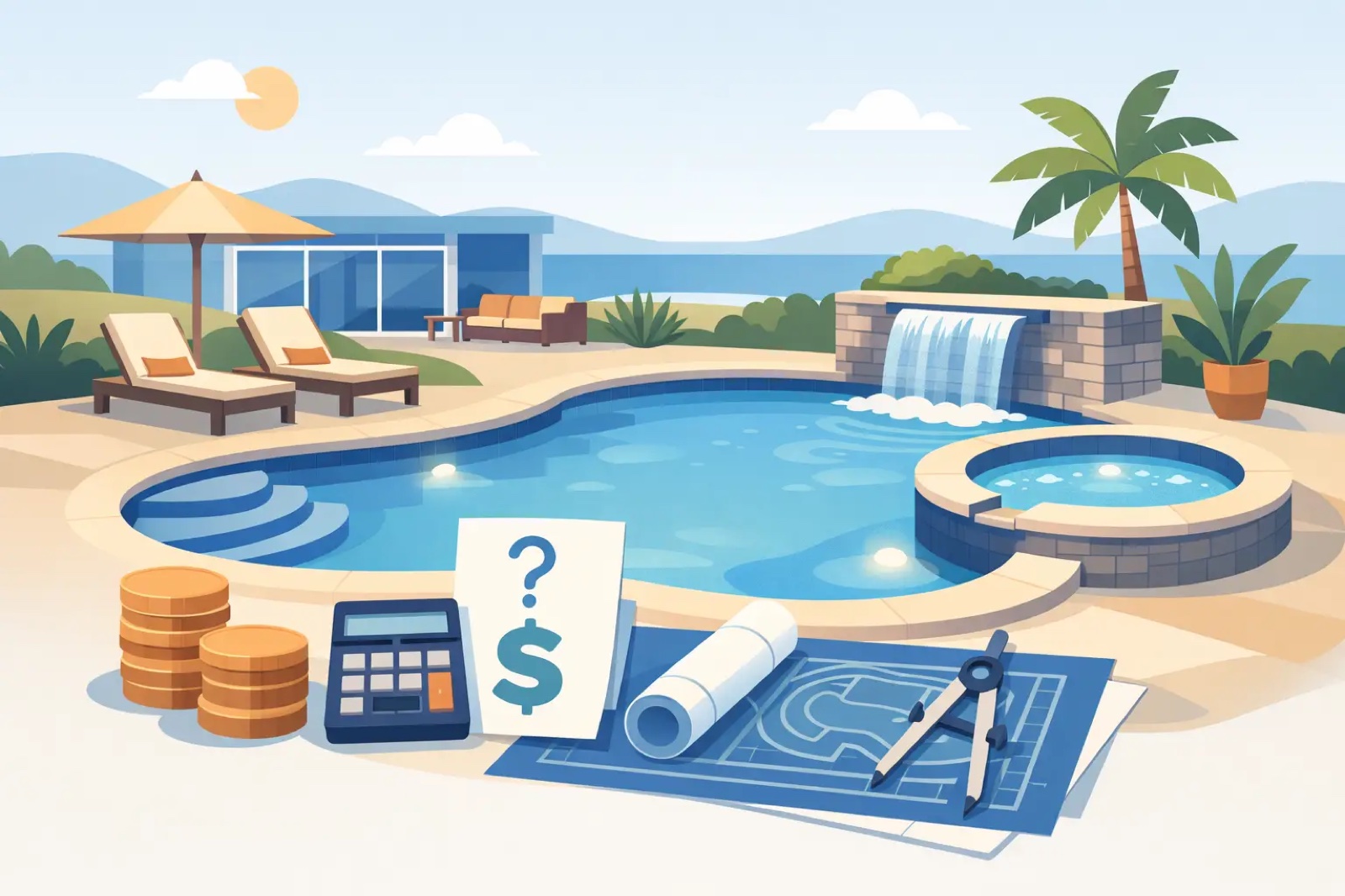
A low initial number is not always a lower final investment. Ask for a clear breakdown of what the estimate includes, from excavation and structural steel to plumbing, electrical work, interior finish, decking, equipment, and startup. You should also ask which selections are allowances and which are fixed in the quoted scope.
Important questions include whether permits, engineering, site preparation, drainage adjustments, fencing requirements, and cleanup are included. If your backyard has limited access or requires demolition of an existing patio, that should be addressed early as well.
Custom construction has variables. The goal is not to demand a quote that ignores every unknown, but to work with a builder who explains possible variables upfront and documents changes clearly.
3. How will Texas soil, rain, and heat affect construction?
Houston-area conditions call for local experience. Expansive clay soils can move as moisture levels change, while heavy rain can affect excavation, drainage, and construction scheduling. Summer heat also places real demands on equipment performance, material selection, and the way outdoor spaces are planned for shade.
Ask how the builder approaches structural design, drainage, and deck placement for your specific lot. A quality pool shell is not simply about what is visible after the project is complete. Proper excavation, steel reinforcement, plumbing pressure tests, shotcrete application, and curing practices support long-term durability.
The same practical thinking should guide the outdoor living areas around the pool. A patio that is beautiful but poorly drained can become a frustration during the first hard rain. Shade structures, outdoor kitchens, and fire features should be planned as part of the full site, not treated as disconnected add-ons.
4. How long will my pool project take?
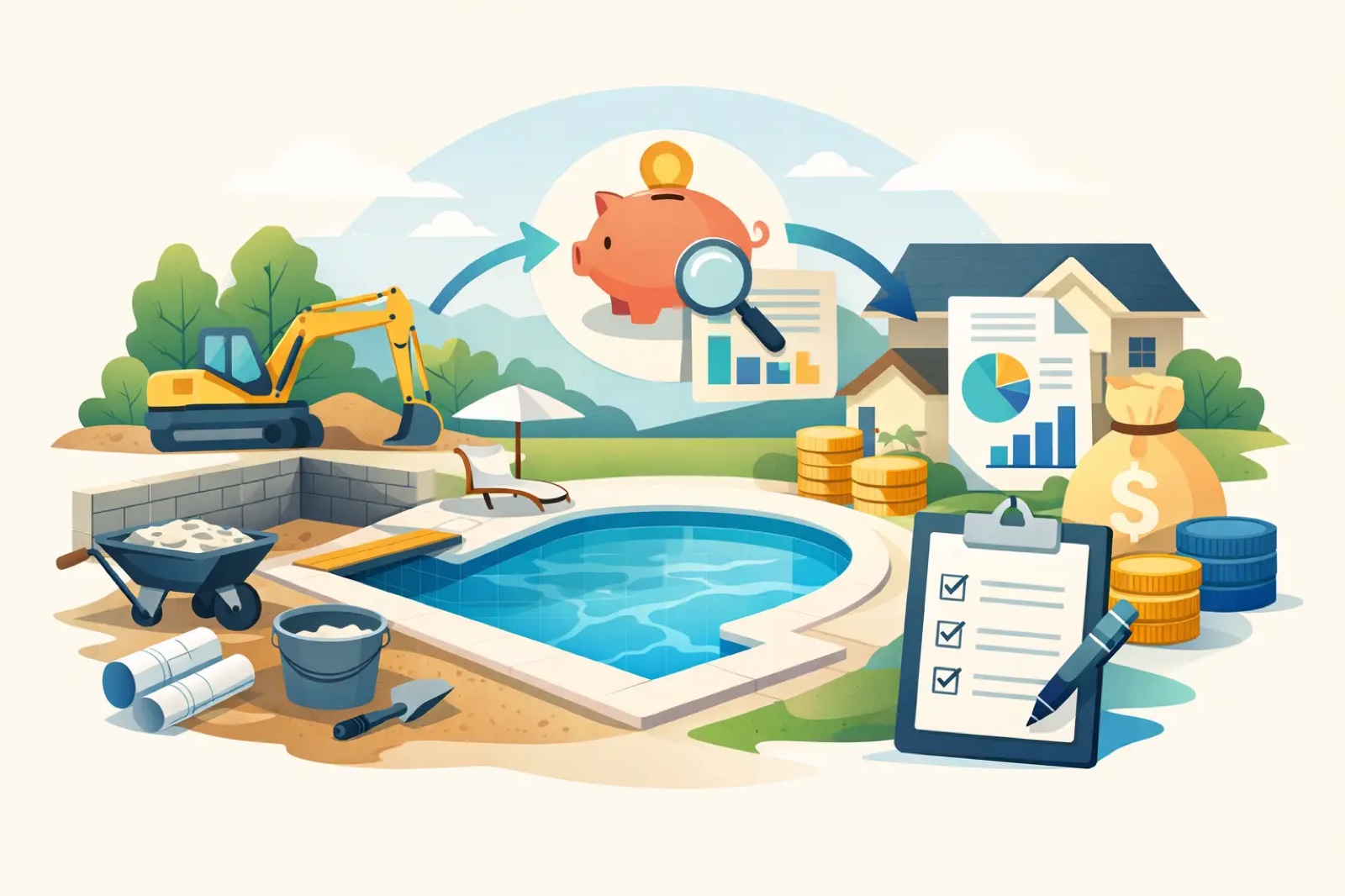
Every backyard is different, so a trustworthy answer is a project sequence rather than an unrealistic completion promise. Pool construction generally moves through design, permitting, layout, excavation, steel and plumbing, gunite or shotcrete, tile and coping, decking, equipment installation, finish work, inspections, and startup.
Weather, permitting timelines, inspection availability, material lead times, and design changes can affect the schedule. Ask who will communicate with you during each phase and how often you can expect updates. You should know who is managing the work, how questions are handled, and what happens if a change affects timing or cost.
A builder who communicates clearly is protecting more than the schedule. They are protecting your confidence throughout a major investment.
5. Which equipment is right for my pool?
Pool equipment should be sized for the pool you are building, not selected as an afterthought. Ask about the pump, filter, heater or heat pump, automation system, lighting, sanitation options, and any equipment required for water features or a spa.
Variable-speed pumps are a common choice because they can operate more efficiently than single-speed models. Automation can make it easier to control lighting, water temperature, and circulation from a phone or wall panel. A heater extends the comfortable swim season, while a spa can create year-round backyard use.
There are trade-offs. More features add convenience and lifestyle value, but they also require proper design, maintenance, and budget planning. Your builder should explain the purpose of each recommendation instead of loading the proposal with upgrades you may not use.
6. What will ongoing maintenance look like?
A beautiful pool should be practical to own. Ask what routine service will involve, how often water chemistry should be checked, and what care is needed for your selected finish, tile, equipment, and water features. If your pool includes a saltwater system, spa, heater, or automation, ask how each component affects regular care.
In the Houston area, calcium buildup can become a visible issue on tile and waterline surfaces. Discuss cleaning options and professional calcium removal before it becomes severe. Maintenance is not separate from construction quality. Accessible equipment placement, sound plumbing, effective circulation, and properly selected finishes all make future care easier.
7. Can the pool be designed with the rest of the backyard in mind?
This is one of the most valuable pool construction questions because it protects the overall vision. A pool can be installed first and outdoor features added later, but planning everything together often creates a better result. It allows the design to account for traffic flow, shade, cooking areas, seating, storage, drainage, lighting, and views from inside the home.
For example, an outdoor kitchen should be positioned so the cook can remain part of the gathering, while still allowing safe clearance from the water. A fire feature may be ideal near a lounge area but less practical if prevailing wind sends smoke toward the house. The right plan balances visual impact with how people will actually move through the space.
8. What permits and safety requirements apply?
Permit requirements vary by municipality and neighborhood, and homeowners association rules may add another layer of approval. Ask who is responsible for preparing plans, securing permits, arranging inspections, and addressing required corrections.
Safety should also be part of the design conversation from the beginning. Depending on the property and local requirements, this may include barriers, gates, alarms, covers, anti-entrapment drains, and properly placed electrical components. A pool builder should help you understand the requirements without making the process feel confusing or rushed.
9. How do I evaluate a builder beyond the price?
Look at completed work, construction experience, communication practices, and the level of detail in the proposal. Ask to see projects similar in scale or style to yours. Pay attention to the craftsmanship in coping, tile alignment, decking transitions, equipment organization, and the way the pool relates to the home.
You should also ask about insurance, warranties, project supervision, and the process for handling concerns after completion. A custom pool is a structural project with lasting consequences, not a purchase that should be decided from a single line-item price.
CHR Builder brings more than 25 years of construction-led experience to custom pools and outdoor living projects, with planning shaped around the way Texas families use their backyards. A detailed consultation and 3D design can help turn broad ideas into confident decisions before work begins.
10. What choices have the biggest impact on budget?
Pool size is only one factor. The largest budget changes often come from site conditions, elevation changes, access limitations, spa additions, water features, premium finishes, extensive decking, outdoor kitchens, and landscaping. Equipment upgrades and automation can also affect the initial investment.
That does not mean these features should be avoided. It means they should be prioritized. Decide which elements are essential to your lifestyle and which are nice to have. In some cases, planning infrastructure now for a future outdoor kitchen, heater, or feature can be smarter than forcing every upgrade into phase one.
Ask about flexible financing options if spreading the investment over time would allow you to build the backyard you actually want rather than settling for a design that feels incomplete.
11. What happens if I want to remodel an existing pool instead?
Not every backyard needs a full rebuild. An outdated pool may benefit from resurfacing, new tile and coping, updated lighting, modern equipment, a redesigned deck, or the addition of a spa and water features. However, remodeling is also the right time to inspect the underlying condition of the structure, plumbing, and equipment.
Ask whether the proposed improvements address cosmetic appearance only or improve performance and longevity as well. A renovation should make the pool easier to enjoy, easier to maintain, and more aligned with your current lifestyle.
12. What should I do before requesting a consultation?
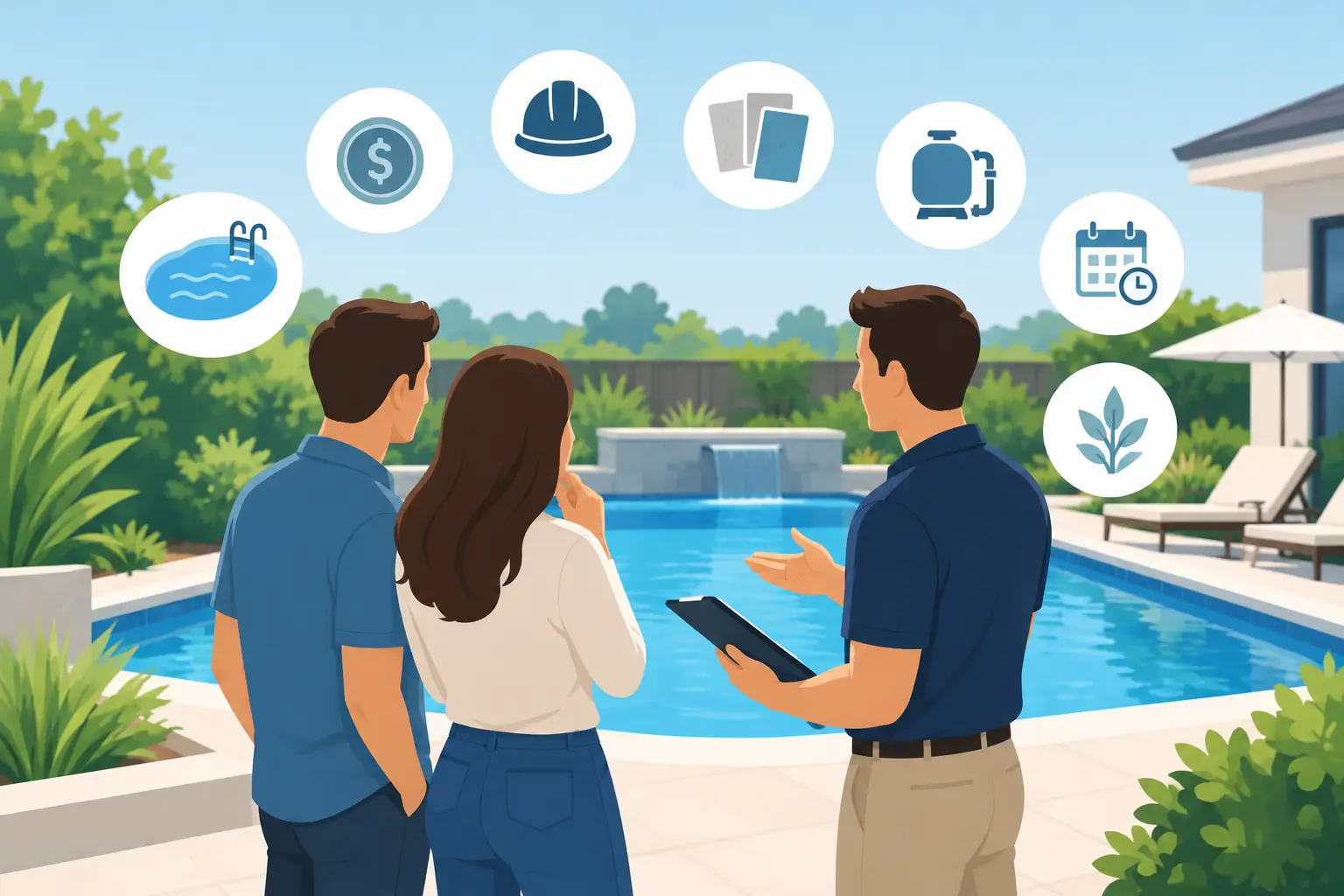
You do not need every answer before meeting with a builder. It helps to collect inspiration photos, think about how you will use the space, and identify a comfortable investment range. Consider whether you want the project to include entertaining areas, shade, cooking, a spa, or future phases.
It is also useful to know your property boundaries, HOA requirements, and any concerns about drainage or access. Bring those details to the conversation, then let experienced design and construction guidance shape the options.
The best backyard projects begin when homeowners ask direct questions and builders provide direct answers. Start with the way you want to live outside, then build a plan that is made for Texas weather, your property, and the years of memories ahead.