A bright white ring around the waterline can make an otherwise beautiful pool look neglected fast. If you are asking, “why is pool tile scaling,” the short answer is minerals in the water are being left behind on the tile. The fuller answer matters because the wrong cleaning method can scratch tile, damage grout, or create a bigger chemistry problem than the one you started with.
For Katy and Houston homeowners, scaling is especially common. Our heat, long swim seasons, evaporation, and naturally hard source water all make mineral buildup more likely. It does not mean your pool was built poorly or that it cannot be restored. It means the pool needs the right balance of water care, cleaning technique, and, in some cases, professional calcium removal.
Why Is Pool Tile Scaling Around the Waterline?
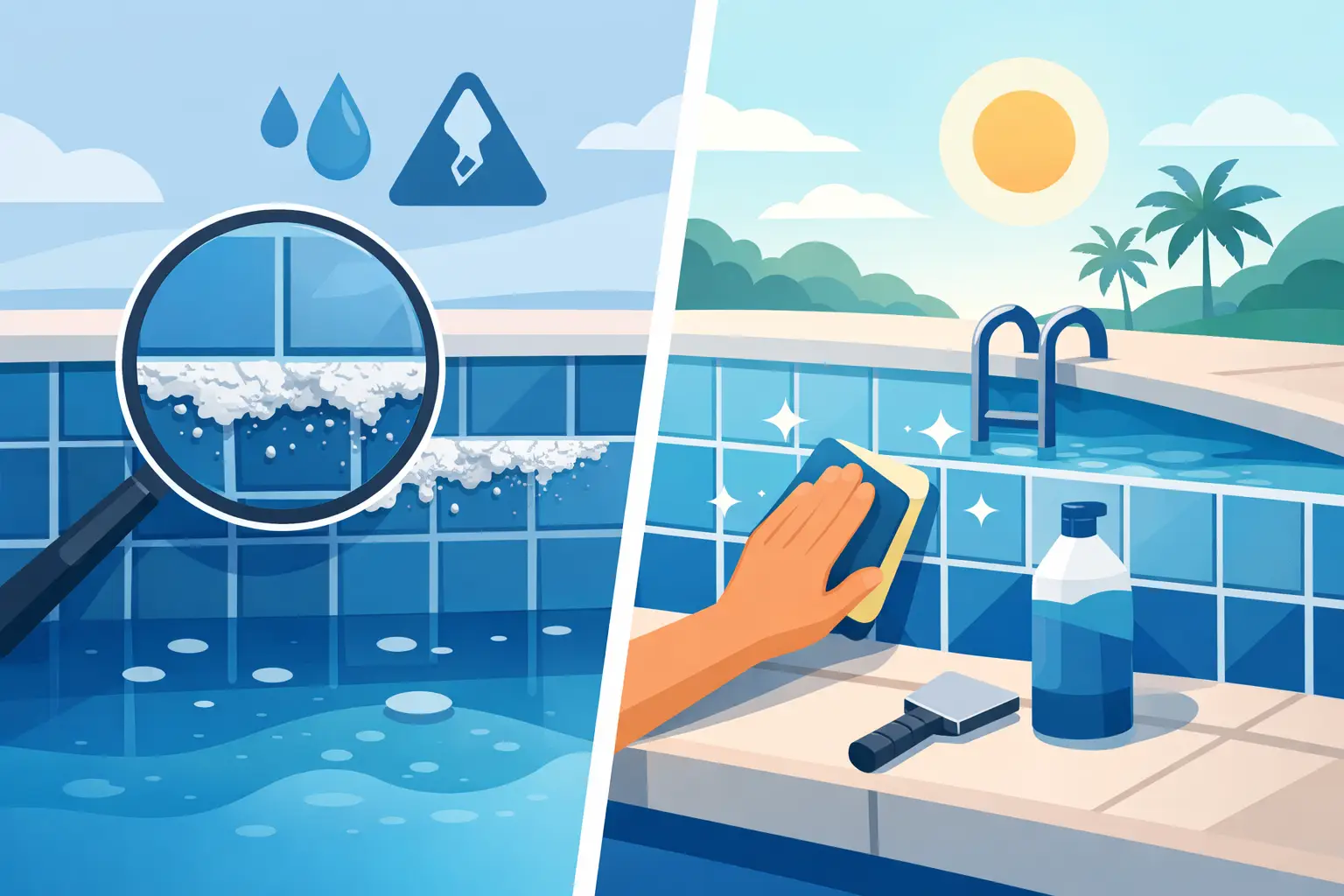
Pool tile scaling is a hard, crusty mineral deposit, usually calcium carbonate, that forms as water evaporates. As the water level drops slightly or splashes onto the tile, the water itself evaporates but the dissolved minerals remain. Over time, those minerals bond to the tile surface, grout, and nearby plaster or coping.
Early scale may look like a faint haze or chalky film. Left alone, it can become a rough white, gray, or tan band that feels gritty to the touch. On darker tile, it often stands out sharply. On natural stone and textured finishes, mineral buildup can settle into pores and become more difficult to remove.
Not every waterline mark is scale. Sunscreen, body oils, pollen, and airborne debris can create a dull ring too, but those contaminants usually respond to standard tile cleaning. Calcium scale feels hard and does not wipe away easily. A professional inspection can confirm what is on the surface before anyone reaches for an acidic cleaner or abrasive tool.
The Chemistry Behind Calcium Buildup
Calcium is not automatically bad for a pool. In fact, pool water needs an appropriate level of calcium hardness to protect plaster, grout, and other cement-based surfaces. Trouble starts when calcium, pH, total alkalinity, water temperature, and evaporation work together to push minerals out of the water and onto the pool surface.
High pH is one of the most common contributors. When pH stays elevated, calcium is more likely to precipitate out of the water as scale. High total alkalinity can make pH harder to control, while high calcium hardness provides more mineral content available to form deposits.
Houston-area pools also face intense summer heat. Warm water holds dissolved minerals differently than cooler water, and fast evaporation concentrates the minerals that remain. A pool that is topped off frequently with hard water may keep receiving more calcium, even when its chemistry otherwise appears close to normal.
This is why a single test result does not always tell the whole story. Pool professionals look at the relationship among pH, alkalinity, calcium hardness, temperature, and stabilizer levels. That overall balance helps determine whether the water is likely to form scale or become corrosive.
Saltwater Pools Can Scale Too
A saltwater pool is still a chlorine pool, and it can develop calcium scale just as easily as a traditionally chlorinated pool. In some cases, scale is more noticeable near salt cell equipment because chlorine generation can raise pH locally. The waterline tile remains vulnerable when evaporation and mineral-heavy water are part of the picture.
Salt systems are excellent for many homeowners, but they do not eliminate the need for routine water testing and proper chemical adjustment. The goal is comfortable, clean water that also protects the finishes you invested in.
Other Reasons Tile Scale May Keep Returning
Water chemistry is usually the primary cause, but recurring scale can point to a few related conditions. A leak that requires frequent refilling may introduce more hard water than normal. Poor circulation can create areas where chemistry is less consistent. An automatic fill line can also add water regularly without homeowners realizing how much mineral content is entering the pool.
Older pools may have worn grout, rough plaster, or porous natural stone that gives minerals more places to grab onto. This does not always require a full renovation, but it may change the safest cleaning approach. When tile, coping, plaster, and decking are being considered together, a builder with both pool and construction experience can help homeowners avoid cosmetic fixes that overlook the condition beneath them.
Scale can also be confused with efflorescence. Efflorescence is a mineral deposit that migrates from within masonry or grout, often because moisture is moving through the material. It may appear above the waterline, on raised walls, spillways, or coping. Unlike typical pool-water scale, efflorescence can signal a drainage, waterproofing, or masonry concern that deserves a closer look.
How to Remove Pool Tile Scale Safely
The best removal method depends on the tile material, the thickness of the scale, and the condition of the grout and surrounding finish. Light buildup on durable ceramic or porcelain tile may respond to a pool-safe calcium remover and careful hand cleaning. Heavy deposits may need professional treatment.
Avoid treating every tile surface the same way. Glass tile, natural stone, hand-painted tile, and aged grout can be damaged by strong acids, harsh abrasives, or aggressive scraping. A tool that works on one waterline can permanently dull or scratch another.
Professional calcium removal often uses controlled media blasting or specialized cleaning methods that lift mineral deposits without unnecessarily harming the tile. The right process should account for the pool’s finish, the tile profile, nearby landscaping, and the possibility of exposing underlying grout issues once the scale is gone.
Draining a pool solely to clean waterline scale is rarely the first choice. In Texas, draining must be handled with care due to groundwater conditions, structural pressure, and the risks associated with leaving a pool empty. A qualified pool professional can recommend whether localized cleaning, water treatment, or a broader restoration plan makes the most sense.
Preventing Scale After It Has Been Removed
Removing visible calcium is only half the job. If the water conditions that created it remain unchanged, the scale will return. Consistent pool care is less costly than repeated restoration, especially on premium tile and stone details.
Start with regular testing and timely adjustments. pH should not be allowed to drift high for extended periods, and total alkalinity and calcium hardness should be kept within ranges appropriate for your pool finish and equipment. In the hottest months, test more often because evaporation and heavy use can change water balance quickly.
Pay attention to the water level. A waterline that fluctuates significantly leaves a wider band of tile exposed to evaporation. If you are adding water often, ask whether a leak inspection or review of the autofill system is warranted. It may be a simple operational issue, or it may be contributing to recurring mineral load.
Routine brushing and waterline cleaning help prevent early film from becoming stubborn scale. This is particularly helpful after big pool parties, windy weather, or long stretches of high heat. Keep in mind that prevention is not about making the water artificially soft. It is about maintaining balanced water that protects your tile, finish, plumbing, heater, and equipment.
When Scaling Signals It Is Time for Pool Restoration
A small amount of waterline scale is typically a maintenance concern. But when deposits cover large areas, return quickly after cleaning, or appear alongside rough plaster, cracked grout, loose tile, or deteriorating coping, it may be time to look beyond cleaning.
A pool remodeling plan can address the visible problem and the surfaces that support long-term performance. That may include regrouting tile, replacing worn waterline tile, restoring plaster, repairing raised features, or updating old equipment that makes chemistry difficult to manage. For homeowners planning a larger backyard refresh, it can also be the right moment to coordinate new decking, a patio extension, or an outdoor kitchen with the restored pool design.
CHR Builder approaches pool restoration with the same construction-first perspective used for custom pool builds. With more than 25 years of experience, the team can evaluate the tile, finish, structure, and surrounding outdoor space together, then recommend work that supports lasting value instead of a temporary cover-up.
Your pool should look as intentional as the rest of your backyard. If that white waterline ring has become part of the view, a professional assessment can identify whether you need targeted calcium removal, chemistry corrections, or a more complete restoration plan built for Texas livin.