A Houston-area pool has to do more than look good in a photo. It has to stand up to intense sun, long swim seasons, family gatherings, and the kind of entertaining that moves naturally from the kitchen to the patio. The pool design trends 2026 homeowners are choosing reflect that reality: cleaner architecture, cooler surfaces, smarter shade, and complete outdoor environments designed for everyday use.
For homeowners in Katy, Houston, and the surrounding communities, the strongest designs are not about following a short-lived look. They pair a tailored visual style with materials, equipment, and construction details that make sense for Texas living over the long term.
Pool Design Trends 2026: More Purpose, Less Excess
The most noticeable shift is toward intentional design. Instead of adding every possible feature to a pool plan, homeowners are choosing a few high-impact elements that support how they actually use their backyard. A pool for young children may prioritize a broad tanning ledge and easy entry. A home built for hosting may center on a generous patio, outdoor kitchen, and areas where guests can sit near the water without being in it.
This does not mean pools are becoming plain. It means luxury is being expressed through proportion, finish quality, lighting, and the way the pool connects to the home. A custom design should feel like it belongs on the property, not like a collection of features placed in the yard.
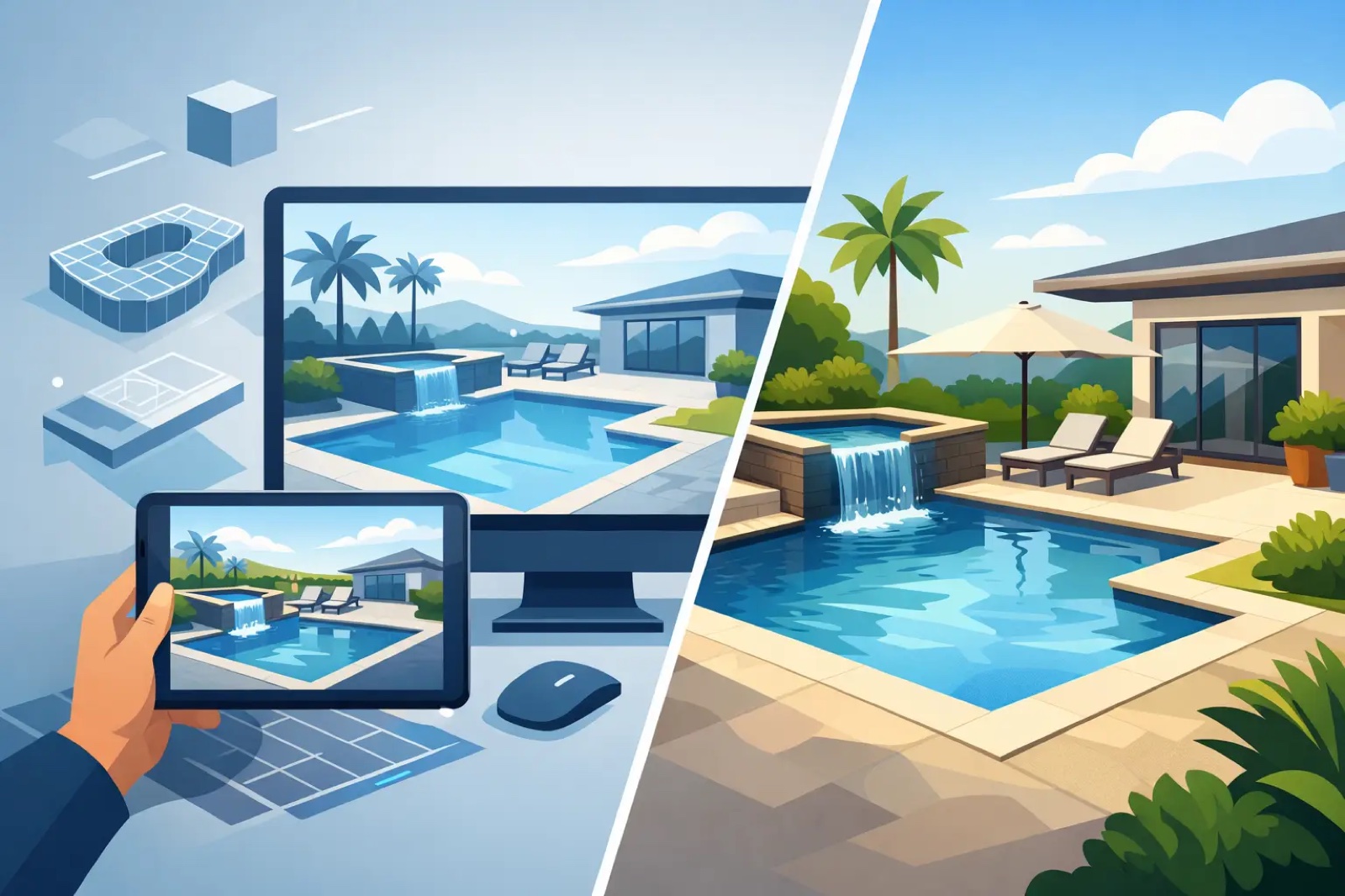
Free 3D design is especially valuable at this stage. It gives homeowners a clear view of sightlines, deck space, shade coverage, water-feature placement, and how the finished project will relate to existing landscaping or future outdoor living additions. Good decisions are easier when you can see the complete plan before construction begins.
Clean Lines With Softer Living Spaces
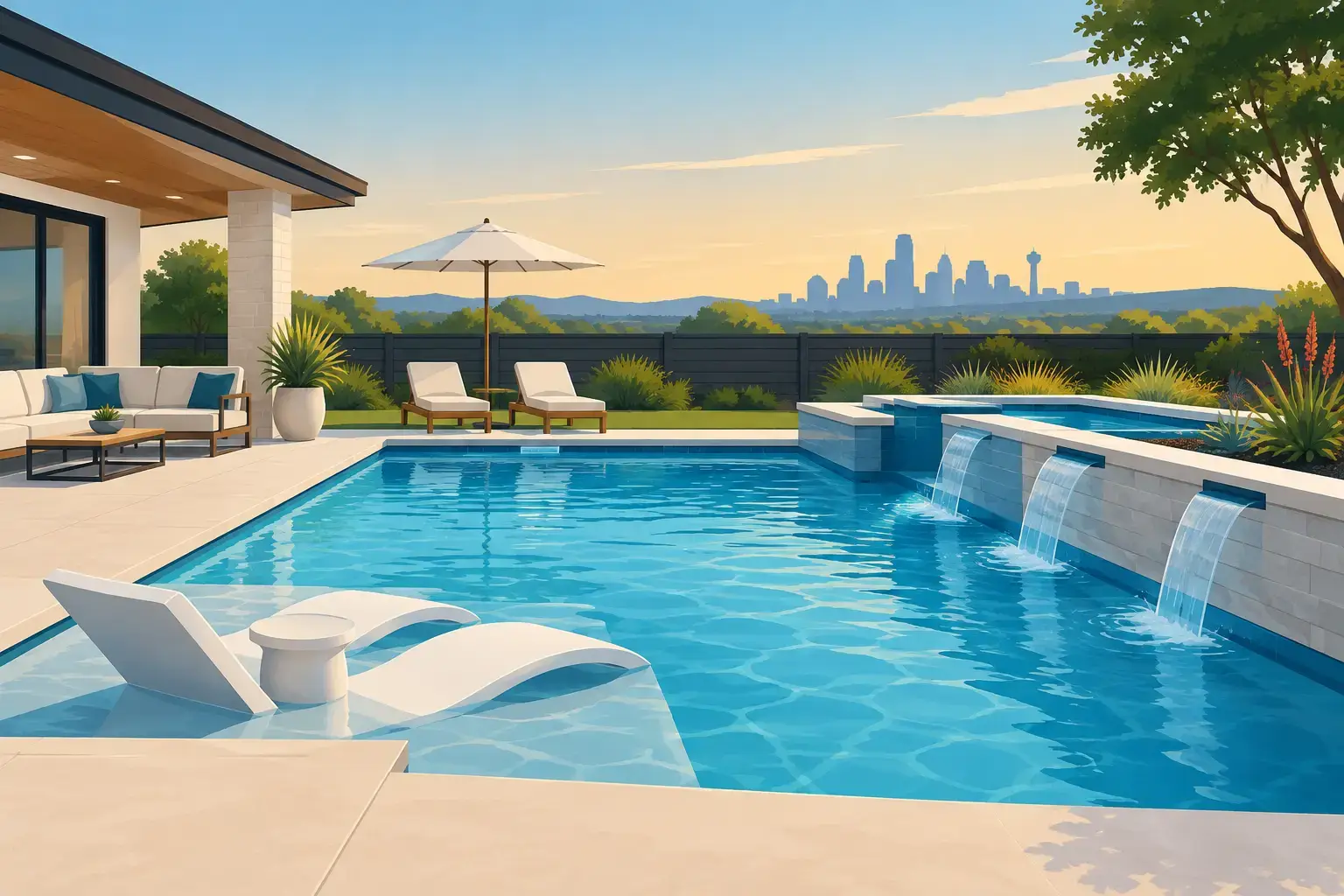
Geometric pools remain a leading choice for 2026, particularly for newer Katy and Houston homes with contemporary or transitional architecture. Straight edges, rectangular forms, and crisp coping create a calm, tailored look. They also make it easier to organize nearby patios, cabanas, fire features, and outdoor kitchens.
At the same time, the surrounding space is becoming less rigid. Homeowners are softening clean pool lines with warm-toned decking, layered planting, curved lounge areas, and textured materials. The result is a backyard that feels polished without feeling cold.
A full rectangle is not the right answer for every property. Freeform pools still make sense when a yard has mature trees, an irregular layout, or a home with more traditional architecture. The trend is not one pool shape. It is choosing a shape that works with the home, property lines, drainage plan, and the way the family intends to use the space.
Tanning Ledges Become Everyday Space
Tanning ledges are no longer a secondary add-on. They have become one of the most requested usable areas in a custom pool. A properly sized ledge can hold loungers, give small children a shallow place to play under supervision, and offer adults a place to cool off without fully swimming.
The key is getting the dimensions right. A ledge that is too narrow becomes decorative rather than functional. A larger shelf provides more flexibility, but it also takes water area away from swimming space. During design, it is worth discussing whether the pool is primarily for relaxation, play, exercise, entertaining, or a combination of all four.
Integrated Spas With a Cleaner Profile
Raised spas are still popular, but many 2026 designs use lower-profile integration. Spas may align with the pool’s edge, share the same finish palette, or use a restrained spillway rather than an oversized feature wall. This gives the water a more unified appearance while preserving the comfort and year-round value of a heated spa.
For homeowners who want a dramatic focal point, a raised spa with tile detail can still be an excellent choice. It depends on the architecture and view from the house. The goal is to make the spa feel planned, not added later.
Cooler, More Comfortable Texas Backyards
Texas heat is shaping pool design in practical ways. In 2026, comfortable surfaces and usable shade are as important as the water itself. Light-colored deck materials, covered patios, pergolas, and thoughtfully placed umbrellas can make a major difference during July and August.
Travertine and other heat-conscious decking materials continue to appeal because they bring a natural, upscale finish while helping the pool deck feel more comfortable underfoot. Material selection still requires balance. Natural stone has character and variation, while porcelain options can offer consistency and low maintenance. The best option depends on budget, desired appearance, slip resistance, maintenance expectations, and how much direct sunlight reaches the deck.
Shade structures are also becoming more integrated with the pool plan. Rather than treating shade as a future project, homeowners are designing covered outdoor living areas from the beginning. A roof extension, pavilion, or pergola can define a dining area, protect an outdoor kitchen, and create a comfortable place to watch children swim.
Water Features That Add Atmosphere, Not Noise
Water features are becoming more restrained. Sheet falls, scuppers, sheer descents, and subtle spa spillways are popular because they add movement and sound without overpowering the backyard. They can also create visual interest from inside the home, especially when positioned along a main viewing line.
The trade-off is maintenance and water use. More features mean more plumbing, more equipment considerations, and more surfaces to clean. In a region where calcium buildup can affect tile and waterlines, selecting durable finishes and planning for professional maintenance matters. A feature should earn its place by improving the experience, not simply by adding another item to the plan.
Fire features remain a strong complement to water, particularly for homeowners who entertain in cooler months. A fire bowl, linear fire feature, or fire pit can extend backyard use well beyond swim season. Placement matters: the feature should enhance the view and gathering space without creating unnecessary heat near seating areas.
The Outdoor Room Is Part of the Pool Design
One of the most important pool design trends for 2026 is the move away from the pool as a stand-alone project. Homeowners are investing in backyards that function as outdoor rooms, with dedicated areas for cooking, dining, lounging, and gathering.
An outdoor kitchen can range from a simple grill station and counter to a fully equipped cooking and serving area. The right level depends on how often you host and whether the space will be exposed to weather. Storage, ventilation, drainage, electrical needs, and durable countertop materials should be addressed early, not after the pool is complete.
For families, a flexible patio often delivers more value than an overly elaborate feature. Enough room for a table, a conversation set, and circulation around the pool makes the backyard easier to use for birthdays, weekend cookouts, and quiet evenings at home. This is where a builder with broader construction experience brings real value: the pool, patio, drainage, utilities, and structures need to work as one coordinated project.
Finishes With Depth and Long-Term Appeal
Bright blue plaster has its place, but many homeowners are selecting finishes with more depth. Soft blue-gray, deep blue, muted green, and natural water tones can give a pool a refined appearance that changes with the sunlight. Glass tile accents, textured waterline tile, and carefully chosen coping add detail without requiring an overly busy design.
Darker interior finishes can create a striking, reflective water color, but they may show mineral deposits or debris differently than lighter finishes. Lighter finishes can feel cooler and more classic, though the final water color is affected by depth, sun exposure, landscaping, and surrounding materials. Viewing physical samples outside is more reliable than choosing from a small screen image.
Smart Equipment Should Be Quietly Useful
Technology is valuable when it makes ownership easier. Variable-speed pumps, efficient filtration, automated water chemistry systems, LED lighting, and app-based controls can improve convenience and help manage operating costs. Homeowners increasingly want the ability to adjust lighting, heat a spa, or check equipment status without walking out to the pad.
Still, automation is not a substitute for quality installation and regular service. Equipment should be sized for the pool, accessible for maintenance, and installed with future repairs in mind. A well-designed equipment layout is not glamorous, but it protects the investment behind every beautiful backyard.
Start With How You Want to Live Outside
The best 2026 pool will not necessarily be the largest, deepest, or most feature-packed one. It will be the pool that fits your home, your family, and your Texas lifestyle for years to come. Before choosing tile or water features, think about the moments you want the backyard to support: quiet mornings by the water, children learning to swim, football watch parties, holiday gatherings, or a private place to unwind.
CHR Builder helps homeowners turn those priorities into a custom plan with free 3D design, experienced construction guidance, and outdoor living options built for Texas livin. A thoughtful consultation can show you what is possible on your property and which choices will add lasting comfort, beauty, and value.