A great pool starts long before excavation. The best results come from making smart design decisions early - decisions that fit your lot, your home, your routine, and the way Texas weather actually works. This inground pool design guide is built for homeowners who want more than a pretty concept. You want a backyard that looks right, functions well, and holds up for years.
Start the inground pool design guide with how you live
A custom pool should match your day-to-day life, not just a photo you saved months ago. Some families need wide shallow space where kids can play safely and adults can relax. Others care more about lap swimming, evening entertaining, or creating a clean, modern backyard centerpiece that raises the look of the entire property.
That first decision shapes everything else. A pool designed for entertaining may need a tanning ledge, integrated seating, strong lighting, and clear traffic flow between the water, patio, and outdoor kitchen. A pool designed for quiet personal use may benefit more from simple lines, privacy planning, and low-maintenance finishes. Neither is better. It depends on what you want the space to do on a Tuesday evening, not just on a holiday weekend.
This is also where budget becomes useful, not limiting. A realistic budget helps prioritize the features that matter most so the finished project feels complete instead of overextended.
Shape, layout, and placement matter more than trends
Pool design trends come and go, but layout decisions stay with your property for a long time. The right shape should work with your home’s architecture, yard dimensions, drainage conditions, and usable patio space.
Geometric pools often suit newer homes and create a crisp, structured look. Freeform pools can soften a yard and work well when the goal is a more relaxed resort feel. Rectangular pools remain popular because they are clean, flexible, and efficient with space, but they are not automatically the best choice for every lot.
Placement is just as important as shape. A pool that is pushed too far into one corner may leave the yard feeling disconnected. A pool placed too close to the house can limit deck space and crowd entertainment areas. The sweet spot is usually a layout that creates balance - enough deck for furniture and movement, enough lawn or hardscape for visual breathing room, and enough access for construction and future service.
In Texas, sun exposure should be part of that planning. Full sun can make a pool inviting for much of the year, but it also affects surface temperature, glare, and comfort on surrounding deck areas. Shade from a patio cover, pergola, or strategic feature wall can make a major difference in how often the backyard gets used.
Size is not just about the pool
One of the most common design mistakes is treating pool size as the main event. Bigger is not always better. What matters is the relationship between the pool and the rest of the backyard.
A large pool with minimal deck space can feel cramped and unfinished. A slightly smaller pool with generous hardscape, seating zones, and room for circulation often feels more luxurious because the space works better. If you plan to add an outdoor kitchen, fire feature, covered patio, or open lounge area, those elements need to be accounted for from the beginning.
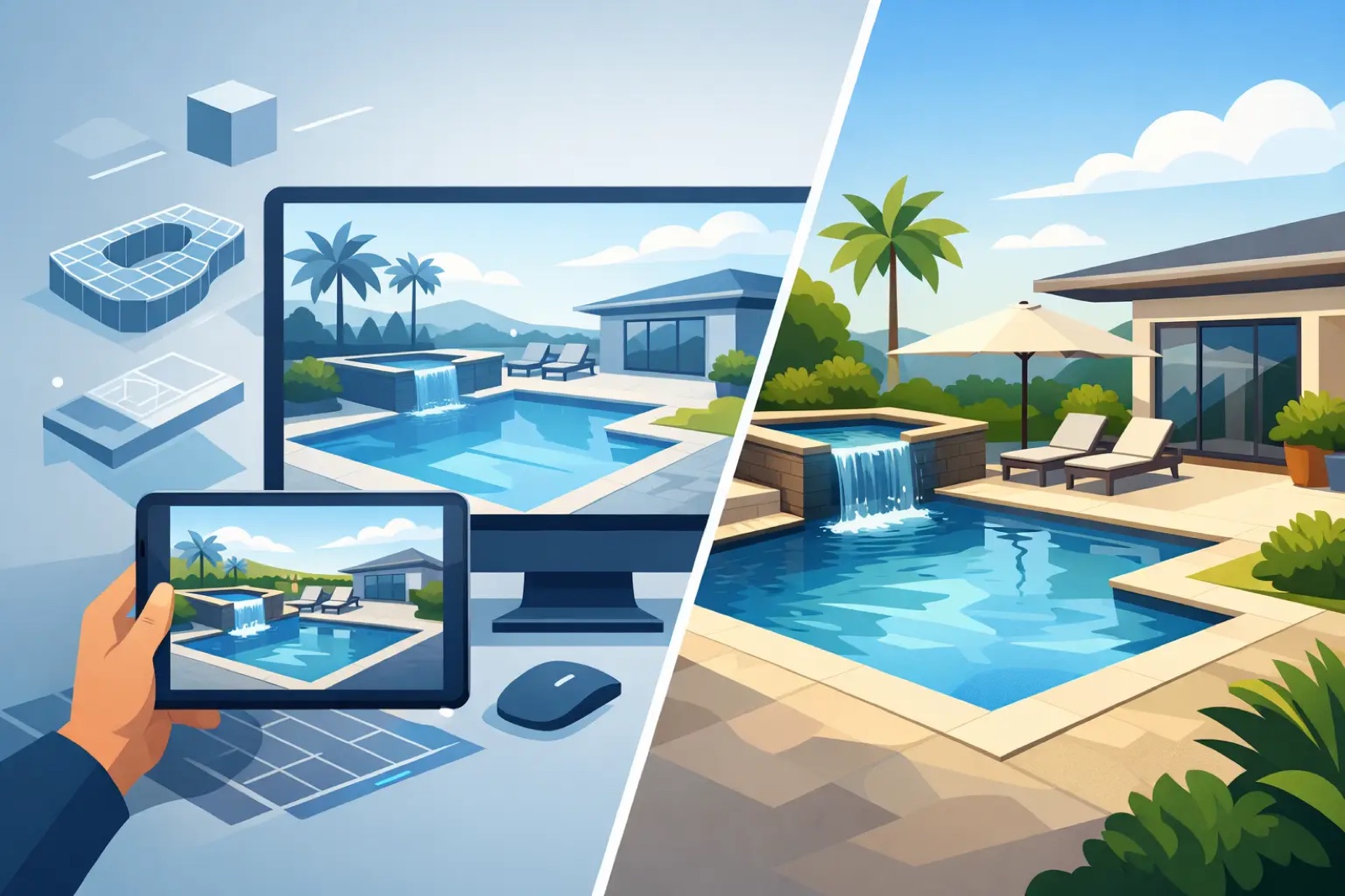
That is where 3D planning becomes valuable. It helps homeowners see whether the design actually fits the property before construction starts. A good design should answer practical questions early, such as where guests will gather, how furniture will sit, and whether the finished yard will feel open or crowded.
Choose features that improve how the pool gets used
Water features and add-ons can elevate a design, but only when they support the overall experience. A tanning ledge is useful if your family enjoys lounging in shallow water or if you want a safe splash zone for small children. Spa integration makes sense when year-round use is a priority. Benches, swim-up seating, and bubblers can make a pool more social without requiring a larger footprint.
Other features are more visual than functional. Sheer descents, raised walls, fire bowls, and dramatic lighting can create a high-end look, but they should be used with restraint. Too many focal points in one pool can make the design feel busy. In most cases, one or two well-placed statement features create a stronger result than trying to add everything at once.
This is especially true in backyards where the pool is part of a larger outdoor living plan. The best spaces feel connected. The pool, patio, kitchen, and landscaping should work together, not compete for attention.
The right materials affect maintenance and long-term value
A pool is a construction project first and a visual upgrade second. Finish selections matter because they influence durability, maintenance, comfort, and the overall feel of the water.
Interior finish color changes how the water appears. Lighter finishes tend to create a brighter blue and can make the pool feel more traditional and reflective. Darker finishes often create a deeper, more modern look, but they can also absorb more heat. Tile choices can sharpen the design, especially on waterline edges and raised features, while coping and decking materials need to hold up under constant sun, rain, and foot traffic.
For Texas homeowners, heat performance matters. Some deck materials become much hotter under direct sun than others. Slip resistance matters too, particularly around tanning ledges, entry points, and family gathering areas. The best-looking material is not always the best option if it creates maintenance headaches or comfort issues later.
An experienced builder helps weigh those trade-offs before final selections are made. That is often where long-term value is protected.
A true inground pool design guide should include the whole backyard
The pool may be the centerpiece, but it rarely works best as a standalone project. When homeowners plan the full outdoor environment from the start, the result feels cleaner, more intentional, and easier to enjoy.
Think about where dining will happen, where shade is needed, how lighting should support evening use, and whether the backyard needs storage, grilling space, or a stronger visual transition from the house to the pool. These decisions affect electrical planning, drainage, hardscape layout, and the way people move through the yard.
This is one reason construction-led design matters. A beautiful concept is only useful if it can be built properly and integrated with the realities of the site. Slope, soil, utilities, setbacks, and access all influence what is possible. The earlier those issues are addressed, the fewer surprises you face once work begins.
For homeowners in Katy, Houston, and surrounding areas, stormwater planning and soil behavior should never be treated as afterthoughts. A backyard built for Texas livin needs more than style. It needs structural planning that respects the region.
Think beyond the build date
Good pool design is not only about installation. It is also about ownership. Before approving a final design, ask how the pool will be maintained, how surfaces will age, and whether the equipment plan fits your expectations for efficiency and convenience.
A complex pool can look impressive on paper but demand more maintenance than some homeowners want. Extra water features, intricate edges, and oversized systems may add visual appeal while also increasing upkeep and operational cost. That does not mean you should avoid premium features. It means each one should earn its place.
Likewise, remodeling potential is worth considering. Timeless layouts tend to age better than highly specific trend-driven designs. If you ever update tile, decking, or lighting later, a balanced core design gives you more flexibility.
What homeowners should expect from the design process
A professional design process should make decisions easier, not harder. It should start with a conversation about your property, style preferences, must-have features, budget range, and timeline. From there, visual planning helps turn those goals into a design you can actually assess.
That is where free 3D pool design can be a major advantage. Instead of guessing from sketches or trying to interpret dimensions on a page, you can see how the pool will sit in the yard, how nearby features connect, and whether the final concept reflects the way you want to live outdoors.
The right builder will also speak clearly about what changes cost more, what features improve daily use, and where simplifying the design may lead to a better long-term result. That kind of guidance saves money and frustration because it keeps the project grounded in both craftsmanship and real-world use.
At CHR Builder, that design-to-construction mindset is what helps homeowners move from ideas to a finished backyard with more confidence. Licensed and insured service, practical planning, and a builder’s eye for structural quality all matter when the investment is this significant.
The best pool design feels obvious once it is built
When an inground pool is designed well, it feels like it always belonged there. The lines fit the house. The patio flows naturally. The features support the way your family spends time outside. Nothing feels forced, oversized, or added just to impress on paper.
That is the real goal - a custom backyard that delivers beauty, comfort, and durability in equal measure. If you are planning a pool, start with the choices that shape daily life and long-term performance. The design should do more than catch your eye. It should make your home better to live in.