A pool can look impressive in daylight and disappear after sunset. The difference is rarely the pool itself. It is the lighting plan. Knowing how to plan pool lighting before construction begins helps you create a backyard that feels safer, more inviting, and ready for Texas evenings with family, friends, and neighbors.
For homeowners in Katy, Houston, and the surrounding area, pool lighting should do more than make the water glow. It needs to handle heat, humidity, frequent use, outdoor entertaining, and the visual demands of a custom backyard. The best plans balance function with atmosphere, using light to define the pool, guide movement, and make every major feature feel intentional.
Start With How You Will Use the Backyard
A lighting layout should follow the way your household actually lives outside. A family that swims after dinner needs strong, even illumination in the pool and clear paths around it. Homeowners who host weekend gatherings may prioritize a dramatic water color, softly lit seating areas, and an outdoor kitchen that remains functional after dark.
Think through your typical evenings. Where do guests enter the yard? Where will people walk with drinks, towels, or plates of food? Which views do you want to see from inside the home? These answers shape fixture locations far better than choosing lights based on a photo alone.
Your pool should remain the visual focal point, but it should not be the only illuminated element. A beautiful pool with a dark patio, unlit steps, and invisible landscaping can feel incomplete. Conversely, lighting every surface at maximum brightness creates glare and removes the calm, upscale effect most homeowners want.
How to Plan Pool Lighting Around Safety First
Safety lighting is the foundation of every successful plan. It should make changes in elevation, walking routes, water edges, and key activity areas easy to recognize without turning the backyard into a stadium.
Inside the pool, properly placed underwater lights help swimmers see the pool walls, steps, benches, tanning ledges, and depth transitions. This is particularly valuable for families with children and for evening entertaining. The goal is even visibility across the water, not a single harsh point of light that creates shadows.
Around the pool, focus on practical circulation areas. Steps leading from the home, deck transitions, raised spa steps, gates, and routes to an outdoor kitchen or seating area all deserve attention. Low-level path lights, integrated step lights, and discreet hardscape lighting can improve visibility while preserving the clean lines of the design.
Glare deserves just as much consideration as brightness. Fixtures aimed toward seating areas, windows, or the water surface can be uncomfortable and reduce visibility. A professional designer considers sightlines from the patio, house, spa, and outdoor living areas so fixtures light the destination instead of shining into someone’s eyes.
Layer the Lighting for Depth and Atmosphere
The most polished backyards use layers of light. Each layer has a job, and together they create depth rather than a flat wash of brightness.
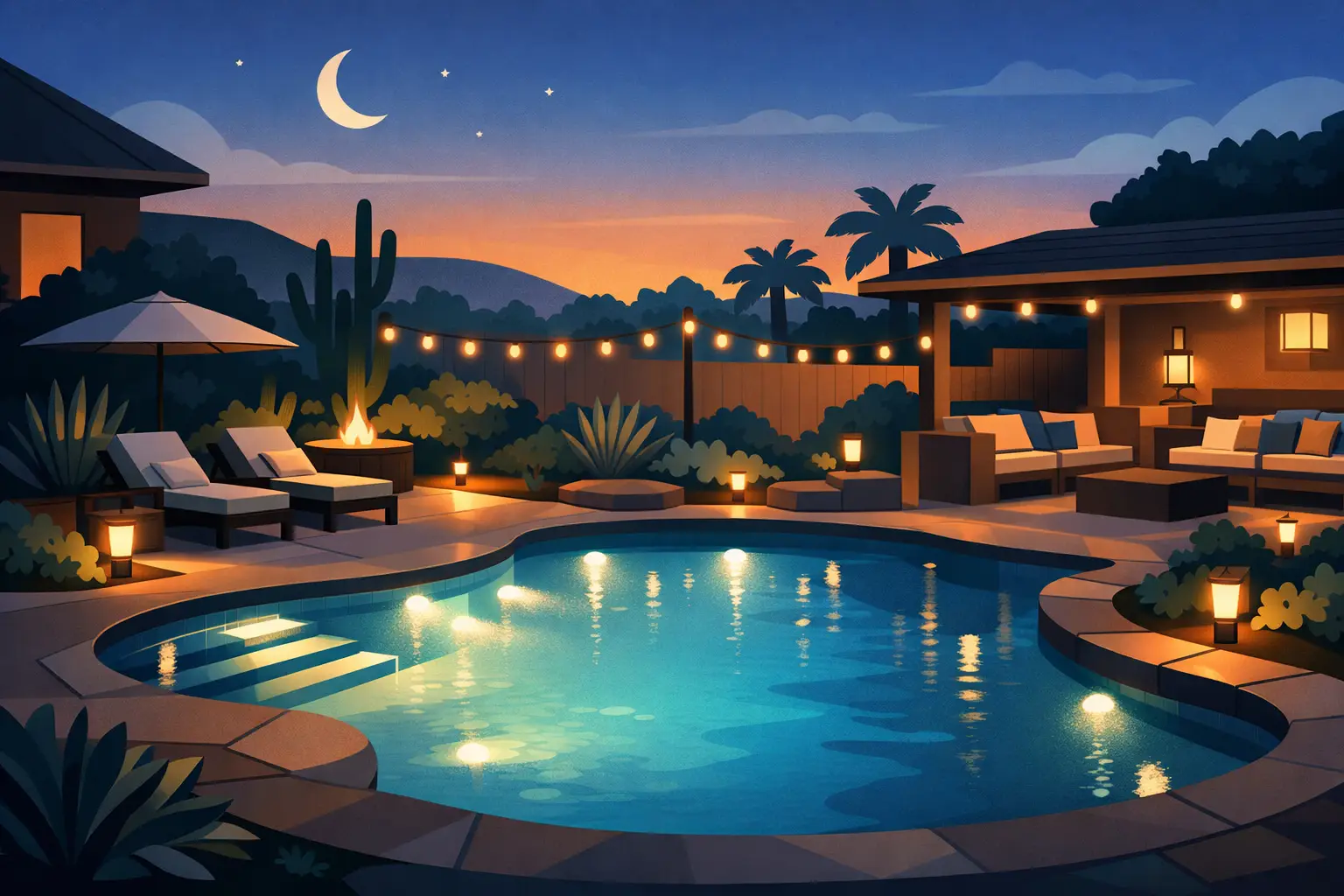
Pool lighting provides the center layer. Modern LED pool lights can deliver crisp white light for swimming or color-changing scenes for entertaining. Color options can be a great feature, but they work best when they support the architecture and mood of the backyard. A deep blue or soft aqua often feels more refined for a relaxed evening, while brighter color scenes can add energy for celebrations.
Accent lighting brings attention to special features. A raised spa, waterfall, fire feature, sheer descent, tile wall, or sun shelf can become a focal point after dark when it is lit with purpose. Water features are especially effective because light catches the movement and texture of flowing water.
Landscape lighting adds the final layer. Uplighting a mature tree, washing a privacy wall with soft light, or highlighting architectural planting beds gives the pool area a sense of enclosure. In Houston-area backyards, this can also help the space feel connected to the home rather than like a separate feature at the far end of the lot.
Avoid the temptation to highlight everything. Select a few strong focal points. The contrast between lit and unlit areas is what gives an outdoor space character.
Choose Fixture Types Early in the Design Process
Lighting decisions affect more than the final look. They influence electrical planning, plumbing coordination, hardscape details, and access for future service. That is why lighting should be addressed during pool design, not treated as an afterthought once the deck is complete.
Underwater LED fixtures are the standard choice for most new custom pools. They are energy-efficient, long-lasting, and available in white or color-changing options. The number and placement of lights depends on pool size, shape, depth, finish color, and features. A long freeform pool, for example, may need a different arrangement than a compact geometric pool with a raised spa.
For decks and walkways, recessed step lights and low-profile hardscape fixtures often provide a cleaner result than tall path lights. They can be integrated into retaining walls, seat walls, stairs, and coping-adjacent structures. These fixtures should be planned before masonry and concrete work begin to avoid visible retrofit solutions later.
Outdoor kitchen lighting also requires specific attention. Grill stations, prep counters, dining tables, and bar seating need usable task lighting, while nearby accent lighting keeps the atmosphere relaxed. One bright fixture over the entire kitchen is rarely enough, especially when you are cooking after sunset.
Use Controls That Match Your Routine
A premium backyard should be easy to enjoy. If changing the pool lights requires multiple switches, separate timers, and a trip to the equipment pad, the system will not feel as convenient as it should.
Modern control systems can place pool lights, spa lights, landscape lighting, water features, and outdoor living lights into simple scenes. You might use a “Swim” setting with bright white pool illumination, an “Entertain” setting with warmer patio lights and color accents, or a “Night” setting that keeps only paths and key perimeter areas visible.
Automation also helps manage energy use. Timers and scheduled scenes prevent lights from running unnecessarily, while dimming capabilities allow you to adjust the feel of the space throughout the evening. The right system depends on the scope of your project and how much control you want from a wall panel or mobile device.
Account for Texas Conditions and Long-Term Maintenance
Houston-area weather asks a lot of outdoor materials. Heat, humidity, heavy rain, irrigation, and pool chemicals can affect fixtures, wiring, and connections over time. Selecting equipment rated for wet locations and having it installed correctly is essential for reliable performance.
Quality matters most in places that are difficult to access later, such as inside pool walls, beneath hardscape, or within raised structures. It is worth investing in durable fixtures and a properly planned electrical system during construction rather than facing disruptive repairs after the backyard is finished.
Pool finish color also changes the lighting effect. Lighter finishes reflect more light and often make the water appear brighter. Darker finishes can create dramatic, deeper-looking water but may require thoughtful fixture placement to maintain clear visibility. Tile, stone, and waterline materials also influence reflections, particularly around a raised spa or water feature.
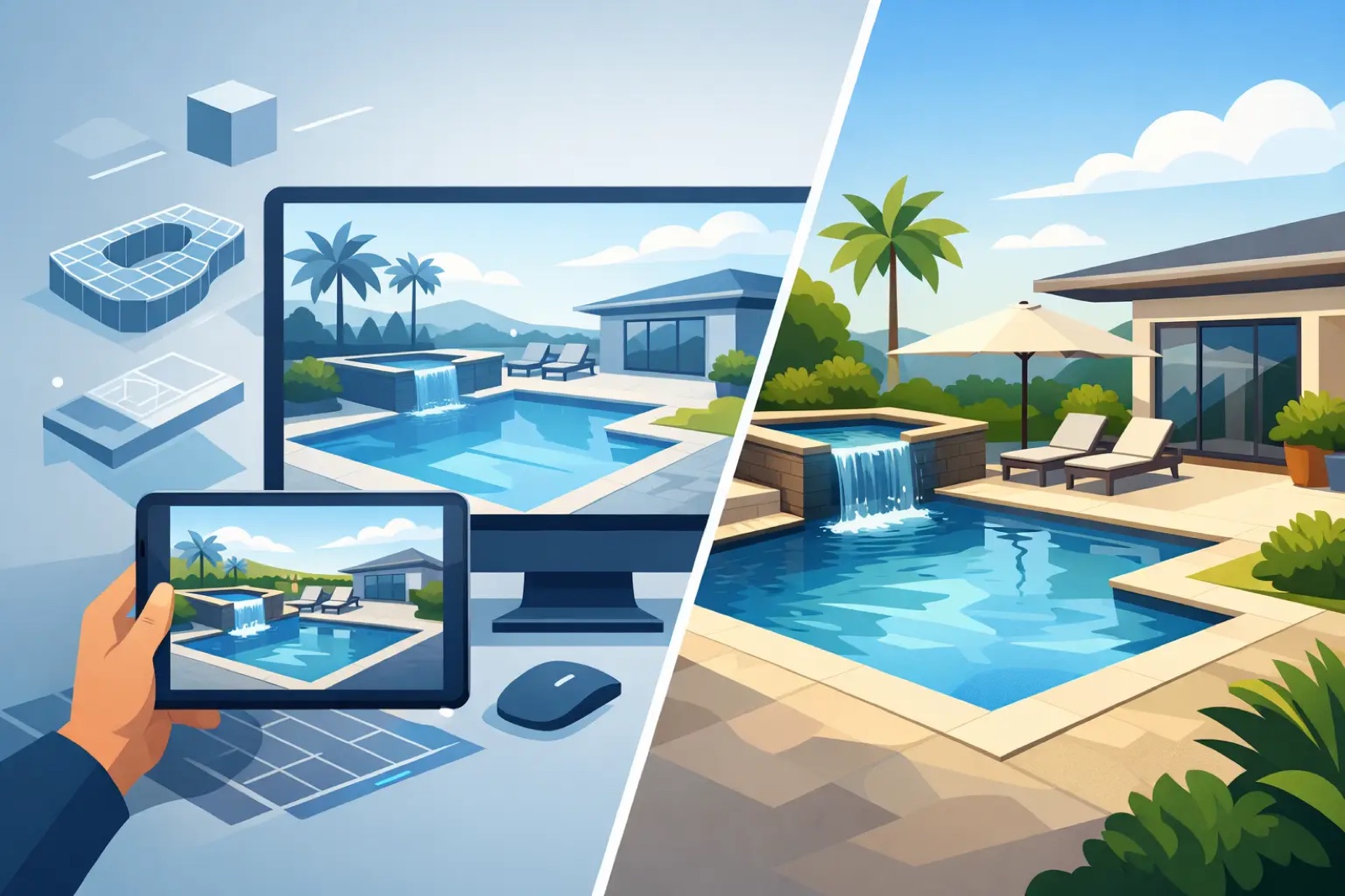
A builder with both pool and broader construction expertise can coordinate these details across the entire project. CHR Builder uses free 3D design to help homeowners visualize how pool lighting, patios, outdoor kitchens, and landscape features will work together before construction starts.
Plan for the View From Inside the Home
Your backyard lighting is not only for the people outside. After dark, the pool becomes part of the view from living rooms, kitchens, bedrooms, and covered patios. Consider the windows and doors that face the pool, then identify what should be visible from each location.
A softly illuminated pool can extend the sense of living space beyond the glass. A bright fixture aimed directly toward the house, however, can create unwanted reflections and reduce that effect. This is another reason a full-site lighting plan is more valuable than selecting pool lights alone.
Before finalizing your design, ask to see the lighting concept as part of the overall backyard plan. Confirm where each zone will be controlled, how the pool will look in white light and color modes, and which steps, paths, and features remain visible when the entertaining lights are dimmed.
The right lighting plan gives your pool a second life after sunset. Build it into the design early, choose quality where it matters, and let every illuminated detail earn its place in a backyard built for Texas livin.