
A pool can look perfect on paper and still feel wrong once it is in your backyard. That usually comes down to shape. If you are wondering how to choose pool shape, the best answer is not to start with trends. Start with how you live, how your lot is laid out, and how the pool needs to work in Texas heat, family life, and long-term maintenance.
The right shape does more than improve curb appeal from the patio. It affects swim space, decking layout, traffic flow, safety, cost, and how well the pool ties into the rest of your outdoor living area. A custom pool should feel like it belongs to the home, not like it was dropped into the yard as an afterthought.
How to choose pool shape based on your yard
The shape of your pool should respond to the shape of your property first. A wide backyard gives you different design options than a narrow side-facing lot. Likewise, a heavily fenced yard, an easement, drainage conditions, or existing trees can all limit what makes sense structurally and visually.
In many Houston-area neighborhoods, usable backyard space is tighter than homeowners expect once setbacks, equipment placement, and decking are factored in. That is why a free 3D design matters. It lets you see whether a geometric pool will fit cleanly or whether a softer freeform layout will better use the available footprint.
Rectangular and linear pools usually work well when the lot is clean, symmetrical, and modern. They make efficient use of space and often leave more organized room for patios, outdoor kitchens, and furniture groupings. Freeform pools can be more forgiving in irregular yards because they bend around constraints and create a more natural transition between pool and landscape.
If your home already has strong architectural lines, a geometric shape often looks intentional. If the yard feels more relaxed or includes curved planting beds and mixed-use entertainment zones, a freeform shape may feel more at home.
Think about how the pool will be used
A pool built for weekend parties should not be shaped the same way as a pool built for lap swimming or for young kids learning to swim. This is where many design decisions become personal.
If exercise matters, long straight runs are useful. A rectangle or elongated geometric pool gives you cleaner swim lanes and a more efficient use of water space. If your priority is socializing, tanning ledges, wraparound benches, and open shallow zones may matter more than swim length. In that case, a shape with pockets and curves can create separate areas for conversation and play.
Families often need a balance. Parents want visual control, kids want room to move, and guests want places to gather without blocking the main swim area. That can point toward a hybrid design - something structured enough to feel organized, but customized with features that soften the layout and make it more livable.
The best pool shape is not always the one with the boldest outline. It is the one that supports the way the backyard actually gets used on a Tuesday evening, a summer birthday party, and a quiet Sunday afternoon.
Match the pool shape to your home style
Pool design should feel connected to the house. A sleek new pool behind a traditional brick home can work, but only if the proportions, materials, and surrounding features tie everything together.
Modern homes usually pair well with rectangles, vanishing-edge looks, and crisp sightlines. These shapes create order and tend to photograph well because everything feels balanced. Traditional homes can go either way. Some look best with classic geometric forms, while others benefit from softer curves that keep the backyard from feeling too rigid.
Mediterranean, transitional, and custom luxury homes often have the most flexibility. What matters is not choosing a shape category just because it is popular. It is choosing one that complements rooflines, patio depth, window views, and the natural focal points of the property.
That is also why pool shape should be considered alongside the full outdoor plan. A pool does not stand alone. It sits next to decking, shade structures, kitchens, fire features, and lawn space. When those elements are designed together, the shape becomes part of a complete outdoor living environment instead of a separate project.
Geometric vs. freeform pool shapes
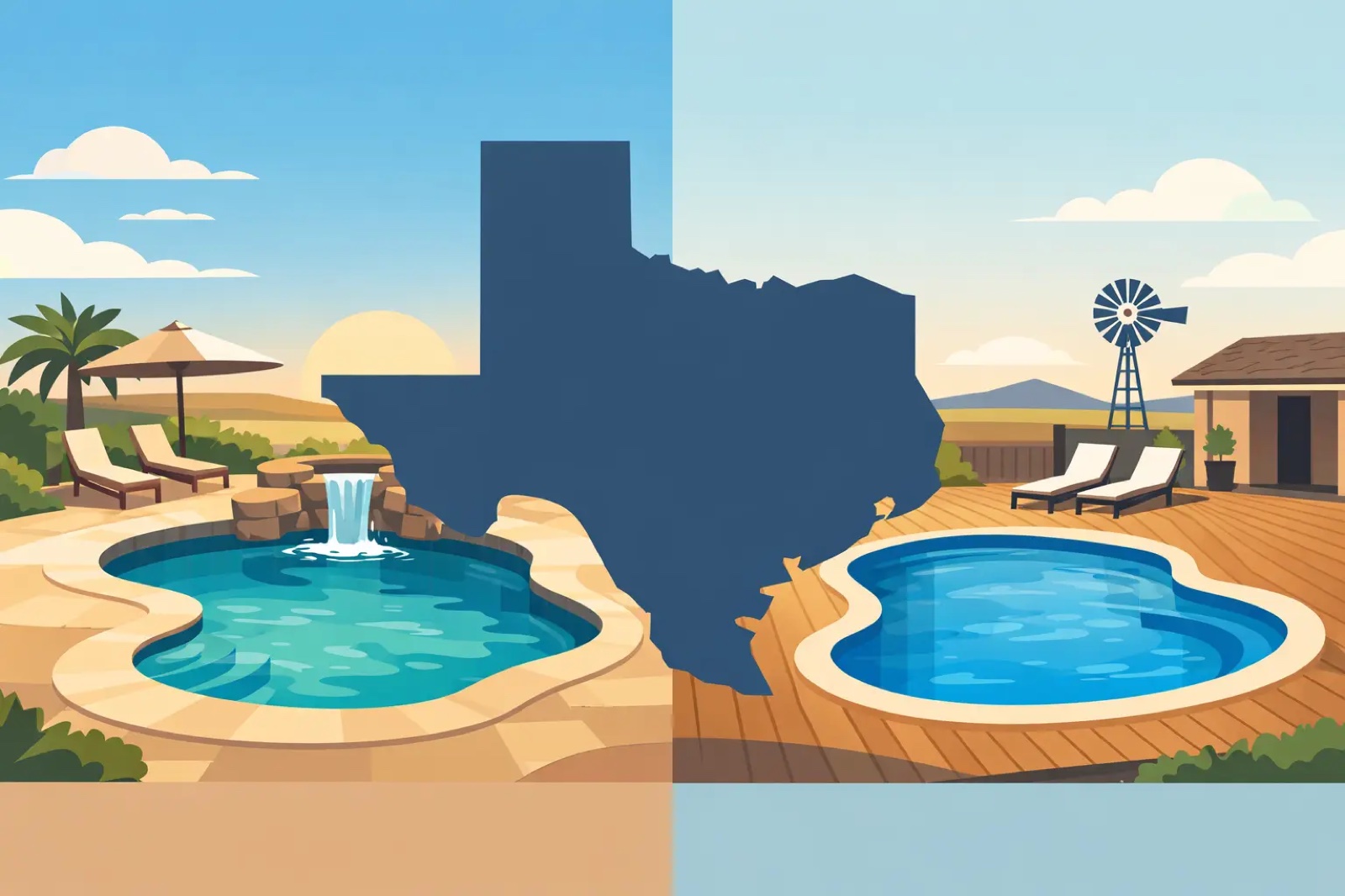
For most homeowners, this is the big decision. Geometric pools are clean, structured, and timeless. Freeform pools are relaxed, organic, and often more resort-like. Neither is automatically better. The right choice depends on priorities.
When a geometric pool makes sense
Geometric pools are a strong fit for homeowners who want a polished look and efficient use of square footage. They usually integrate well with modern patios and can make smaller yards feel more intentional rather than crowded. They also simplify certain features, such as auto covers, straight-edge coping, and defined swim lanes.
The trade-off is that a geometric design can feel formal if the rest of the backyard is loose and natural. It also puts more visual pressure on alignment. When a design is based on straight lines, every angle needs to be right.
When a freeform pool makes sense
Freeform pools bring softness and movement to the yard. They can feel more relaxed and can help blend the pool into landscaping. In some yards, they solve layout challenges more gracefully than a strict rectangle.
The trade-off is that freeform does not always mean more functional. Curves can reduce uninterrupted swim space, and some homeowners later realize they prefer cleaner edges for furniture layout and entertaining. A freeform pool works best when the curves serve a purpose, not when they are added just to look different.
Budget matters, but not in the way most people think
When homeowners ask how to choose pool shape, they often assume simple equals cheaper and custom curves equal more expensive. Sometimes that is true, but not always.
Cost is shaped by more than the outline of the pool. Excavation conditions, retaining needs, access to the yard, decking, water features, finishes, and engineering all affect the final number. A straightforward rectangular pool with upgraded materials and integrated features can cost more than a modest freeform design.
What matters most is choosing a shape that delivers value over time. A pool that fits the yard well and supports your lifestyle is less likely to feel dated or disappointing a few years from now. That is especially important in Texas, where the backyard gets real use for a large part of the year.
Don’t ignore maintenance and long-term ownership
Pool shape affects more than appearance. It can influence cleaning patterns, circulation, and renovation options down the road.
Straightforward shapes are often easier to clean and may support more predictable circulation when properly engineered. Pools with tight curves, unusual corners, or decorative extensions can create areas that need more attention. That does not mean complex shapes are a bad idea. It means the design should be backed by construction experience, not just a sketch.
This is where builder knowledge matters. A good design is not only attractive in a rendering. It is practical to maintain, structurally sound, and built to last through changing weather, shifting ground conditions, and years of use.
How to choose pool shape with 3D design in mind
Most people cannot fully judge pool shape from a flat floor plan. They need to see scale, sightlines, sun exposure, and how the water sits relative to the house and patio.
That is why visual planning is one of the smartest parts of the process. A 3D design helps answer questions before construction begins. Will the shape block yard space you still want to keep? Does it leave enough room for dining, lounge seating, or an outdoor kitchen? Does it look balanced from the main windows of the home?
In custom pool building, expensive mistakes usually start with assumptions. The more clearly you can see the design upfront, the easier it is to choose a shape with confidence.
The best pool shape is the one built around real life
There is no single best pool shape for every home in Katy, Houston, or the surrounding area. The best shape is the one that fits your lot, your architecture, your budget, and the way your family wants to live outside. Sometimes that means a sharp geometric layout. Sometimes it means a softer custom form. Often, it means a design that blends both.
At CHR Builder, that decision starts with the full picture - not just the pool itself, but the entire backyard experience and the structural quality behind it. Built for Texas livin means building something that looks right, functions well, and still feels like a smart investment years from now.
If you are choosing a pool shape, look past what is popular and pay attention to what will feel right every time you step outside.