A sun shelf can become the most-used square footage in a custom pool. When designing pool sun shelves, the goal is not simply to add a shallow ledge. It is to create a comfortable, durable place where kids can play, adults can lounge in the water, and the pool feels connected to the patio and the rest of your Texas backyard.
Often called a tanning ledge or Baja shelf, this feature deserves the same design attention as the pool shape, waterline tile, and decking. A shelf that is too shallow, too narrow, or placed in the wrong part of the pool can look good on a rendering but feel awkward after construction. A well-planned shelf supports how your family actually uses the backyard, from quiet afternoons to full weekend gatherings.
Start With How You Plan to Use the Shelf
The best sun shelf design starts with real-life use. A family with young children may want a broad, open play area with enough room for parents to sit nearby. Homeowners who entertain may prefer a clean lounge zone with space for two in-pool chairs, side tables, and a clear path into the deeper pool. If the pool is intended primarily for exercise or swimming, a more compact shelf can preserve valuable swim space.
Think about where the shelf sits in relation to the home, outdoor kitchen, covered patio, and main views from inside. A shelf near the patio keeps lounging and conversation close together. A shelf facing a favorite landscape feature can make the water feel like part of the larger outdoor room. On the other hand, placing it directly in the primary entry path may create traffic conflicts when guests are moving in and out of the pool.
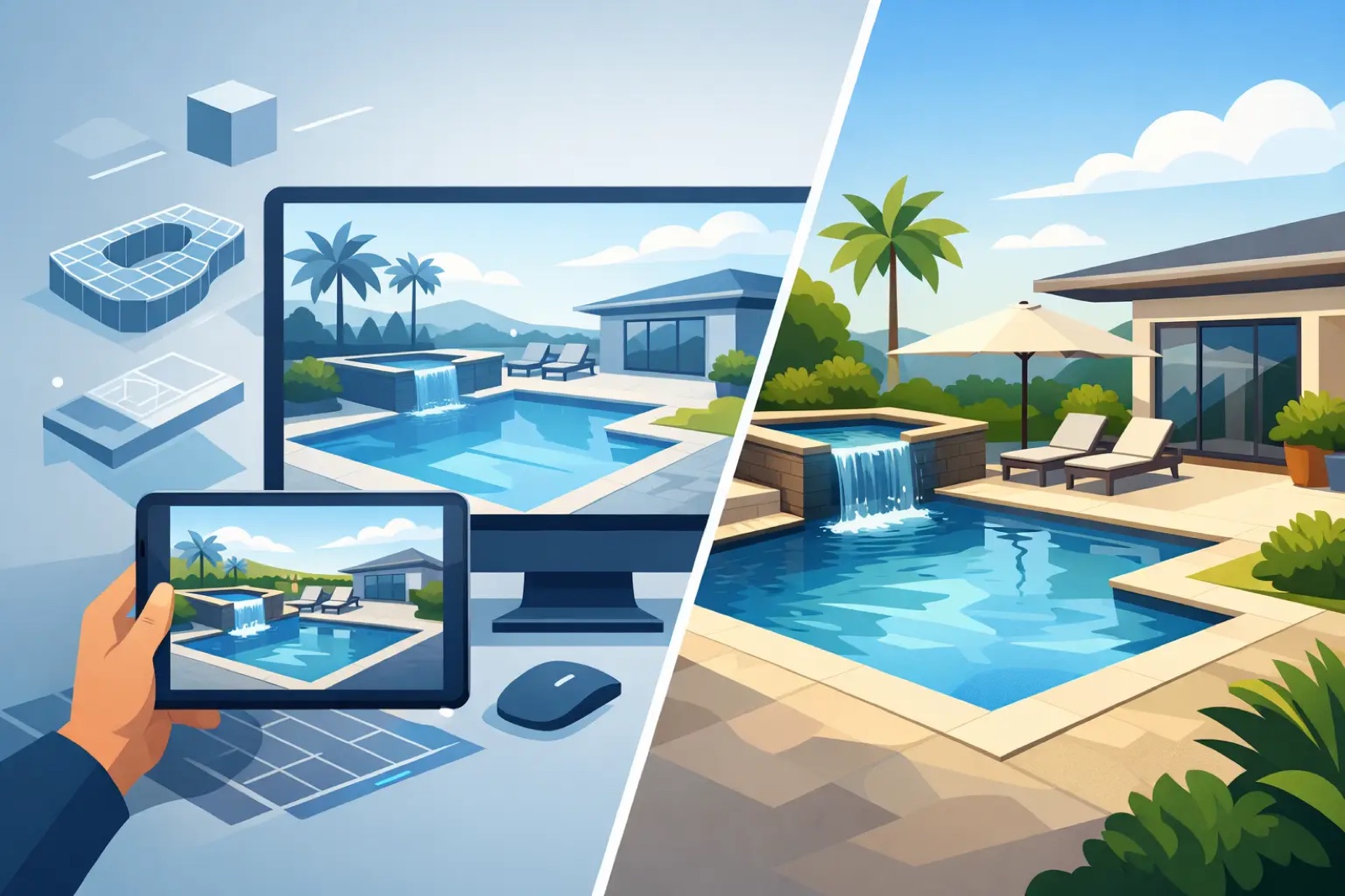
This is where a 3D design is especially useful. It lets you see whether lounge chairs crowd the entry, whether the shelf interrupts the pool’s visual lines, and how the feature relates to a spa, fire feature, or outdoor living area before construction begins.
Get the Depth Right Before Designing Pool Sun Shelves
Depth determines whether a sun shelf feels relaxing or frustrating. Most pool sun shelves are built between 6 and 12 inches below the waterline. That range works well for sitting in the water, allowing children to splash, and keeping submerged loungers partially covered.
A 6-inch shelf creates a lightly covered, resort-style look and works well with many in-pool chaise lounges. It can also feel warmer faster in the Texas sun. The trade-off is that it offers less water coverage for adults who want to cool off and may not work as well if the shelf will be used actively by older children.
A depth closer to 10 or 12 inches provides more cooling water and can feel more practical for a family-focused pool. It may also better accommodate certain furniture styles. However, deeper is not always better. A shelf that is too deep loses the easy, relaxed character that makes this feature appealing in the first place.
The finished depth must account for the pool’s interior finish, the waterline tile location, and how the water level will sit after the equipment is operating. Small measurement differences can change the final experience. An experienced pool builder plans these details early rather than treating the sun shelf as an add-on.
Size It Around Furniture, Not Just Empty Space
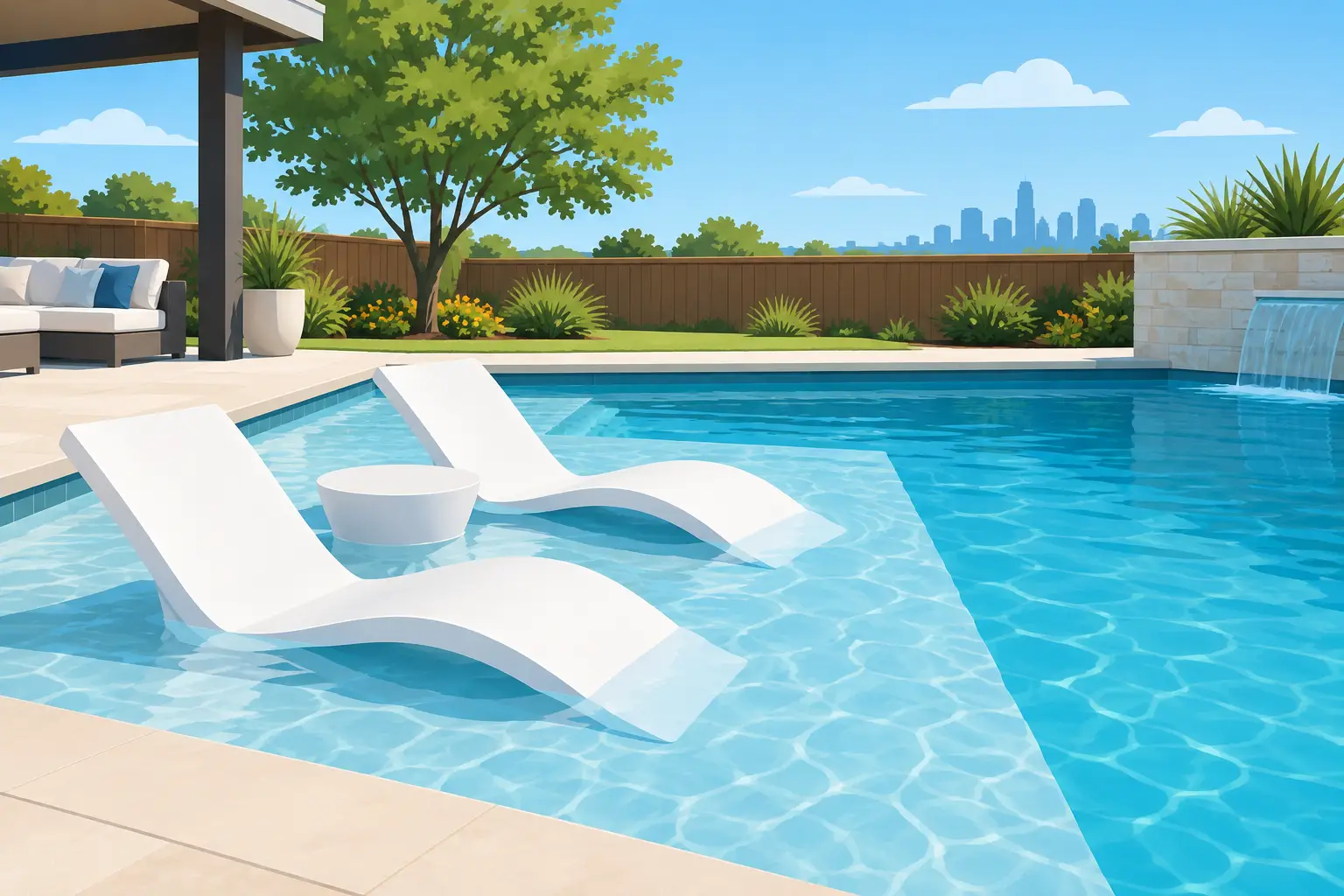
A shelf can look generously sized until two chaise loungers are placed on it. Before choosing dimensions, decide whether you want built-in furniture, portable loungers, umbrellas, or a combination of these elements.
For two in-pool chaise lounges, a shelf often needs at least 8 by 10 feet to feel comfortable, though the best size depends on the furniture footprint and desired walking clearance. Larger shelves in the 10-by-14-foot range can create a true social zone with multiple loungers, small tables, and room for children. A compact ledge may be the better choice for a narrow yard or a pool where uninterrupted swimming length matters more.
Avoid designing to the absolute minimum. You need clear space to walk around furniture, reach the pool steps, and move safely when the surface is wet. A shelf should feel intentional, not like a shallow corner squeezed into the pool plan.
For Houston-area backyards, scale also matters visually. A very large shelf can dominate a modest pool, while an undersized shelf can disappear in a larger luxury pool design. The right proportion creates a balanced view from the home and a comfortable experience in the water.
Plan Entry, Steps, and Traffic Flow
Sun shelves often include entry steps, but the configuration needs thoughtful planning. Wide steps at one side can make access feel natural while leaving the main shelf open for lounging. Centered steps can create a symmetrical look, particularly in formal pool designs, but they may divide the usable area.
If the pool includes a raised spa, consider whether the shelf should create a transition between the spa and the shallow end or remain separate. There is no single correct arrangement. It depends on the pool’s shape, the backyard layout, and the features competing for space.
Safety should guide the design as much as appearance. Clearly defined step edges, appropriate depth changes, and good lighting help family members and guests move confidently after sunset. Contrasting tile or a visible marker along step edges can improve visibility without taking away from the finished look.
Choose Materials That Hold Up to Texas Conditions
Sun shelves receive intense direct sunlight, repeated chemical exposure, furniture contact, and constant foot traffic. Material choices should be made for long-term performance, not just first-day appearance.
A quality plaster or exposed aggregate finish provides a durable surface under water and can complement nearly any pool style. Lighter finishes often keep the shelf visually bright and can make the water appear cleaner and more inviting. Darker finishes can deliver a dramatic, modern look, but they may absorb more heat and make surface debris more noticeable.
Waterline tile is another opportunity to define the shelf. Tile along the shelf perimeter can create a crisp visual boundary, while matching the pool’s waterline tile creates a unified design. For a more subtle look, the interior finish can carry across the entire pool with minimal tile accents.
Decking around the pool matters too. Travertine, porcelain pavers, and properly selected textured concrete can provide attractive, slip-conscious surfaces for hot Texas weather. The best choice depends on your style, maintenance expectations, budget, and how much direct sun the area receives.
Add Features With a Purpose
A few well-selected features can make a sun shelf more functional and more enjoyable. Bubblers are a popular choice because they create movement, sound, and a playful focal point for children. They also add a polished resort feel without requiring a large footprint.
Umbrella sleeves are useful in Katy and Houston summers, when shade can determine how long a family stays outside. A built-in sleeve keeps an umbrella stable and avoids placing a heavy base on the patio. Position it carefully so the canopy shades loungers without blocking walking paths or creating conflict with nearby furniture.
LED lighting can extend use into the evening and improve visibility around steps and edges. For a quieter visual style, keep lighting focused on safety and water glow rather than adding too many competing colors or effects. The shelf should complement the entire pool environment, including landscaping, patio lighting, and outdoor kitchen areas.
If young children will use the shelf regularly, leave open space rather than filling every inch with loungers or water features. Families often value flexibility more than a fully accessorized design.
Account for Construction and Long-Term Care
A sun shelf is a structural pool feature, not patio furniture placed in shallow water. It must be engineered and built as part of the full pool shell, with proper reinforcement, plumbing placement, surface preparation, and drainage planning around the pool deck.
In the Houston region, soil movement, drainage, and heavy rain events all affect outdoor construction decisions. The pool design should account for grading and water management so runoff moves away from the pool and home. Equipment selections, circulation, and return placement also matter because shallow water can show debris and chemical imbalances quickly.
Maintenance is straightforward when the design is planned well. Keep the shelf brushed, maintain balanced water chemistry, and inspect furniture feet or bases for areas that may trap debris. If the pool has hard-water buildup, professional calcium removal can help restore the finish and preserve the clean look that makes a sun shelf feel luxurious.
Build a Shelf That Belongs in the Whole Backyard
The strongest pool designs do not treat the sun shelf as a separate feature. They use it to connect the pool with the patio, shade structures, outdoor kitchen, landscaping, and the way the homeowners want to spend time outside.
CHR Builder helps homeowners turn those decisions into a complete construction plan with custom design guidance and free 3D pool design. Before choosing dimensions or finishes, walk your backyard, picture where people will sit and move, and decide what the shelf needs to do for your family. A sun shelf built around those answers will feel just as right on a quiet Tuesday afternoon as it does when the backyard is full of guests.