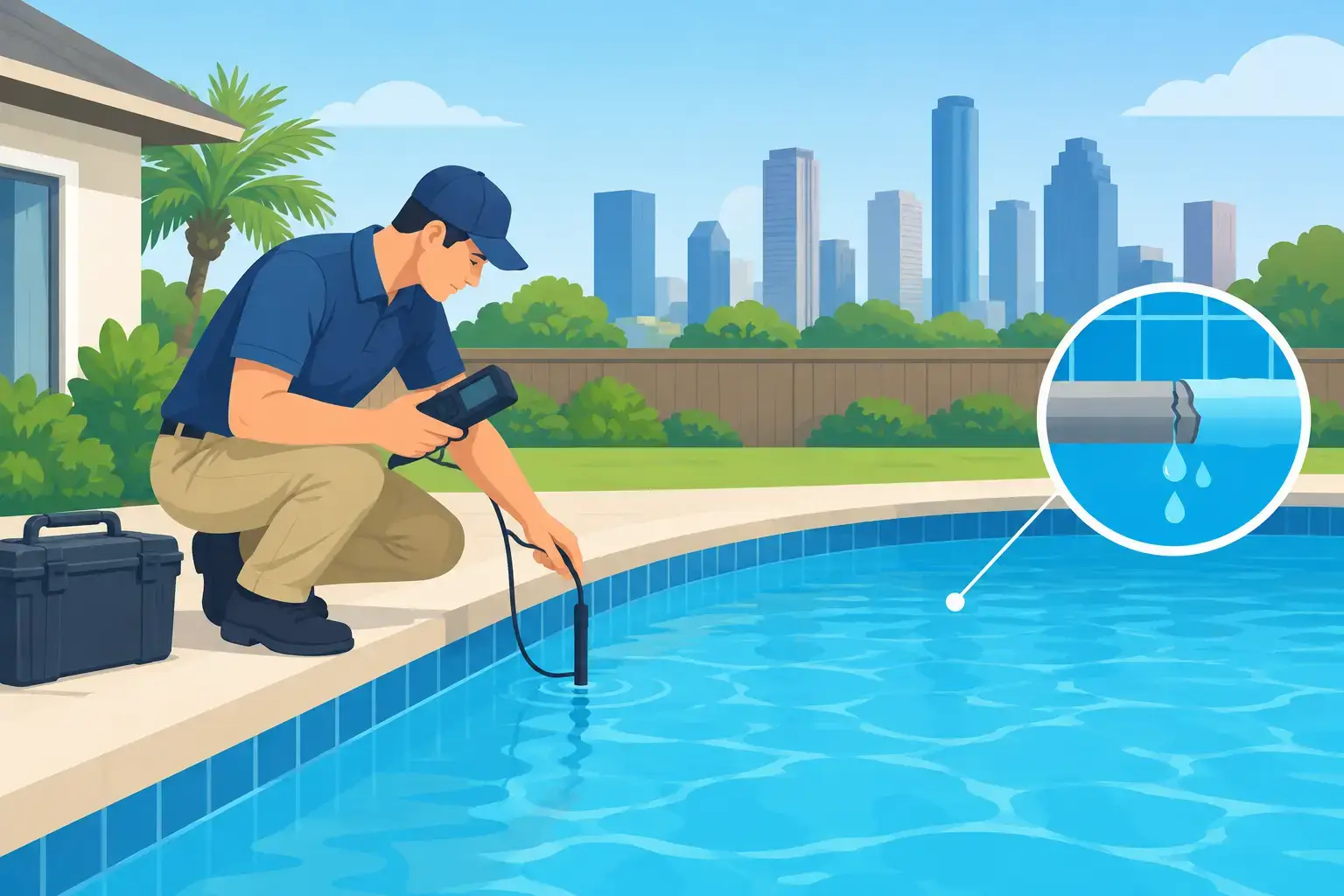
A pool that needs the hose every few days is not just an inconvenience. In Houston-area heat, water loss can be easy to dismiss as evaporation, but a proper pool leak diagnosis can reveal problems that affect your pool shell, plumbing, equipment pad, and long-term repair costs.
For Katy and Houston homeowners, the right response is not to guess or keep adding water. It is to identify the pattern, rule out normal evaporation, and bring in experienced help before a small issue becomes damage beneath the deck or around the pool structure.
Pool Leak Diagnosis Starts With the Pattern
The first question is simple: is the pool actually leaking, or is it losing water through normal evaporation? Texas summers can produce noticeable evaporation, especially when temperatures stay high, wind is up, and the pool receives direct sunlight for most of the day. Splash-out from active families, pets, and pool gatherings also adds up.
Still, evaporation usually happens gradually and consistently. A leak often creates a more aggressive or irregular drop in water level. If you are adding several inches of water each week, noticing soggy soil near the pool, seeing air bubbles returning through the pool jets, or watching the pump lose prime, it is time to investigate.
Pay attention to when the loss occurs. Water that drops faster while the pump runs can point toward a pressure-side plumbing issue, such as a return line. Water that drops faster while the system is off may suggest a suction-side line, a structural crack, a failing skimmer, or a leak around a fitting. This pattern does not confirm the exact location, but it gives a professional a valuable starting point.
The Waterline Can Offer a Clue
Let the water level fall naturally for a day or two while keeping a close eye on it. If it stops at a specific point, inspect what sits at that elevation. The skimmer throat, light niche, return fitting, tile line, steps, and plumbing penetrations are all common areas of concern.
Do not let the water fall below the skimmer opening or run equipment without adequate water. A leak test should protect the pump and filtration system, not create an additional repair.
Try the Bucket Test Before Assuming the Worst
The bucket test is a practical first step for homeowners. It compares pool water loss with evaporation outside the pool under the same weather conditions. It cannot pinpoint a leak, but it can help determine whether further pool leak diagnosis is warranted.
Place a bucket on a pool step so the water inside the bucket is close to the same temperature as the pool water. Fill the bucket with pool water until its level matches the water level outside the bucket. Mark both water lines with tape or a pencil, then leave the pool undisturbed for 24 hours.
Run the first test with the circulation system operating normally. If the pool water drops significantly more than the bucket water, a leak is likely. Repeat the test with the pump off for another 24 hours if practical. Comparing both results can help show whether the loss is connected to circulation plumbing or occurs regardless of pump operation.
Keep the test conditions realistic. Do not perform it immediately after a storm, during heavy pool use, or while the autofill system is running. If your pool has a waterfall, spa spillover, deck jets, or other water features, turn them off during the test so they do not distort the results.
Where Pool Leaks Commonly Hide
A leak is not always a visible crack in the pool. In fact, many of the most frustrating leaks occur in places homeowners cannot inspect without specialized equipment and experience.
Skimmers, Lights, and Return Fittings
Skimmers are a frequent trouble spot because they connect the pool shell to plumbing and experience constant water movement. Cracks in the skimmer body, separation around the throat, or deteriorated sealant can allow water to escape behind the pool wall.
Light niches and return fittings also depend on watertight seals. A failing light conduit, worn gasket, or loose fitting can create a slow leak that is difficult to see from the surface. These repairs require care because electrical components and underwater penetrations are involved.
Plumbing Lines and Equipment
A plumbing leak may leave few obvious signs in the pool itself. You may notice wet ground near the equipment pad, unexplained air in the pump basket, reduced circulation, or a pressure reading that no longer behaves normally.
Underground lines can shift over time due to soil movement, root intrusion, age, and prior construction activity. Houston-area clay soils expand and contract with moisture changes, placing added stress on pipes, fittings, and the area surrounding a pool. Locating these leaks often requires pressure testing and specialized detection methods rather than excavation based on guesswork.
Structural Cracks and Surface Failures
Not every crack is structural, and not every structural concern is visible. Fine surface cracking can be cosmetic, while a crack that moves, widens, or continues through the plaster and shell deserves professional attention.
Look for new cracks, hollow-sounding areas, loose tile, damaged coping, or a visible gap where the deck meets the pool. These signs may relate to movement, drainage problems, or an aging pool finish. The right repair depends on the cause. Patching a visible crack without addressing the movement behind it may only delay the next repair.
When DIY Testing Should Stop
Homeowner testing is useful for confirming that water loss deserves attention. It is not a substitute for a complete diagnosis when the cause is unclear. Avoid repeatedly adding chemicals, sealants, or patch products in hopes of solving an unseen problem. Some products can affect water balance, filtration performance, or future repair work.
Call for professional evaluation when the bucket test indicates a leak, the water level is falling quickly, equipment is drawing air, the ground remains wet near the pool, or cracking is visible around the shell or deck. A professional can assess the pool as a system, including the vessel, plumbing, equipment, and surrounding structure.
This is especially valuable for older pools and pools scheduled for remodeling. A new finish, tile, coping, or patio upgrade is the right time to identify hidden concerns before the visible work begins. Repairing a leaking line after a new deck has been installed is far more disruptive than planning the correction early.
Choose Repairs That Protect the Whole Backyard
The best repair is not always the fastest patch. A worn gasket may call for a targeted replacement, while a compromised plumbing section may need a more durable correction. If the pool surface is aging, calcium buildup is severe, or deck drainage is contributing to the problem, the most cost-effective plan may combine repairs with restoration work.
At CHR Builder, we look at leaks in the context of the complete backyard. With more than 25 years of construction experience, our team understands how pool structure, hardscape, drainage, and outdoor living features work together. That construction-led perspective matters when you are protecting a premium backyard investment built for Texas livin.
If your pool is losing water, document the pattern, protect your equipment, and schedule an evaluation before the issue spreads beyond the pool. A clear diagnosis gives you the confidence to make the right repair, preserve your backyard, and get back to enjoying it.