If your pool finish feels rough, looks stained, or has started showing cracks, the question usually comes down to pool resurfacing vs replastering. Homeowners in Katy, Houston, and nearby Texas communities often use those terms like they mean the same thing, but they are not always identical. Knowing the difference can save you money, prevent a short-term patch job, and help you choose a finish that actually fits how you use your backyard.
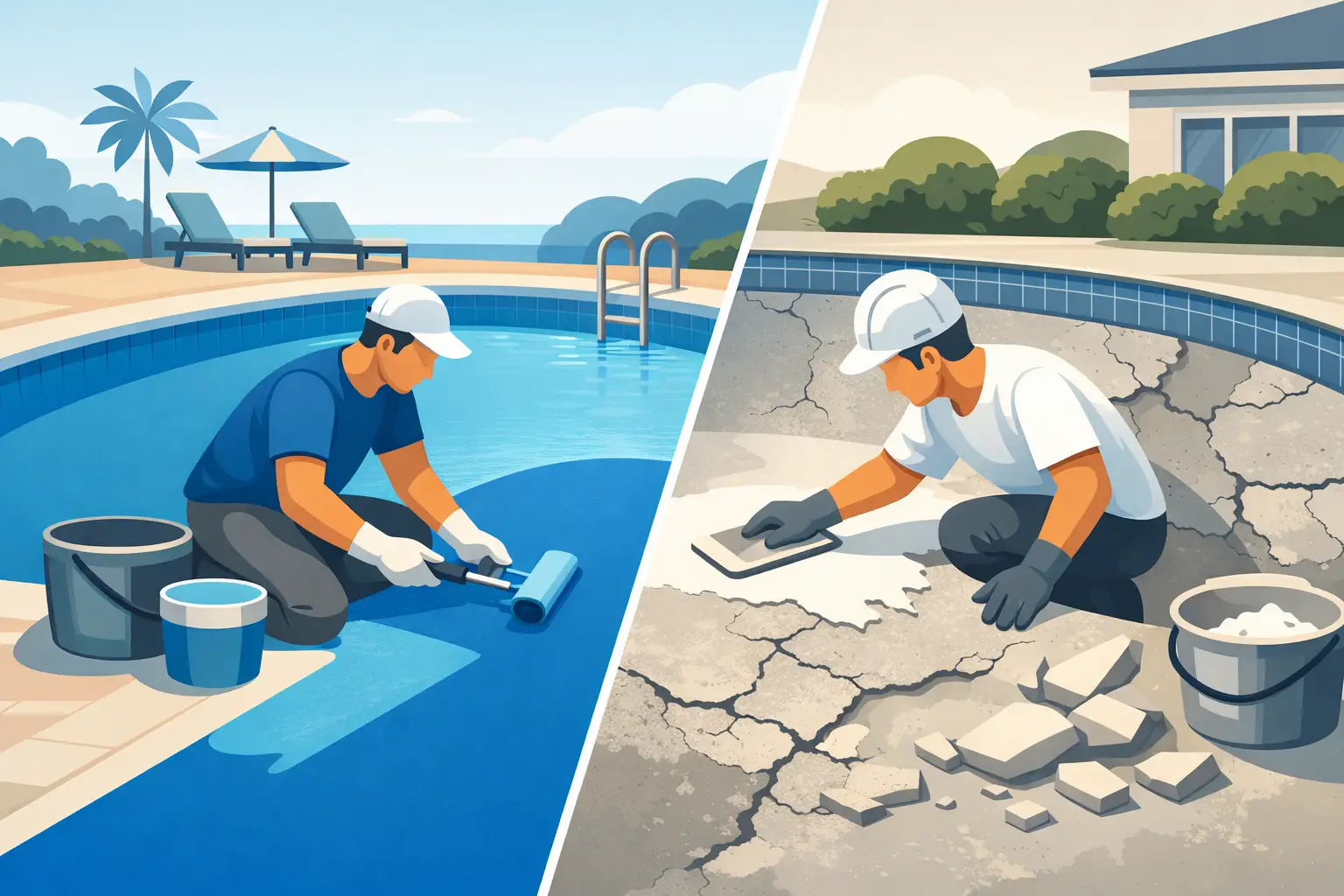
In simple terms, replastering is one type of pool resurfacing. Resurfacing is the broader category. It refers to renewing the interior finish of a pool, whether that means standard white plaster, quartz, pebble, or another upgraded surface. Replastering specifically refers to applying a new plaster-based finish to the pool shell.
That distinction matters because some pools need a straightforward plaster replacement, while others need a more complete surface upgrade or underlying repair before any new finish goes on.
Pool resurfacing vs replastering: what changes?
Think of resurfacing as the full conversation and replastering as one answer inside it. When a contractor recommends resurfacing, they may be talking about removing the worn interior surface and replacing it with a new material that improves appearance, comfort, durability, or all three. That new finish might be traditional plaster, but it could also be quartz or pebble if you want longer life or a different look.
Replastering is narrower. It usually means the old plaster is prepped or removed, bond coat is applied as needed, and a fresh plaster layer is installed. If your pool already has a plaster finish and the structure is sound, replastering may be the right move.
Where homeowners get tripped up is assuming the least expensive finish is always the smartest option. That depends on the age of the pool, water chemistry history, visible damage, and what kind of result you want long term.
When replastering is enough
A pool can be a good candidate for replastering when the shell is in solid condition and the main problem is finish wear. In that case, the old plaster may be etched, stained, discolored, or rough underfoot, but the pool itself is not dealing with major movement, beam damage, or serious structural cracking.
This is common in older backyard pools around the Houston area where the basic shape still works well, but the interior finish has simply reached the end of its service life. Standard plaster can be an effective solution if you want a clean, classic look and a lower upfront cost.
Replastering also makes sense when the goal is restoration rather than redesign. If you are not changing tile, coping, waterline details, or pool features, a fresh plaster surface can refresh the entire appearance without turning the project into a larger renovation.
That said, plaster is not the longest-lasting finish on the market. It can wear faster than quartz or pebble, especially if water chemistry has been inconsistent. For some homeowners, a lower initial price is worth it. For others, replacing plaster with another plaster finish every several years is not the best long-term value.
When full resurfacing makes more sense
If your pool needs more than a cosmetic reset, resurfacing is usually the better term and the better approach. This may involve changing the finish material, correcting failed spots, preparing damaged substrate, or combining the finish work with broader remodeling.
A full resurfacing project is often the smarter choice when the existing surface is failing unevenly, when there are hollow spots or delamination, or when you want a more durable and upscale finish. Homeowners who are already investing in backyard upgrades often choose this route because it improves both performance and visual impact.
For example, if you are modernizing an outdated pool, resurfacing can be paired with new tile, coping, lighting, tanning ledges, water features, or patio updates. Instead of putting a fresh coat on an older look, you are rebuilding the interior finish as part of a bigger transformation built for Texas livin.
In these cases, the finish selection becomes part of the design strategy, not just a maintenance decision.
The materials matter more than many homeowners expect
One reason pool resurfacing vs replastering can feel confusing is that the material choice changes the outcome so much. Not all new finishes perform the same.
Traditional white plaster is the most familiar option. It offers a smooth, bright finish and usually carries the lowest entry cost. It can look great, but it is also more vulnerable to etching, staining, and wear over time.
Quartz finishes blend plaster with aggregate for added durability and more visual depth. They typically hold up better than plain plaster and give homeowners more color options without moving fully into a premium pebble look.
Pebble finishes are known for durability, texture, and a high-end appearance. They usually cost more upfront, but many homeowners prefer them because they last longer and create a more custom feel. If your backyard is becoming a larger outdoor living space with upgraded hardscapes and entertaining areas, pebble often fits the overall investment better.
So if you are comparing bids, do not just ask whether the contractor is resurfacing or replastering. Ask exactly what material is being installed, how the surface will be prepared, and what condition the underlying shell is in right now.
Signs your pool needs more than a fresh finish
Some pool interiors are worn out. Others are warning you about a deeper issue. Surface cracks, flaking, rough spots, and staining do not always mean structural trouble, but they should be evaluated carefully.
If the finish is chipping away in isolated areas, if there are recurring cracks, or if you have noticed water loss, shifting deck sections, or tile line separation, the project may require repairs before any new interior coating goes on. Putting fresh plaster over a problem underneath usually does not solve anything for long.
This is where working with an experienced builder matters. A construction-led company sees beyond color samples and finish textures. It can evaluate shell condition, prep requirements, drainage concerns, and how the entire pool environment is aging together.
For Texas homeowners, that bigger-picture view is especially valuable. Heat, soil movement, heavy use, and water chemistry all play a role in how pool surfaces wear over time.
Cost is part of the decision, but not the whole decision
Most homeowners start with price, and that is fair. Replastering with standard plaster is often less expensive than a broader resurfacing project with premium materials. But lower upfront cost does not always mean lower ownership cost.
If you plan to stay in your home for years and want a finish that supports property value, visual appeal, and durability, paying more now may make sense. If you are restoring a pool to good condition before a home sale, a more straightforward replastering job may be the practical choice.
It also depends on what else is happening in the backyard. If you are already updating patios, outdoor kitchens, or poolside features, resurfacing with a more durable finish can help the entire space feel cohesive. A premium outdoor environment deserves a finish that looks intentional, not temporary.
What to ask before you approve the work
Before moving forward, ask your contractor how they define resurfacing in your specific case. You want to know whether they are recommending standard replastering, a finish upgrade, or a repair-driven renovation.
Ask what prep work is included, whether damaged areas will be removed and repaired, what finish options fit your pool and usage, and how the material choice affects lifespan and maintenance. A trustworthy contractor should be able to explain the trade-offs clearly, not just push the highest-priced option.
This is also the right time to think beyond the pool interior. If the coping, tile, deck, or surrounding outdoor living features need attention, bundling improvements into one coordinated plan can be more efficient and produce a better final result.
At CHR Builder, that kind of planning matters because the best pool finish is not just about the waterline. It is about how the entire backyard works together, from structure to style.
The right answer depends on your pool and your plans
Pool resurfacing vs replastering is not really a debate about which term is better. It is about choosing the right scope of work. If your pool shell is sound and you want a clean reset, replastering may be all you need. If your surface is failing, your design feels dated, or you want a finish that better matches a premium backyard, resurfacing opens the door to stronger and more customized results.
The best next step is a professional evaluation that looks at surface wear, structural condition, finish options, and how you want to use your space in the years ahead. A well-finished pool should do more than look new on day one. It should feel like it belongs in the backyard you actually want to come home to.