A backyard patio does more than fill the space around a pool. It sets the tone for cookouts, quiet evenings, kids coming in from the water, and the everyday use your outdoor living area will get for years. When weighing a concrete patio versus pavers, Houston-area homeowners need to look beyond the first-day appearance. Texas heat, clay soils, rainfall, pool water, and long-term maintenance all deserve a place in the decision.
Both materials can create a beautiful, durable outdoor space. The better choice depends on your design, your property conditions, how you plan to use the patio, and how much flexibility you want down the road.
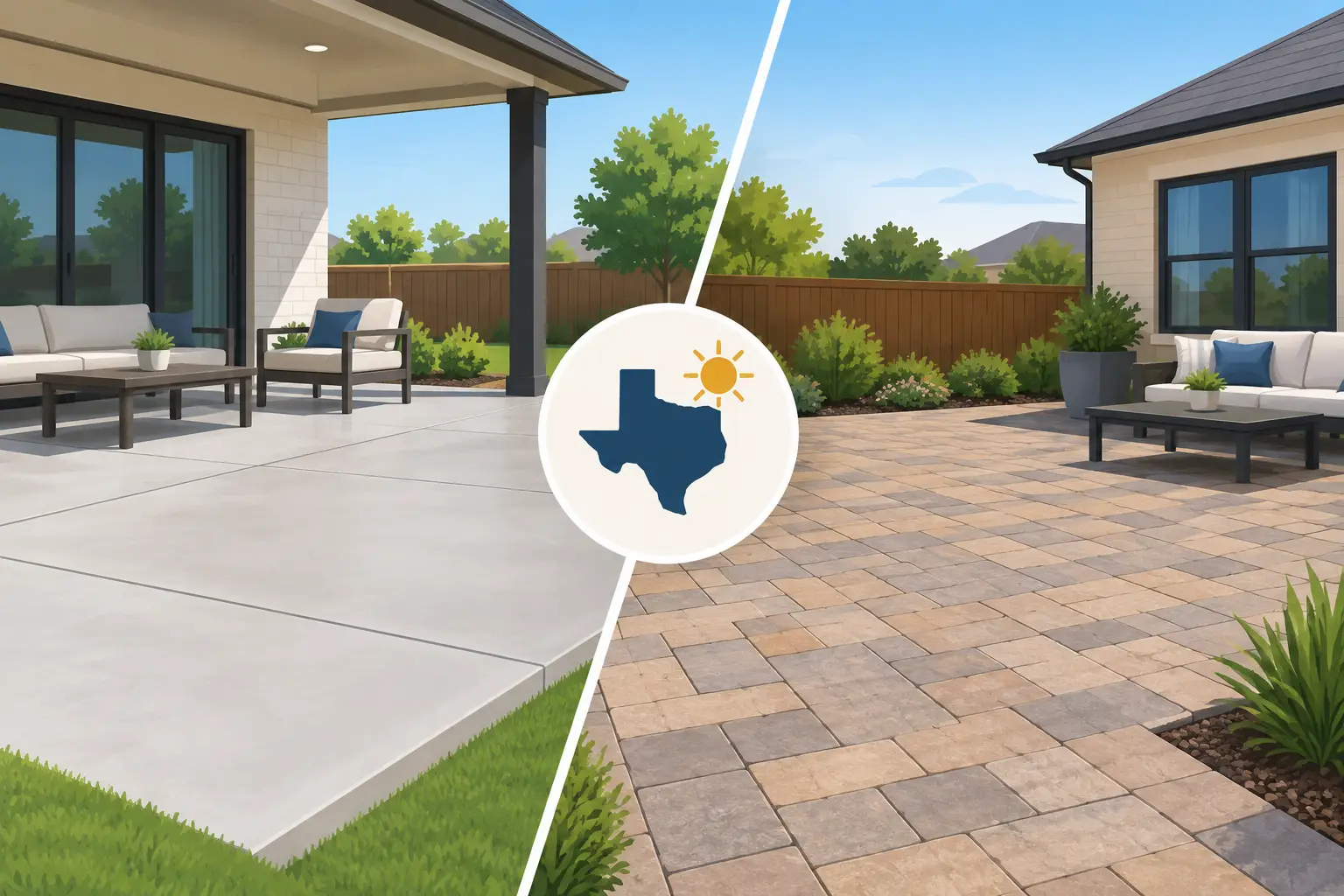
Concrete Patio Versus Pavers: The Core Difference
A concrete patio is a continuous poured surface. It can be finished with a simple broom texture, colored, stamped to resemble stone, or customized with saw-cut patterns and decorative borders. Its clean, unified look works especially well with modern pool designs and large outdoor living layouts.
Pavers are individual units, typically made from concrete, natural stone, or porcelain, installed over a prepared base with joint material between them. They create texture, pattern, and visual movement. Because the surface is made of separate pieces, pavers also offer a practical advantage when one area needs repair or access later.
There is no universal winner. A well-built concrete patio can outperform poorly installed pavers, and poorly prepared concrete can crack regardless of how attractive it looked at installation. The real value comes from proper planning, excavation, base preparation, drainage, reinforcement, and skilled installation.
Why Homeowners Choose Concrete Patios
Concrete is often the right fit for homeowners who want a polished, open layout with fewer visual breaks. It is particularly effective for large patios, outdoor kitchens, covered structures, fire features, and pool decks where a continuous surface helps the design feel intentional.
Lower upfront cost for many large spaces
For broad patio areas, standard finished concrete is often less expensive than premium paver systems. Material costs, installation time, pattern complexity, and site preparation all affect final pricing, but concrete can offer strong value when the goal is to cover significant square footage with a clean finish.
Decorative concrete does narrow that price gap. Stamped patterns, integral color, hand-applied finishes, borders, and specialty sealers add cost, but they can also provide a custom look without using individual pavers across the entire backyard.
A sleek foundation for a custom backyard
Concrete works well when the patio needs to support the visual weight of a pool, outdoor kitchen, pergola, or covered patio. A light-colored finish can brighten the yard and help reflect some heat. A textured finish also provides better traction than a smooth troweled surface, an important consideration around a pool.
The trade-off is that concrete is a slab. It needs planned control joints to manage cracking, and cracks can still occur as soil moves, temperatures shift, and the material cures over time. Joints and good installation help control where cracking happens, but they do not make a concrete surface completely immune to movement.
What maintenance looks like
Concrete needs periodic cleaning and may benefit from resealing, especially if it is decorative or exposed to frequent pool splashing, food spills, and heavy sun. Stains, fading, and surface wear are often manageable, but a major crack or settlement issue is harder to disguise than it would be with pavers.
Why Homeowners Choose Pavers
Pavers are a strong choice for homeowners who want a more detailed, high-end surface with long-term repair flexibility. They are available in a wide range of colors, sizes, laying patterns, and edge treatments, making them easier to coordinate with stone coping, outdoor kitchens, retaining walls, and architectural details on the home.
Built-in flexibility for shifting soil
Houston-area properties can have expansive clay soils that swell with moisture and contract during dry conditions. Properly installed pavers are not unaffected by soil movement, but their segmented format can be more forgiving than one continuous slab. If a localized area settles, an experienced contractor can lift the affected pavers, correct the base, and reinstall them.
That repairability is a meaningful advantage for pool decks and utility-heavy outdoor spaces. If future work requires access to plumbing, drainage, or electrical runs beneath the patio, pavers may allow a more targeted repair than cutting and patching concrete.
Better visual customization
Pavers offer more opportunities to create contrast and detail. You might use a larger-format paver for the main deck, a darker border around the pool, and a complementary material beneath an outdoor dining area. The result can feel layered and custom without overwhelming the rest of the landscape.
Their joints can also help break up the visual expanse of a large backyard. That is useful when a patio needs to connect several zones, such as the pool, grilling area, lounge seating, and a fire feature, while keeping each space visually defined.
What maintenance looks like
Pavers need routine cleaning, and joint sand may need replenishing over time. Depending on the installation and surrounding landscape, weeds can occasionally appear in joints. Sealing is optional in many cases, but it can enhance color, make cleanup easier, and help protect the surface from stains.
The key is the base below the pavers. A beautiful paver surface installed on an inadequate base can settle, shift, or develop uneven areas. Proper excavation, compaction, edge restraints, drainage planning, and installation practices matter far more than choosing a trendy paver color.
Texas Heat, Rain, and Pool Water Change the Decision
Material selection should reflect the realities of Texas living. In Katy, Houston, and surrounding communities, patios are exposed to intense sun, sudden downpours, high humidity, and long warm seasons of daily use.
Heat is one consideration. Dark surfaces tend to get hotter under direct sun, whether they are concrete or pavers. Lighter colors generally feel more comfortable underfoot, though no patio material stays cool in full summer sun. Shade structures, strategic landscaping, and the orientation of the pool and patio often have as much impact on comfort as the surface itself.
Drainage is another non-negotiable. Water should move away from the home and be managed around the pool, patio, and landscape beds. Standing water can create slippery conditions, undermine bases, encourage staining, and make an otherwise premium backyard feel unfinished. A patio should be designed as part of the full site plan, not installed as an isolated hardscape surface.
For pool areas, texture and drainage deserve special attention. The goal is a surface that feels comfortable, provides reliable traction, and works with the pool’s coping, waterline finishes, and surrounding features.
Cost Should Include the Long View
The upfront price of a concrete patio versus pavers matters, but it should not be the only number guiding the project. Consider how long you expect to stay in the home, how much design flexibility you want, and what a future repair could look like.
Concrete may make more sense when you want a large, streamlined patio with a controlled budget and a modern appearance. Pavers may justify their higher initial investment when repairability, detailed design, and flexibility around soil movement are priorities.
It is also worth comparing complete scopes rather than square-foot material pricing alone. Demolition, grading, drainage, base preparation, reinforcement, edge details, sealing, and integration with a pool or outdoor kitchen can substantially affect the finished investment. A low initial quote that overlooks those details can become expensive later.
Choose the Surface That Supports Your Whole Backyard
If your vision calls for a crisp, contemporary pool deck, expansive entertainment space, and minimal visual interruption, concrete may be the right foundation. If you want rich texture, custom patterns, and the ability to address localized movement without replacing a large section of patio, pavers are often the better fit.
Many premium backyard projects use both. For example, concrete can create a broad, functional dining and kitchen patio, while pavers add definition around the pool or create a standout lounge zone. The best combination is the one that looks cohesive and performs well under real Texas conditions.
At CHR Builder, patio choices are considered alongside the pool, drainage, outdoor kitchen, shade, and circulation plan from the beginning. A free 3D design can help you see how concrete, pavers, colors, and layout decisions will work together before construction begins.
Your patio should not be an afterthought or a surface selected from a sample board alone. Choose the material that fits your home, handles your site conditions, and gives your family a backyard built for Texas livin for many seasons ahead.