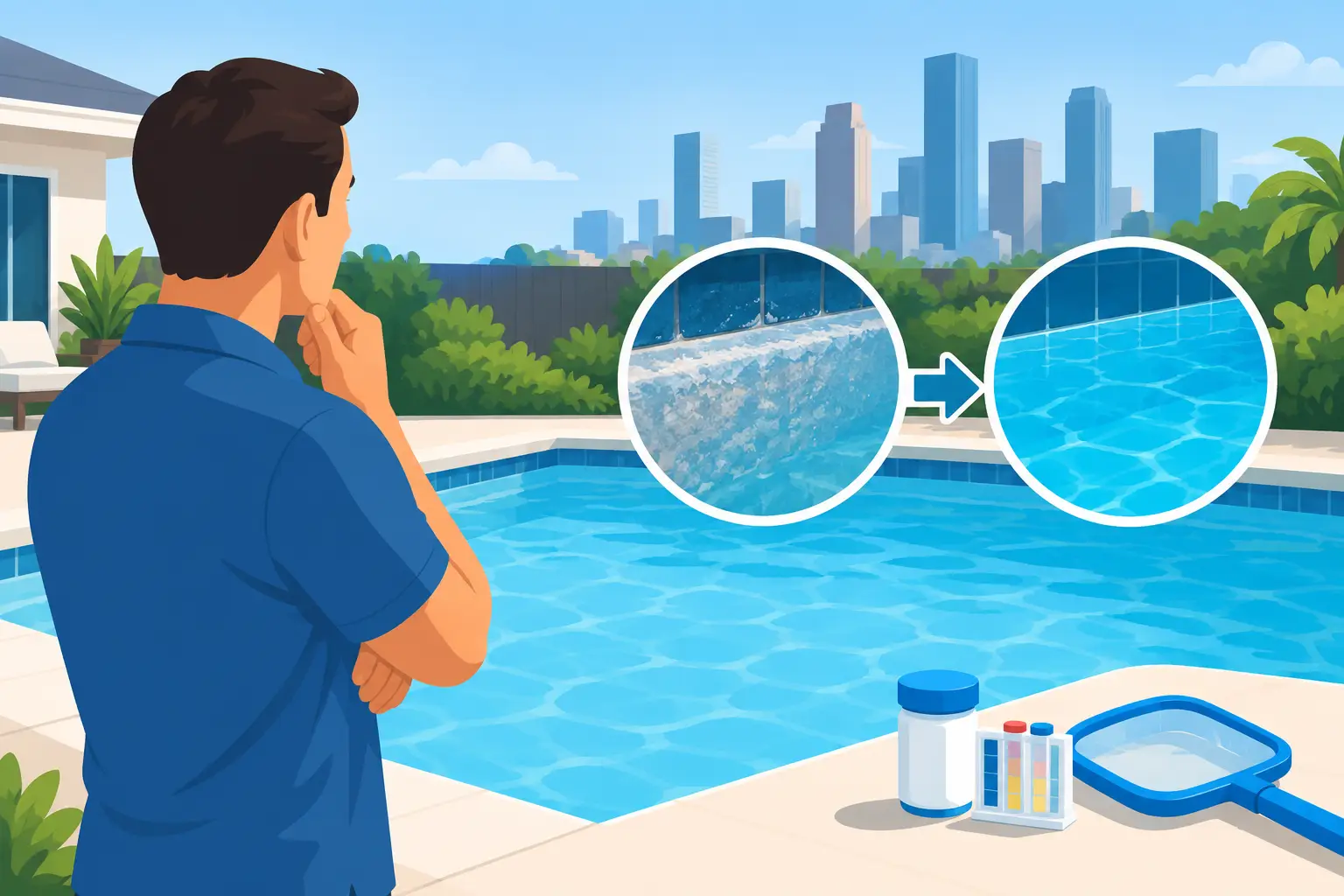
That chalky white line around your waterline is not just making an otherwise beautiful pool look neglected. In Houston-area pools, mineral scale can build up quickly, turning blue tile dull, roughening stone, and distracting from the backyard you invested in. So, can pool calcium be removed? Yes, in many cases, but the right method depends on where it has formed, how long it has been there, and what materials make up your pool.
Calcium removal is not a one-size-fits-all cleaning job. Aggressive products or improper acid use can permanently damage tile glaze, natural stone, plaster, and nearby landscaping. A professional assessment helps protect the finish while restoring the clean, polished look your outdoor space deserves.
What Pool Calcium Looks Like
Pool calcium deposits usually appear as a white, gray, or tan crust around the waterline. They may feel rough or gritty to the touch. On darker tile, the buildup can be especially noticeable, often creating a hazy ring that ordinary brushing will not remove.
In Texas, hard water is a frequent contributor. As water evaporates during hot weather, it leaves minerals behind. If the pool's calcium hardness, pH, alkalinity, or water level is not properly managed, those minerals can attach to the tile, coping, spillways, and plaster surface.
Not every white mark is calcium scale. Fading, etching, old grout, and surface wear can look similar at first glance. That distinction matters because a treatment that removes mineral buildup will not repair worn plaster or damaged tile.
Can Pool Calcium Be Removed Safely?
Yes, calcium deposits can often be removed safely, especially when they are addressed before they become thick, hardened scale. The safest approach begins with identifying the pool surface and the type of deposit.
Ceramic and porcelain tile can usually tolerate more cleaning options than delicate glass tile, natural stone, or aging plaster. Even then, the goal is to use the least aggressive method that will work. Scraping with the wrong tool, for example, may remove some buildup while leaving scratches that are harder and more expensive to correct.
For light scale, trained pool technicians may use specialized nonabrasive pads, controlled cleaning solutions, or carefully selected scale removers. These methods can improve the appearance of the waterline without draining the pool or exposing finishes to unnecessary risk.
For heavier buildup, professional calcium removal may involve a more targeted process. This can include carefully applied acidic solutions, mechanical removal with surface-appropriate tools, or bead blasting for certain tile surfaces. Each option has trade-offs. Acid can be effective, but it must be used precisely. Blasting can restore heavily scaled tile, but it is not appropriate for every finish and should be performed by an experienced professional.
Why Acid Washing Is Not Always the Answer
Homeowners often hear that acid washing will solve pool calcium problems. Acid washing does have a place, particularly for stained or heavily scaled plaster pools, but it is not a routine maintenance service and it is not automatically the best first step.
An acid wash removes a very thin layer of plaster along with stains and deposits. That means it can make an older plaster surface look cleaner, but it also shortens the remaining life of the finish. Repeated acid washing can leave plaster rougher, more porous, and more likely to collect future stains or scale.
Acid washing also requires draining the pool, handling hazardous materials, and carefully managing wastewater. In the Houston area, where heat and groundwater conditions can create additional concerns, this is work best left to qualified pool professionals. Tile calcium removal can often be completed without a full acid wash, which is why a surface-specific recommendation matters.
The Difference Between Calcium Deposits and Calcium Hardness
Calcium deposits are visible mineral scale on pool surfaces. Calcium hardness is the amount of dissolved calcium in the water. They are related, but they are not the same problem.
Water with excessively high calcium hardness is more likely to form scale, particularly when pH and alkalinity are high. Yet water that is too low in calcium can be just as damaging. Low-calcium water may pull minerals from plaster, grout, and other cement-based finishes, causing etching and premature wear.
The objective is not to remove all calcium from your pool water. It is to keep water chemistry balanced for your specific finish and equipment. That balance helps prevent buildup while protecting the investment beneath the waterline.
A professional maintenance plan should test more than chlorine. It should account for pH, total alkalinity, calcium hardness, stabilizer, salt levels when applicable, and the condition of the pool's surfaces and circulation system. Small adjustments made consistently are far less disruptive than trying to correct years of scale all at once.
What Homeowners Should Avoid
When scale is visible, it is tempting to attack it with a pumice stone, wire brush, household acid, or online cleaning trick. Those shortcuts can create a larger restoration issue.
Avoid using household cleaners, vinegar mixtures, or undiluted acids without knowing how they will react with your specific tile, grout, coping, and deck materials. Never mix pool chemicals or cleaning products. Also avoid metal scrapers and wire brushes, which can scratch finishes and leave metal residue that may lead to staining.
Pumice may be acceptable on certain plaster surfaces when used correctly, but it can scratch tile and is generally a poor choice for glass, polished stone, or decorative finishes. If the calcium has spread across a large waterline area, is present on spillways, or has made tile feel sharply rough, professional service is the more reliable route.
Preventing Calcium From Returning
Calcium removal improves appearance, but prevention protects the result. In a climate built for Texas livin, evaporation is unavoidable, especially during long stretches of summer heat. As the water level drops, minerals concentrate and deposits can form more readily around the waterline.
Maintain a consistent water level, brush the waterline regularly, and keep circulation and filtration equipment operating as designed. Regular testing is equally important. A pool can look clear while its chemistry is drifting toward scaling conditions.
If your pool uses a salt chlorine generator, inspect the cell as part of regular maintenance. Scale can accumulate there as well, reducing efficiency and putting stress on the system. Water features, raised spas, and spillways also deserve attention because moving water and evaporation make them common scale zones.
For homeowners planning a pool remodel, calcium buildup is also a useful opportunity to evaluate the condition of tile, coping, plaster, and water features together. If surfaces are nearing the end of their useful life, cleaning alone may offer only a temporary improvement. A thoughtful renovation can pair new finishes with updated equipment and a maintenance strategy designed for lasting performance.
When to Call a Pool Professional
Call for an assessment when deposits do not respond to normal brushing, when tile has lost its shine, or when the buildup is spreading beyond the waterline. You should also seek professional help if the pool has recurring scale despite regular chemical service. The visible calcium may be a symptom of an underlying water-balance or equipment issue.
CHR Builder provides pool maintenance and calcium removal with the same construction-minded attention used for custom pools and restorations. That perspective matters because the goal is not simply to make scale disappear for a week. It is to preserve your tile, plaster, stone, and equipment while helping your pool stay ready for the way your family uses the backyard.
A clean waterline makes a meaningful difference in the overall appearance of a pool, especially when it frames a custom patio, outdoor kitchen, or entertaining space. Address calcium early, choose a treatment that matches your finish, and keep the water balanced afterward. Your pool should look like a feature of the home, not another surface waiting for repair.