The deck around your pool does more work than most homeowners expect. It has to handle bare feet in August, splash-out every day, heavy patio furniture, and years of Texas sun without turning into a maintenance headache. That is why choosing the right concrete pool deck options matters just as much as the pool finish, tile, or waterline.
For most homeowners in Katy, Houston, and nearby communities, concrete remains the strongest all-around choice. It offers design flexibility, dependable structural performance, and a wide range of looks that can fit anything from a clean modern backyard to a more natural resort-style setting. The real question is not whether concrete works. It is which finish, texture, and installation approach make the most sense for how you use your space.
Why concrete pool deck options stay popular in Texas
Concrete continues to lead for one simple reason - it gives homeowners more control. You can shape it around custom pool layouts, integrate it with patios and outdoor kitchens, and choose finishes that balance appearance, slip resistance, and cost.
That flexibility matters in Texas. A pool deck here needs to perform through intense sun, occasional freeze events, heavy rain, and shifting soils. Concrete, when properly designed and installed, holds up well in those conditions. It also allows for expansion joints, drainage planning, and reinforcement strategies that help protect long-term durability.
There is also the design side. Concrete does not have to look plain. Today’s options include traditional brushed surfaces, decorative stamping, texture skins, color treatments, saw-cut patterns, and overlay systems that can update an older deck without a full replacement. That range is one reason many luxury outdoor spaces still start with concrete as the foundation.
The most common concrete pool deck options
Broom finish concrete
Broom finish is one of the most practical choices for a pool deck. After the slab is poured and leveled, the surface is lightly textured with a broom to create traction. The result is clean, understated, and effective.
This option works especially well for homeowners who want a timeless look and lower upfront cost. It pairs easily with modern and traditional homes, and it tends to be easier to keep clean than heavily textured decorative surfaces. The trade-off is visual impact. If you want the deck to feel like a major design feature, broom finish can look more basic unless it is combined with color, borders, or saw cuts.
Salt finish concrete
Salt finish creates a lightly pitted texture by pressing rock salt into fresh concrete and then washing it away after the surface sets. It gives the deck a bit more visual character than a standard broom finish while still maintaining traction.
For pool areas, this can be a smart middle-ground option. It feels more refined than plain brushed concrete but usually costs less than stamped work. The surface texture is subtle, which many homeowners like around lounge areas and outdoor living spaces.
Stamped concrete
Stamped concrete is often the first option homeowners consider when they want a higher-end appearance. It can mimic stone, slate, brick, or even wood plank patterns while keeping the structural advantages of concrete.
When stamped concrete is done well, it can transform the entire backyard. It gives the deck a custom look and helps tie the pool into the home’s architecture. But this is also where quality matters most. Poorly installed stamped concrete can crack, fade unevenly, or become slippery if the texture and sealer are not chosen carefully.
In hot Texas climates, darker stamped colors can also retain more heat. That does not mean stamped concrete is a bad fit. It means color selection and finish choice should be handled thoughtfully. Lighter tones and pool-specific texture planning usually perform better for comfort.
Exposed aggregate
Exposed aggregate is created by removing the top layer of cement paste to reveal the stone within the concrete mix. The finished look has more texture and natural variation, which many homeowners like for a classic outdoor feel.
This surface is typically very slip resistant, which is a strong advantage around water. It also hides dirt and wear well over time. The trade-off is comfort. Depending on the stone size and finish, exposed aggregate can feel rougher under bare feet than smoother options. Some families love the traction. Others prefer a softer feel for children and frequent pool use.
Colored concrete
Color can be added to many concrete finishes, whether the surface is broomed, stamped, or saw-cut. Integral color is mixed into the concrete itself, while topical stains and dyes are applied closer to the surface.
For a pool deck, color does more than affect style. It also influences heat absorption and how easily the deck shows wear. Lighter shades generally stay cooler and create a brighter, more open look. Earth tones can blend beautifully with landscaping and outdoor kitchens, but very dark colors may feel hotter in direct sun.
Concrete overlays for remodels
If you already have a structurally sound concrete deck that looks dated or worn, an overlay can be a smart upgrade. Concrete overlays are applied over the existing surface to create a refreshed appearance, often with texture, pattern, or color.
This can be a cost-effective solution during a pool remodel, especially if the slab is still in good condition. It allows homeowners to modernize the look without full demolition. Still, overlays are not a fix for major structural issues. If the existing deck has significant movement, cracking, or drainage problems, replacement may be the better long-term investment.
How to choose the right option for your backyard
The best concrete pool deck options depend on more than style. They should match how you use the space, how much maintenance you want, and how the rest of the backyard is being built.
If your priority is value and function, broom finish or salt finish usually makes sense. These surfaces provide reliable traction, a clean appearance, and straightforward maintenance. If your goal is a more custom luxury environment, stamped concrete or decorative saw-cut concrete may deliver the visual impact you want.
Heat is another major factor in the Houston area. Pool decks get hot fast, especially in open yards with full sun exposure. Lighter colors generally perform better, and some surface textures feel more comfortable than others. This is where design planning matters. What looks great in a sample board may feel very different on a large deck in July.
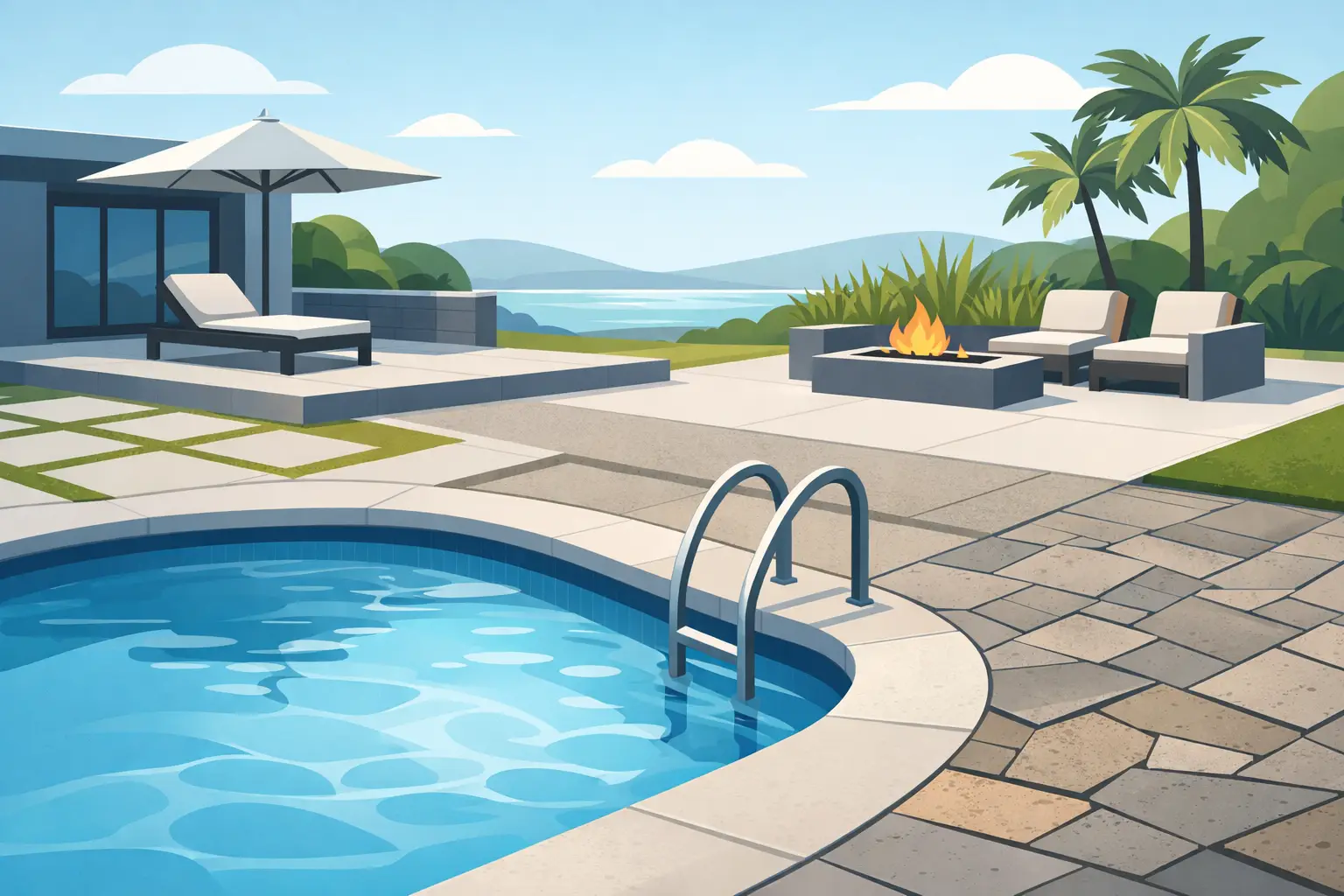
You should also think beyond the pool itself. The deck often connects to covered patios, outdoor kitchens, fire features, and walkways. A strong design considers those transitions from the start. A deck should not feel like a separate slab dropped next to the water. It should feel like part of a complete outdoor living environment built for Texas livin.
Installation quality matters more than the finish itself
Homeowners often focus on the decorative surface, but performance starts below that layer. Base preparation, grading, reinforcement, drainage, joint placement, and concrete mix design all affect how the deck holds up over time.
That is especially true in this region, where shifting soils and weather swings can put pressure on hardscape surfaces. Even the best-looking finish will disappoint if the slab is not installed correctly. Cracking can never be eliminated completely with concrete, but proper planning can help control where it happens and reduce bigger long-term problems.
Sealers matter too, especially on decorative finishes. The right sealer can help protect color and improve cleanability, but too much gloss or the wrong product can make the surface slick when wet. Around pools, appearance should never come at the expense of safety.
When replacement is better than resurfacing
If you are remodeling an older pool, it is tempting to keep the existing deck to save money. Sometimes that works. Sometimes it only delays a bigger repair.
If the current deck has widespread cracking, settling, poor drainage, or uneven sections, resurfacing may only mask the issue for a short time. Full replacement gives you the chance to correct the slope, improve drainage, redesign the layout, and create a more cohesive outdoor space. For many homeowners investing in a premium backyard, that long-term value is worth it.
At CHR Builder, pool deck design is approached as part of the full project, not as an afterthought. That means considering how the concrete looks, how it performs, and how it supports the entire backyard plan from day one.
What homeowners usually regret
Most deck regrets come down to three things: choosing a finish based only on appearance, underestimating heat, or treating the deck like a minor accessory instead of a major structural and lifestyle element.
A pool deck covers a lot of visual ground. It affects first impressions, comfort, traffic flow, and maintenance for years. The right choice feels natural every time you step outside. It stays cooler, drains better, looks finished, and makes the whole backyard more usable.
If you are weighing concrete pool deck options, the best next step is not picking a pattern from a catalog. It is looking at your property, your pool design, your sun exposure, and your long-term goals as one complete project. That is how you end up with a deck that looks right on day one and still works years later.