
A beautiful pool can turn a Katy or Houston backyard into the place everyone wants to be. But Texas heat, hard water, heavy rain, and nearly year-round use put real pressure on every surface and system. The right pool maintenance company does more than keep water looking blue. It protects the equipment, finish, and long-term value of a major investment.
For homeowners who expect their pool to be ready for family time, weekend gatherings, and quiet evenings outdoors, maintenance should be consistent, informed, and tailored to the pool itself. A one-size-fits-all service plan rarely delivers that standard.
A Pool Maintenance Company Protects More Than Water Quality
Clean water is the most visible result of professional pool care, but it is only one part of the job. Proper service should connect water chemistry, circulation, cleaning, equipment performance, and surface condition. When one area is ignored, the others eventually feel it.
Water that is out of balance can irritate skin and eyes, encourage algae growth, stain tile, corrode metal components, or damage plaster and equipment over time. A pool can look acceptable from the patio while a chemistry problem is quietly shortening the life of its heater, pump, or salt system.
That is why experienced maintenance technicians test and adjust the water based on more than chlorine alone. They consider pH, alkalinity, sanitizer levels, calcium hardness, stabilizer, and the pool's specific equipment. The goal is balanced water that is comfortable to swim in and less aggressive toward the investment below the surface.
For Houston-area homeowners, this work matters even more during long summer stretches. High temperatures burn through sanitizer faster, while frequent storms can dilute chemicals and introduce debris. Professional attention keeps small changes from becoming a green pool, a stained finish, or an avoidable repair call.
What Reliable Weekly Pool Service Includes
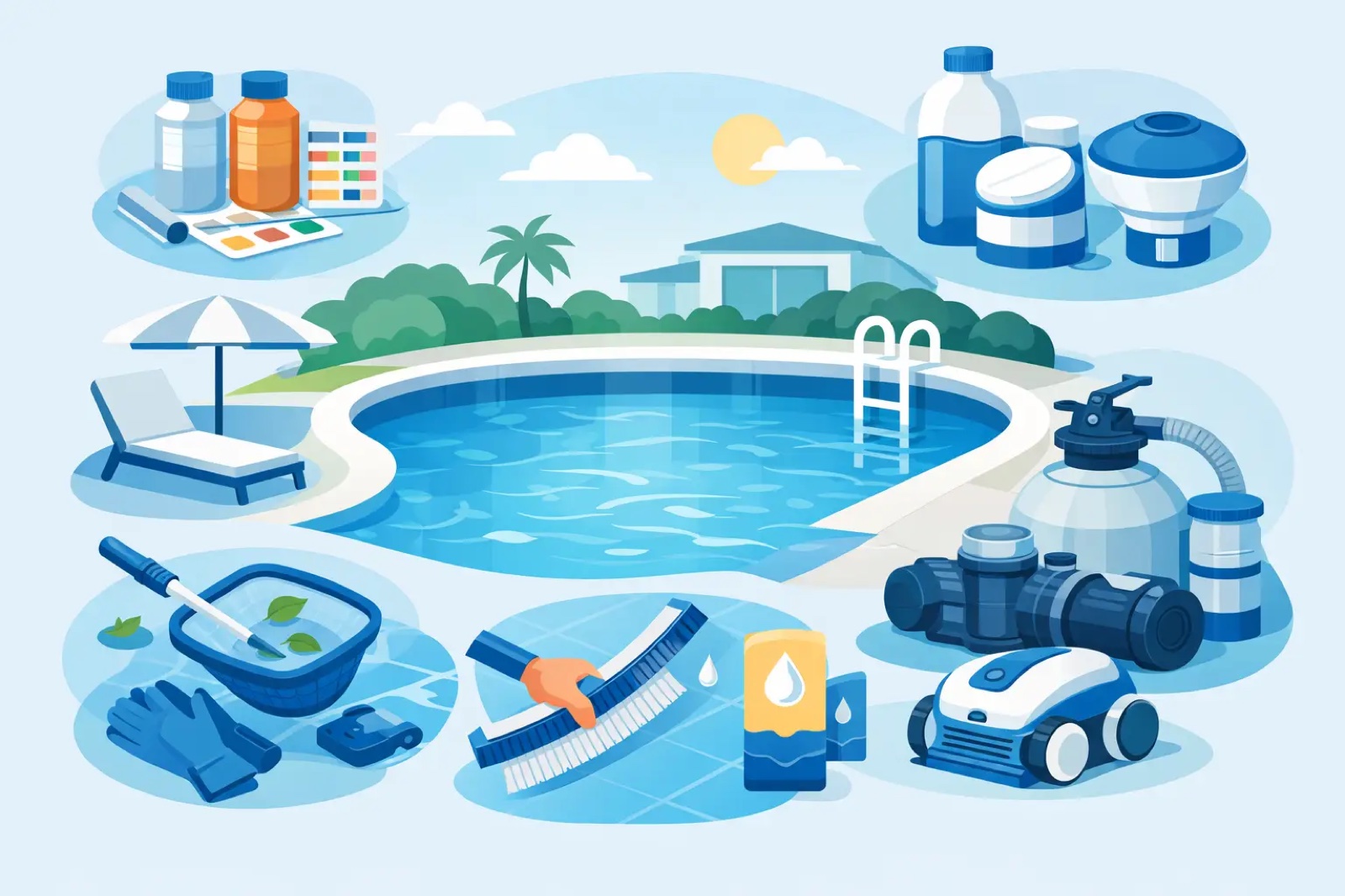
A dependable service visit should feel thorough, not rushed. The exact tasks may vary by pool type, season, landscaping, and equipment, but routine service typically includes water testing and chemical balancing, skimming the surface, emptying baskets, brushing walls and steps, vacuuming or monitoring the cleaner, and checking water level.
The technician should also look beyond the pool basin. Filters, pumps, valves, lights, heaters, automation controls, and salt cells all deserve regular observation. A weak return jet, unusual pump noise, air in the system, or declining water level can point to an issue that is less expensive to address early.
A quality provider also communicates clearly. Homeowners should know if a filter needs cleaning, a component is nearing the end of its service life, or a weather event requires an extra visit. Good maintenance is not simply a recurring stop on a calendar. It is ongoing oversight of a custom system.
Water Chemistry Is a Moving Target
Pool chemistry is not set once and forgotten. It changes with rainfall, swimmer load, direct sunlight, leaves, pollen, landscaping debris, and outdoor temperatures. A pool used by a large group over a holiday weekend needs different attention than one that has been covered and unused for several days.
This is where local experience makes a difference. Texas pools face extended heat and heavy mineral content in the water supply. A technician who understands those conditions can make informed adjustments instead of repeatedly adding chemicals without addressing the underlying cause.
Cleaning Must Match the Pool's Design
A freeform pool with a raised spa, tanning ledge, water features, and natural stone has different cleaning needs than a simple rectangular pool. Tight corners can collect debris. Spillways can develop scale. Pebble finishes, glass tile, coping materials, and travertine patios need appropriate care to preserve their appearance.
Your pool maintenance plan should account for those details. The better the service team understands how a pool was built, the better they can protect its surfaces and identify concerns before they affect the overall design.
Calcium Removal Is Essential in Texas Pools
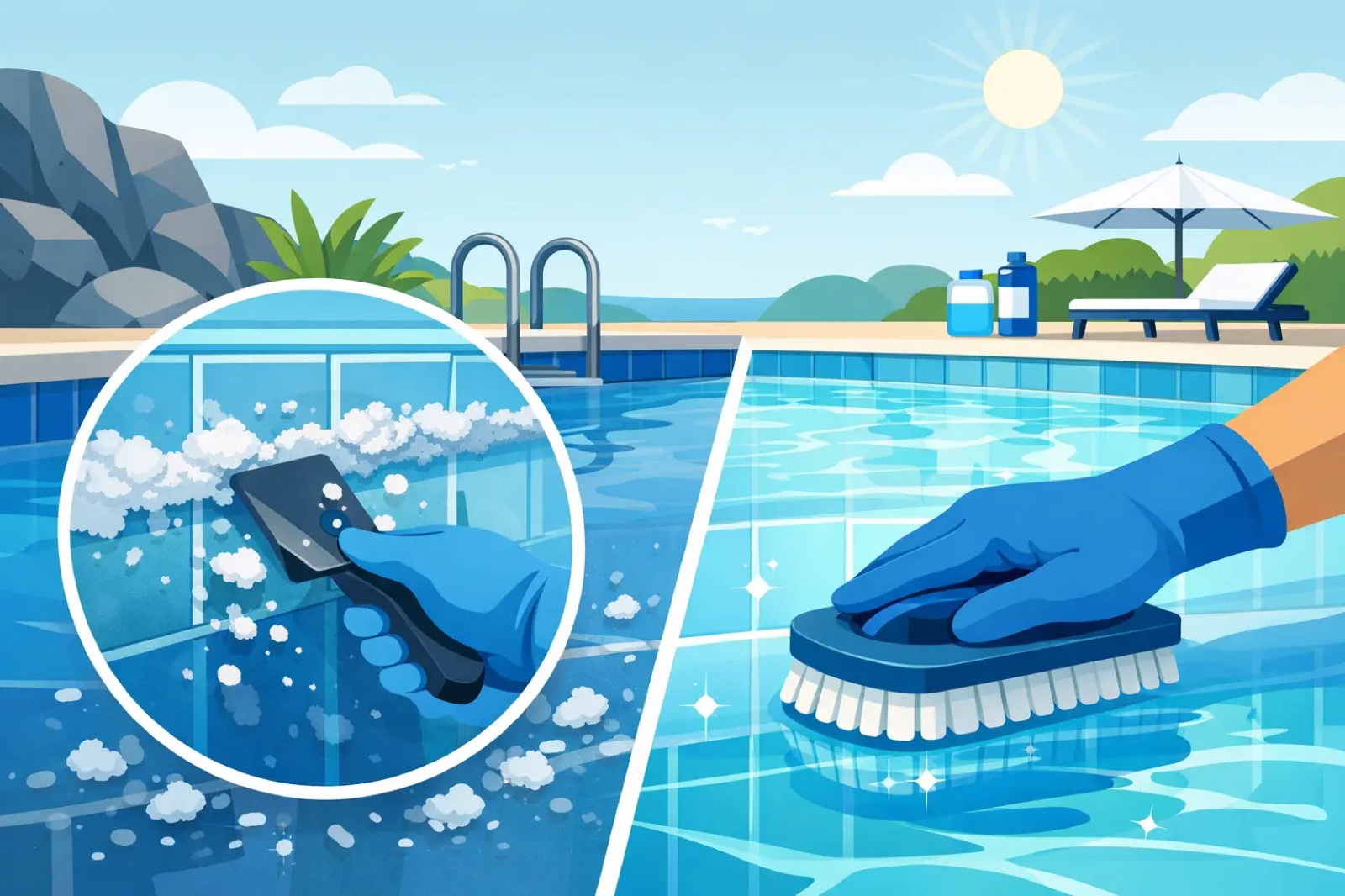
Many homeowners first notice calcium buildup as a white, chalky line around the tile or water feature. It may seem cosmetic, but mineral scale can become harder to remove over time and can affect the look of tile, stone, and finished surfaces.
Calcium buildup is especially common in the Houston area because of hard water, evaporation, and high heat. As water evaporates, minerals remain behind. If chemistry is not carefully managed, those minerals can attach to tile, spillways, heaters, salt cells, and other equipment.
Professional calcium removal should be handled with the correct method for the material involved. Aggressive cleaning can scratch tile, damage grout, dull stone, or harm a pool finish. The right approach depends on the surface, severity of buildup, and condition of the surrounding materials.
Routine monitoring helps reduce the rate of scale formation, but no pool is completely immune. A maintenance company that offers calcium removal can restore a cleaner appearance while helping homeowners avoid the temptation to use harsh products that cause more damage than they solve.
Equipment Checks Can Prevent Major Repairs
The pump room is where many costly pool problems begin. A leaking seal, dirty filter, clogged impeller, worn valve, failing capacitor, or weak circulation pattern may not be obvious during a quick look at the water. Left untreated, however, these issues can strain equipment and increase operating costs.
During regular service, technicians should pay attention to circulation, pressure readings, visible leaks, unusual sounds, and the condition of fittings and controls. They should also recognize when a problem calls for a repair specialist rather than a temporary adjustment.
There is a practical trade-off here. Not every aging part needs immediate replacement, and not every minor issue is an emergency. A trustworthy provider explains the condition, expected risk, and recommended timing so the homeowner can make a confident decision. That is particularly valuable when managing a premium backyard with integrated lighting, automation, spa equipment, or water features.
Choosing a Pool Maintenance Company for Your Home
The lowest monthly price can be appealing, but it should not be the only measure of value. A cheap service plan that skips testing, communication, equipment checks, or careful cleaning can cost more later through repairs, surface damage, and frustrating downtime.
Look for a company that is licensed and insured, familiar with local pool conditions, and prepared to explain exactly what its service includes. Ask how it handles algae outbreaks, severe weather, calcium deposits, filter cleanings, repair recommendations, and service communication. Clear answers are a strong sign that the company has a real process.
It also helps to work with a team that understands construction, not just chemicals. Pool systems are connected to structural elements, plumbing, finishes, drainage, decks, and outdoor living features. When maintenance professionals understand the complete backyard environment, they are better positioned to spot issues that may affect more than the water.
Questions Worth Asking Before You Hire
Ask whether weekly visits include chemical balancing and physical cleaning, how technicians document service, and whether they inspect equipment at every visit. Confirm who handles specialty work such as calcium removal, leak concerns, filter maintenance, and equipment repair.
You should also ask whether the company works on pools similar to yours. A pool with a salt system, raised spa, fire feature, outdoor kitchen, or automated controls deserves a provider comfortable with those details. The right partner should make ownership easier, not leave you guessing what is happening behind the scenes.
Maintenance Supports Long-Term Backyard Value
A custom pool is not just a feature. It is part of how your family lives at home, hosts friends, and enjoys Texas weather. Consistent care protects that experience while preserving the craftsmanship that went into the build.
At CHR Builder, pool maintenance is approached with the same attention to detail that goes into custom pool construction, remodeling, and outdoor living projects. With more than 25 years of construction experience behind the work, the focus stays on durable performance, clean finishes, and practical recommendations for the life of your pool.
If your waterline tile has visible scale, your equipment is showing its age, or your current service feels inconsistent, it is worth getting a professional assessment. The best time to protect a pool is before a minor issue becomes the reason it cannot be enjoyed.