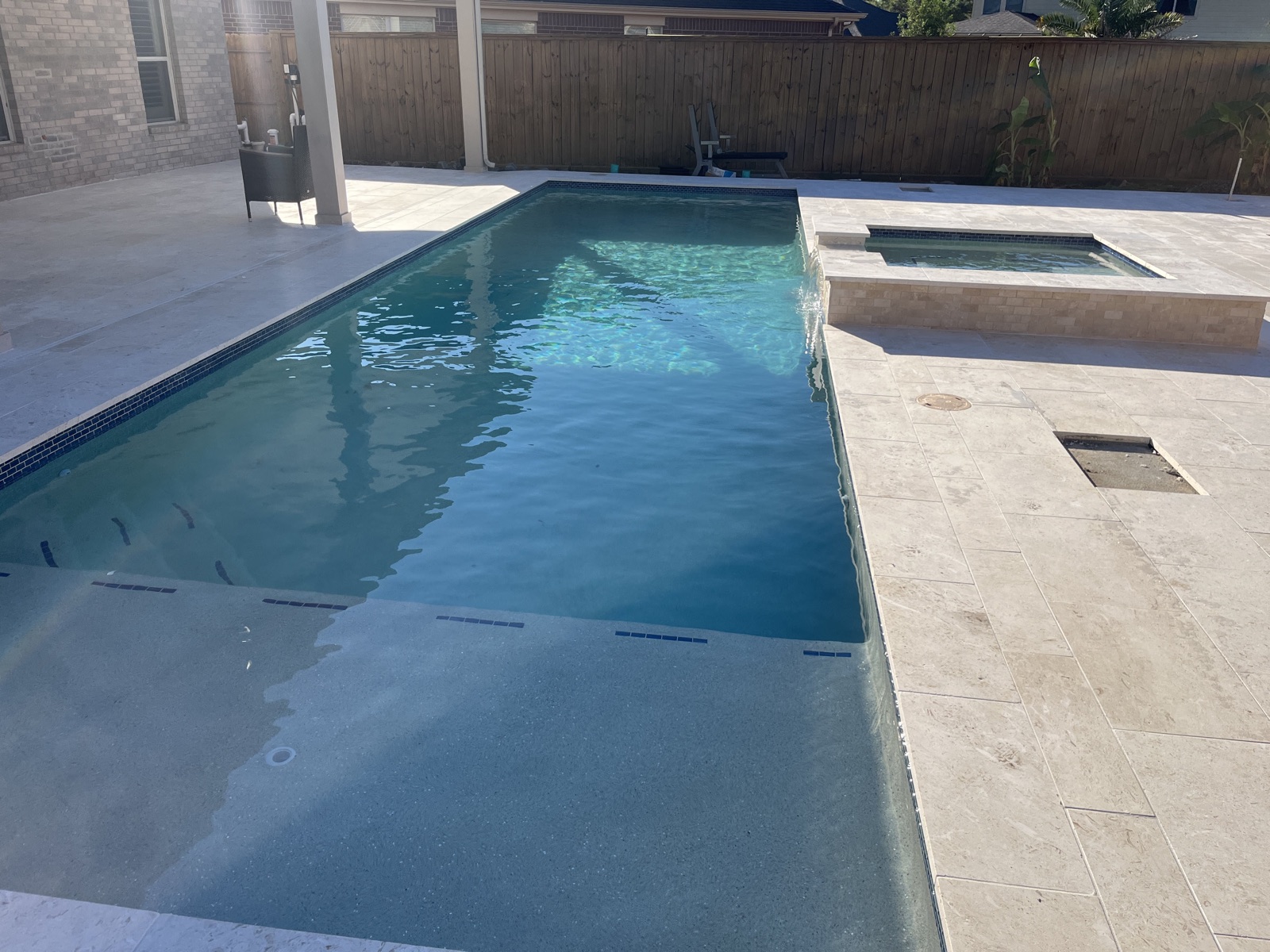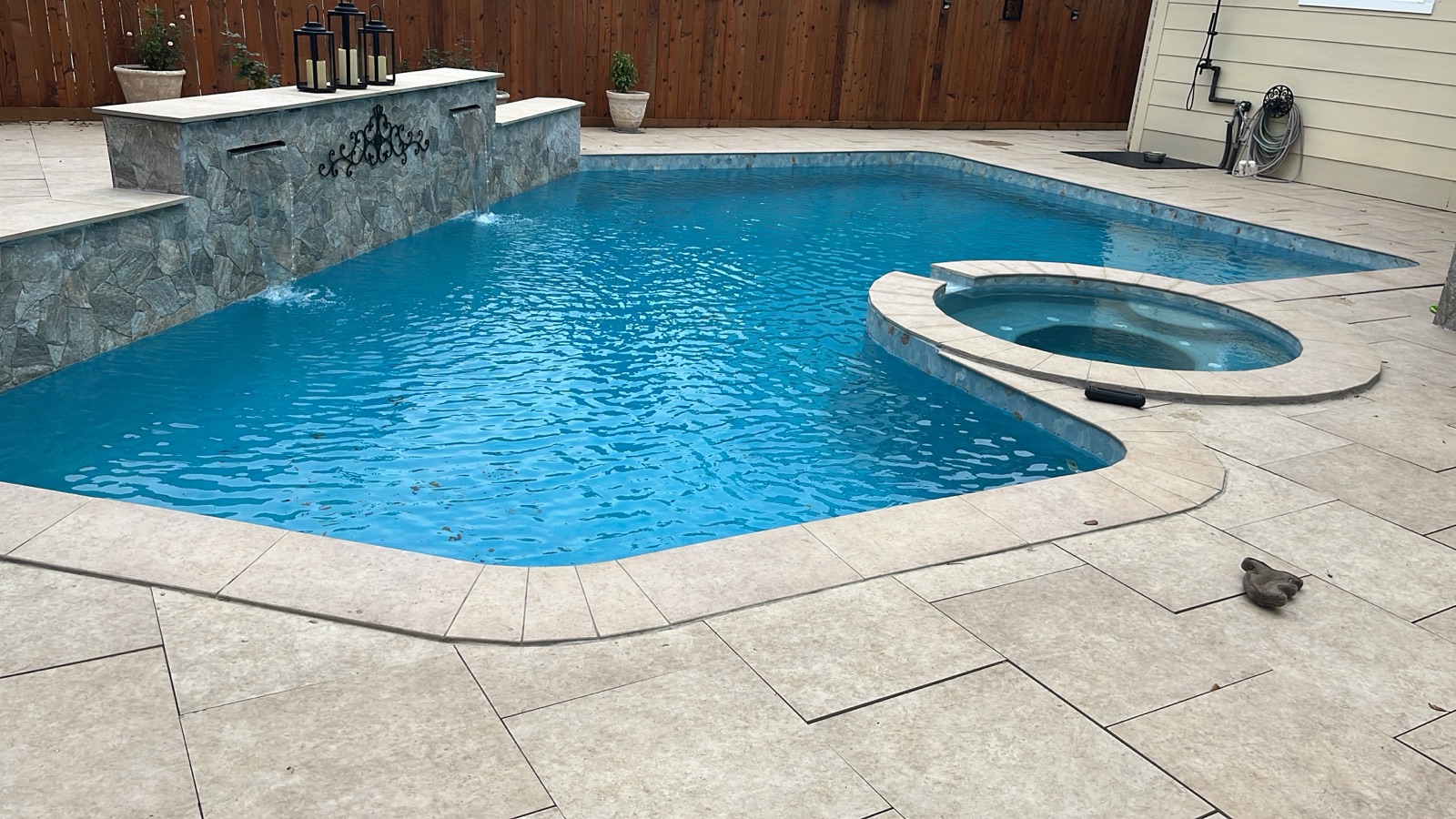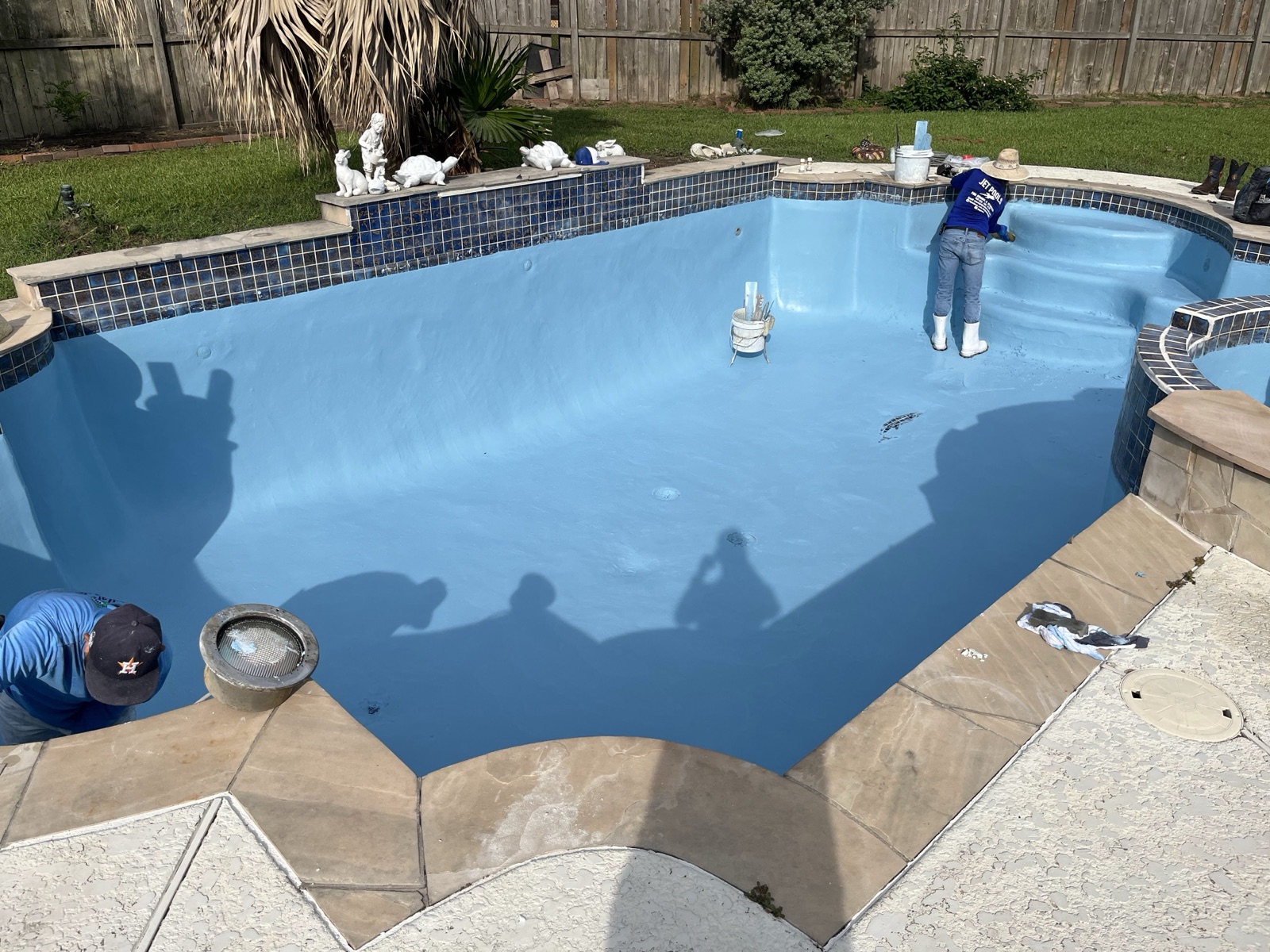
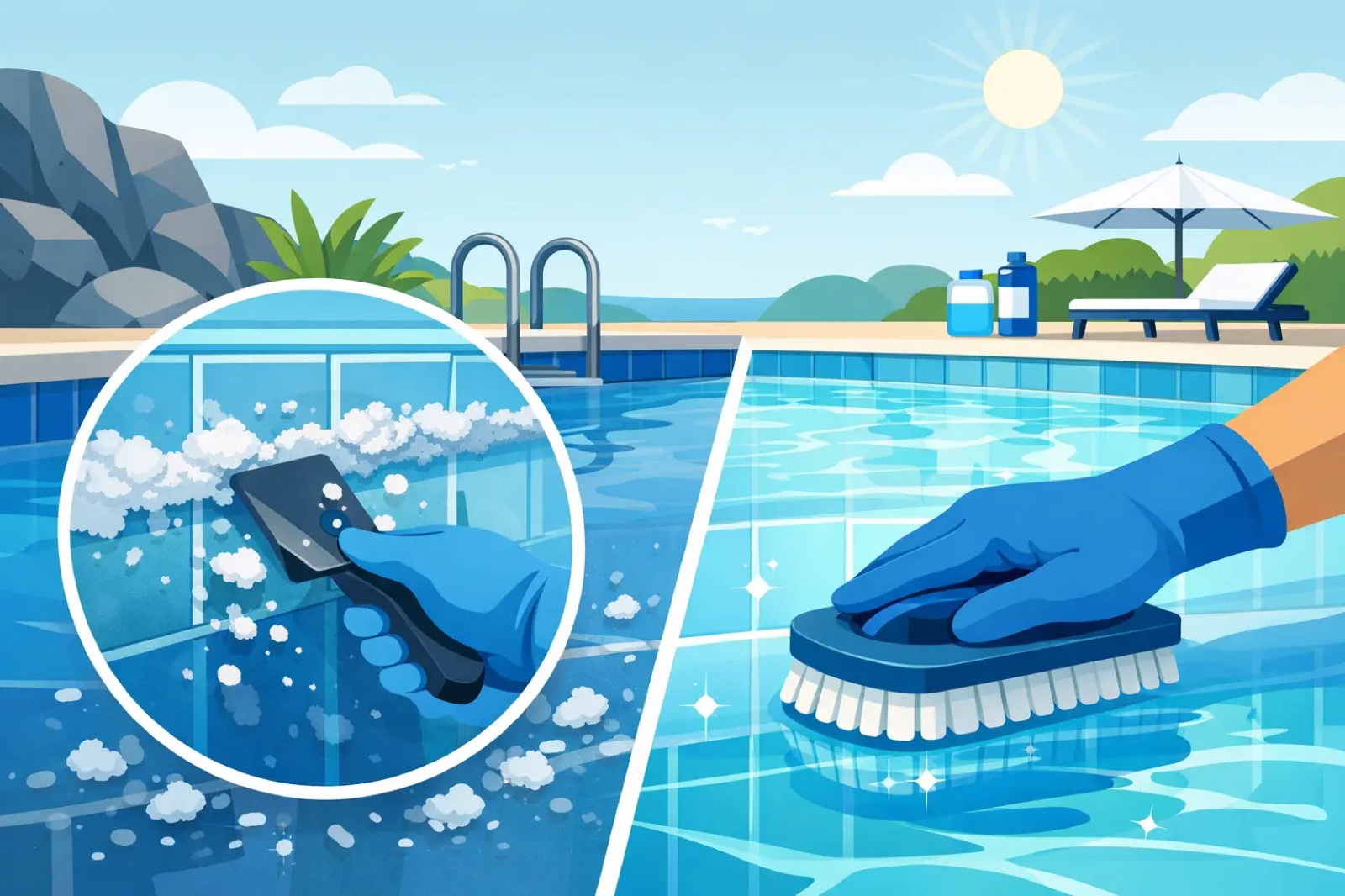
That white or gray crust building up on your pool tile is calcium scale, and if you own a pool in Katy or Houston, you have probably seen it. It starts as a thin haze at the waterline and, if ignored, can turn into thick, rough deposits that look bad and eventually damage the tile and grout beneath. The good news is that scale is treatable. The key is knowing what you are dealing with and choosing the right removal method before you make things worse.
What Pool Scale Actually Is
Pool scale is primarily composed of calcium carbonate, the same mineral that forms limescale in pipes and appliances. Water naturally contains calcium, and in the Houston and Katy area, our municipal water is on the harder end of the scale. When water evaporates from the pool surface, it leaves those minerals behind. Over weeks and months, they accumulate into visible deposits wherever water meets air, mainly at the waterline, around jets, on spillways, inside spas, and on any raised bond beams or water features.
Heat speeds up the process. A Texas summer accelerates evaporation dramatically, which means calcium concentrates faster here than in cooler climates. Add in the fact that most homeowners top off the pool regularly to replace evaporated water, and you are introducing more minerals with every fill. Without active management of calcium hardness and pH, scale buildup is essentially guaranteed over time.
Common Problem Areas to Watch
Scale concentrates wherever evaporation is heaviest. The waterline tile band is almost always the first place it shows up. Spas are particularly prone because the water agitation and heat create ideal conditions for calcium to precipitate out. Waterfalls and spillways, where water flows over a surface and then drops through air, accumulate scale on the edges and faces. Even saltwater systems develop scale around the salt cell and in areas of high flow.
The longer scale sits, the harder it becomes. Fresh deposits are chalky and relatively easy to address. Older deposits that have been baked in through multiple summer seasons can feel almost like concrete and require more aggressive treatment.
DIY Options for Light Buildup
For minor, early-stage scale on hard tile surfaces, there are a few things homeowners can try. A pumice stone works on light deposits on ceramic or porcelain tile when used wet. Keep the stone and the tile surface wet throughout, and use light circular pressure. Do not use a pumice stone on glass tile, natural stone, or any polished surface. The abrasiveness will scratch those finishes permanently.
Pool-safe scale remover products are also available and work well on fresh, thin deposits. These are acid-based formulas that dissolve calcium without requiring mechanical scrubbing. Apply them with a non-abrasive pad, let them dwell briefly, then scrub gently and rinse. Always follow the product directions and keep in mind that anything going into the pool affects water chemistry, so test and adjust after treatment.
What DIY methods cannot do is remove heavy, thick, or multi-year buildup without risking damage. If the scale feels raised, sharp, or rough to the touch, or if it has spread below the tile line onto the plaster, it is time to call a professional.
When Professional Removal Is the Right Call
Professional calcium removal typically involves bead blasting or a similar abrasive technique that targets the scale without damaging the tile or grout beneath. Bead blasting uses fine glass or mineral beads propelled at controlled pressure to strip scale cleanly from the surface. It is precise, fast, and when done correctly, leaves tile looking close to new.
This method is particularly valuable on glass tile, natural stone, and mosaic surfaces where DIY scrubbing would cause visible damage. It is also the most efficient approach when multiple sections of waterline tile are affected or when the buildup has been there long enough to develop real thickness.
For lighter overall staining on plaster interiors, an acid wash is another professional option. This involves draining the pool and applying a diluted acid solution to the interior surface. It removes staining and can brighten aging plaster significantly. It is a more involved process and removes a thin layer of the plaster surface, so it should not be done repeatedly. But for a pool that has lost its color and is showing mineral haze throughout the interior, an acid wash can be a cost-effective way to restore the appearance without a full replaster.
Prevention After Removal
Once scale is removed, prevention comes down to chemistry. Keep calcium hardness in the 200 to 400 ppm range and maintain pH in the 7.4 to 7.6 zone. When pH climbs, calcium deposits form more readily. When calcium hardness gets too high, the water is saturated and will deposit minerals anywhere it can find a surface.
Consider a sequestrant product, sometimes called a metal or mineral control product, which keeps calcium in suspension and makes it less likely to drop out of solution onto your tile. Run the pump consistently so water stays in motion, and test chemistry weekly rather than waiting until something looks off.
In a Texas climate, staying on top of calcium is an ongoing job. But with the right habits, you can keep the tile looking clean and avoid the kind of buildup that requires professional intervention every year.
Ready to Talk to an Expert?
If you have calcium scale on your pool tile and want to know the best approach for your specific situation, our owner is happy to talk through it on a free 15-minute call. No obligation, no sales pressure. Just a straight conversation with the person who will build your pool.
Call us at (346) 481-3835 or book your free call at chrbuilder.com.