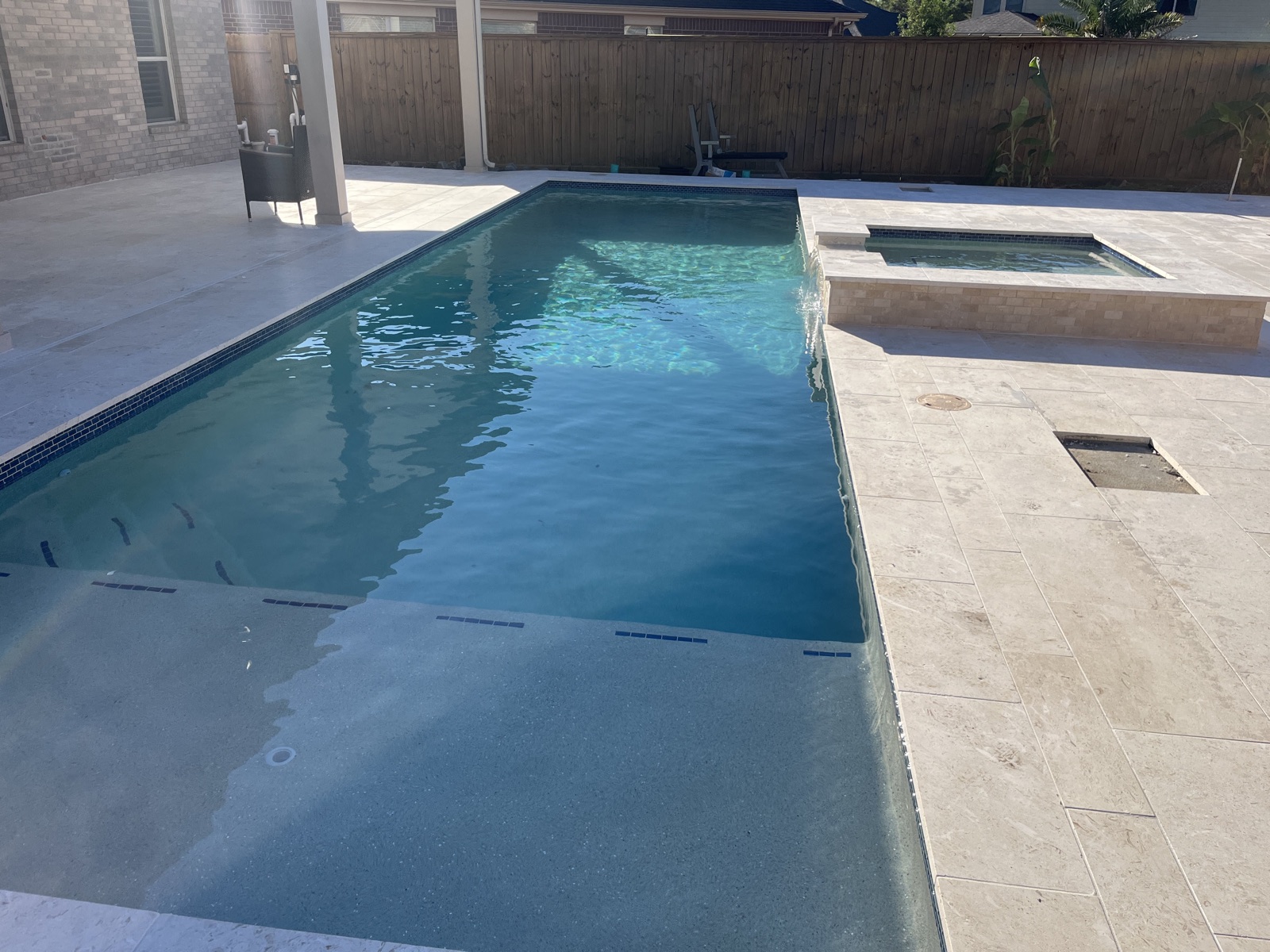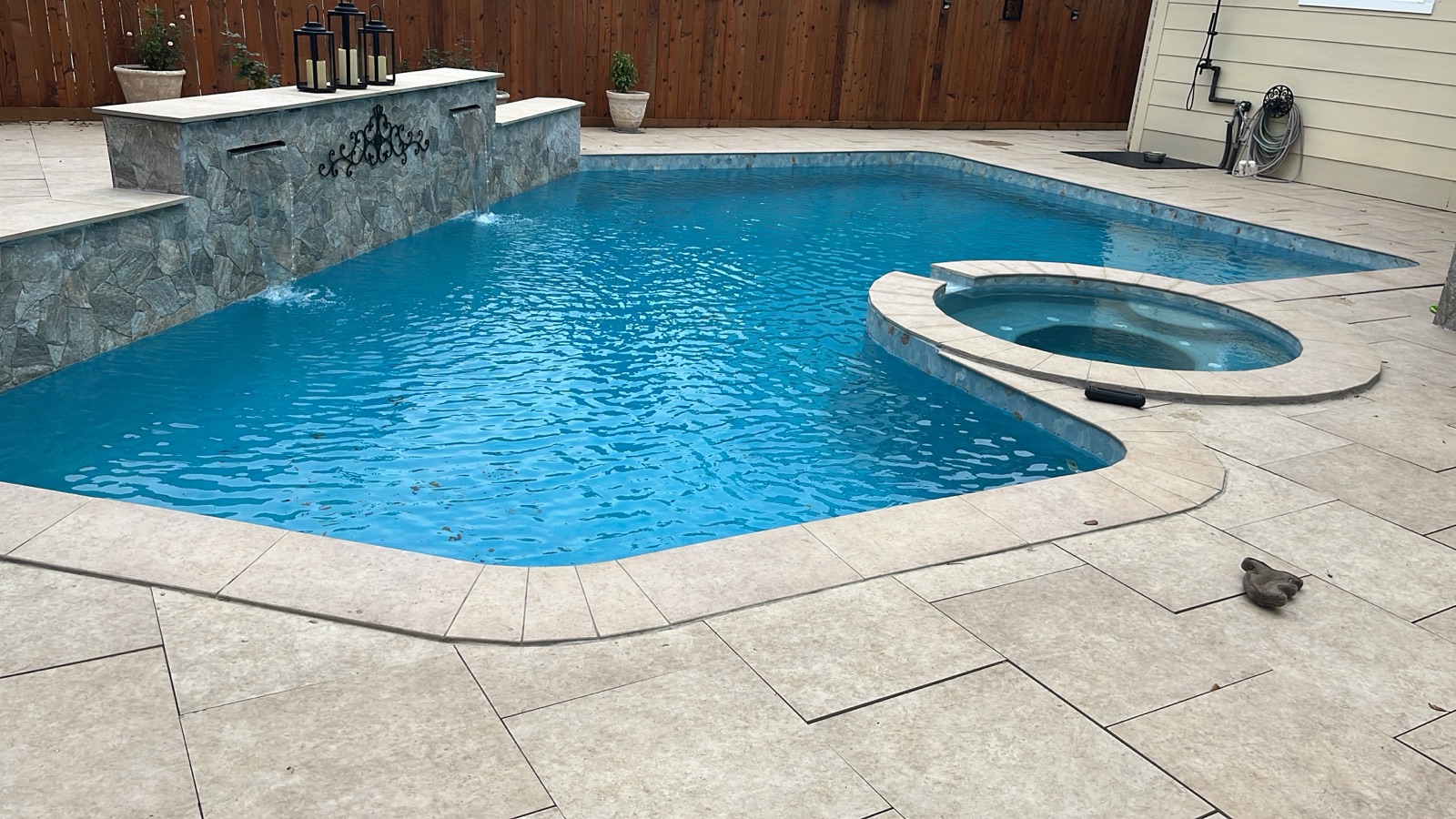
The waterline tile band on your pool does more than look good. It protects the edge of the pool shell where water meets air, and it takes a constant beating from UV exposure, chemical contact, calcium deposits, and the thermal expansion that comes with Texas temperature swings. When that tile starts failing, it is worth addressing sooner rather than later. Small repairs stay small when you catch them early. Ignored problems tend to spread and get expensive.
Why Waterline Tile Fails
Most tile failures in this area are not caused by defects in the tile itself. The tile is usually fine. What fails is the bond between the tile and the substrate underneath it, or the grout that holds the tile joints together.
Soil movement is the most common culprit in the Houston area. Texas clay soil is expansive, meaning it shrinks when dry and swells when wet. Over years, that repeated movement shifts the pool shell slightly, and when the shell moves, the tile and its adhesive bond can crack or separate. You will not notice the shift in the shell itself, but you will see it in the tile: hairline cracks, tiles that sound hollow when tapped, or grout gaps that open up.
Water chemistry imbalances also contribute. Water that is too acidic gradually attacks the grout between tiles, softening and eroding it over time. Once grout degrades, water gets behind the tile and weakens the adhesive bond. Calcium buildup adds pressure too, as heavy scale at the waterline expands and contracts with temperature, which can lift tiles off the substrate.
Poor initial installation is another factor, especially on older pools. If the original tile was set with inadequate adhesive, the wrong type of mortar, or insufficient surface preparation, it was only a matter of time before it started failing.
Signs That Waterline Tile Needs Attention
The most obvious sign is visible: cracked tiles, tiles that have popped off entirely, or grout that is crumbling away. But there is a less obvious sign that homeowners often miss. Take a coin or your knuckles and tap along the tile band. Tiles that are well-bonded produce a solid sound. Tiles that have separated from the substrate produce a hollow, higher-pitched sound. Hollow tiles are on borrowed time, even if they look intact on the surface.
Recurring calcium scale that builds up faster in one area than another can also indicate a grout problem. When grout is compromised, water moves behind the tile and creates more evaporative surface for calcium to deposit. If you find yourself cleaning scale in the same spot over and over, that section deserves a closer look.
Spot Repair vs. Full Restoration
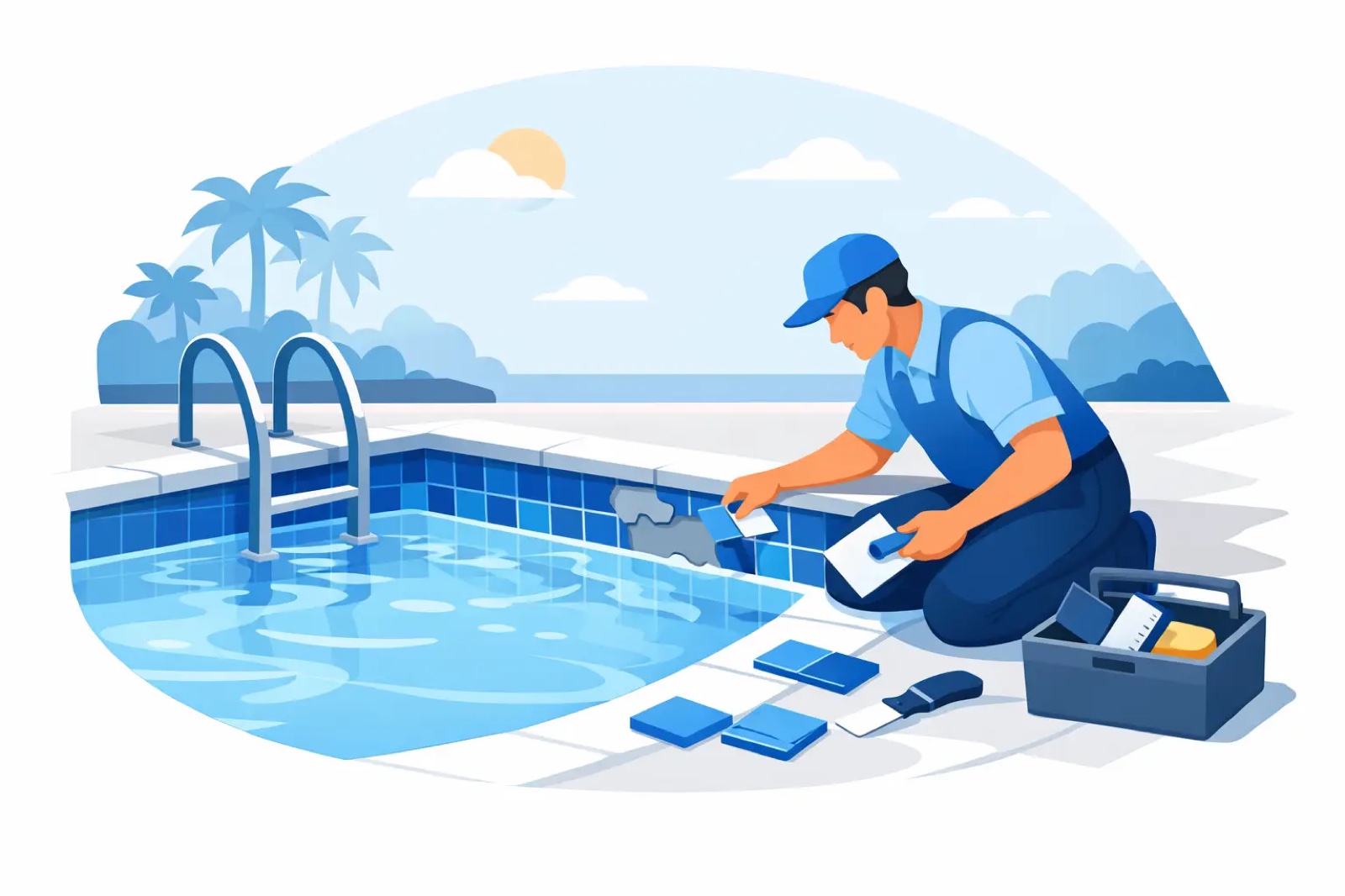
Not every tile problem requires tearing out the entire waterline band. When damage is limited to a few isolated tiles or a short section, spot repair is a reasonable approach. But spot repair has one challenge: matching the existing tile. If your pool is more than a few years old, the exact tile may be discontinued. Even the same product can have slight color variation between production runs. A professional can usually find something close, but it is worth being aware that a spot repair on older tile may not be a perfect visual match.
When multiple sections are failing, when the grout is compromised throughout, or when the tile is significantly outdated and the homeowner wants to update the look, full waterline tile replacement makes more sense. This gives you a fresh, consistent finish and the opportunity to correct any underlying substrate issues before new tile goes on.
How Professional Repair Works
A professional tile repair starts with an honest inspection, not an immediate quote. Before any tile comes off the wall, the technician should identify the scope of the failure, check for hollow tiles beyond the obviously damaged sections, and assess the condition of the substrate and any structural cracks in the shell itself. If there are structural issues, those need to be addressed first. Putting new tile over a moving substrate just sets up the same failure again in a few years.
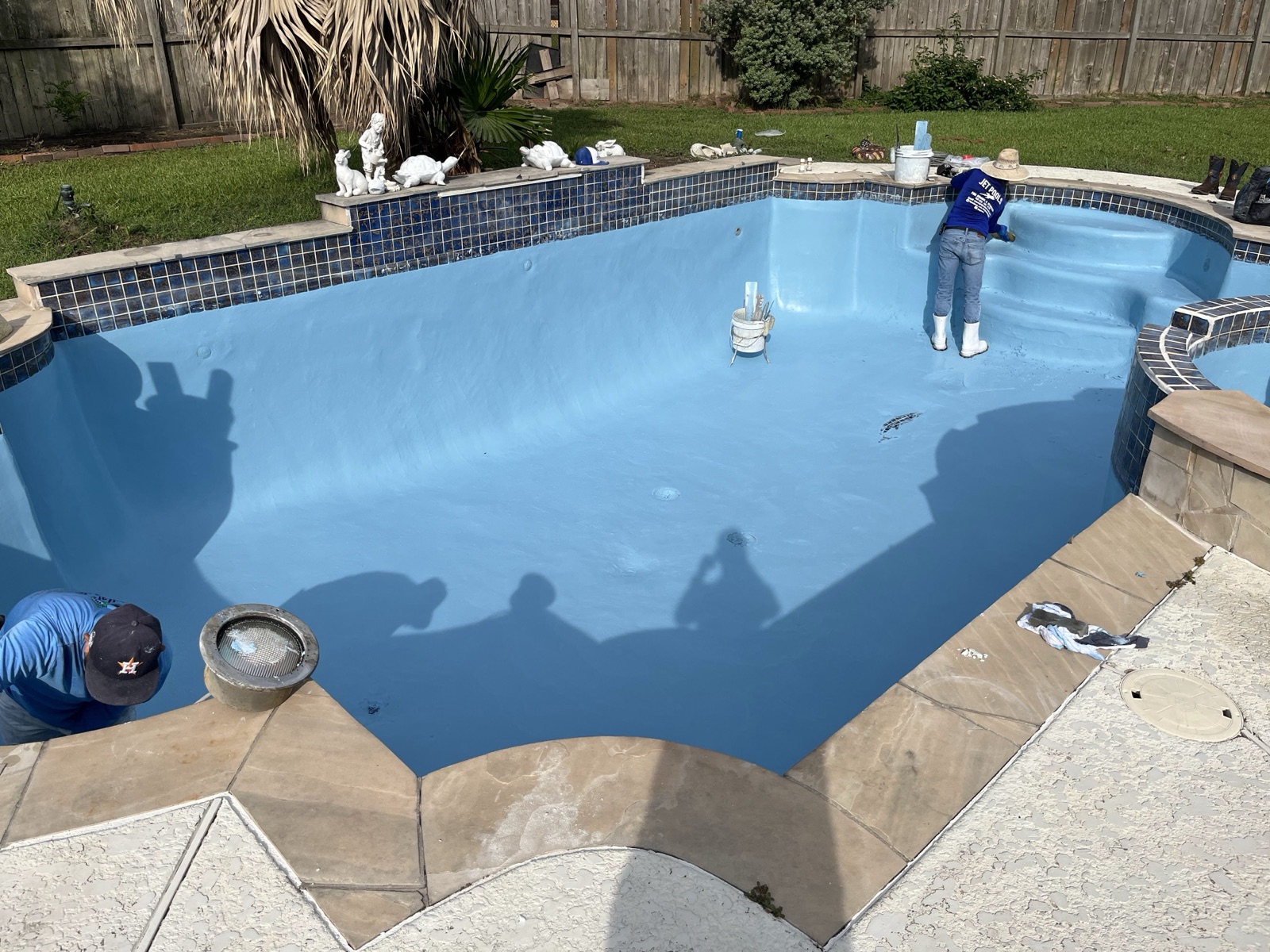
For the repair itself, the pool typically needs to be partially or fully drained. The failed tile is removed, and the substrate is cleaned, prepared, and sometimes repaired before new tile goes on. The right adhesive for the application, whether epoxy-based or polymer-modified mortar, is critical. Using the wrong product is one of the main reasons DIY tile repairs fail quickly.
After the tile is set and cured, the joints are grouted with a pool-grade grout that is water and chemical resistant. The pool is then refilled and the water chemistry is brought back into balance before the area gets full exposure again.
Pairing Tile Repair with Other Restoration Work
If your tile needs repair, it is a good time to look at the rest of the pool surface. Tile work goes much smoother when the pool is drained, and that drainage creates an opportunity to assess the plaster, address calcium on the tile band from top to bottom, and inspect coping and decking for any issues. Combining a tile repair with a calcium removal service, for instance, can give the pool a dramatic visual improvement for a fraction of what each project would cost if done separately at different times.
We regularly see pools that come in for a tile repair and leave looking considerably better than they did before, simply because we addressed everything that was visible once the water was out.
Ready to Talk to an Expert?
If you have waterline tile that is cracking, popping loose, or showing heavy calcium buildup, our owner is happy to talk through the repair options on a free 15-minute call. No obligation, no sales pressure. Just a straight conversation with the person who will build your pool.
Call us at (346) 481-3835 or book your free call at chrbuilder.com.