The waterline and the pool edge are two of the most stressed areas of any pool. They take the constant push and pull of water, sun and UV exposure, pool chemicals, foot traffic, and in Southeast Texas, the additional pressure from soil movement that never really stops. When the coping cracks or the tile starts pulling away from the bond beam, it is easy to write it off as a cosmetic issue. It is not.
Loose tile and failing coping are the first signs that the interface between your pool shell and the surrounding structure is breaking down. Left alone, they create pathways for water intrusion that can accelerate the damage and turn a manageable repair into a much larger problem.
Signs That You Need Tile or Coping Replacement
Some of the signs are obvious. Cracked coping stones, tiles that have fallen off completely, or grout lines that have opened up and filled with debris are easy to spot. Others take a closer look.
- Hollow-sounding tile: Tap the tile with your knuckle. If it sounds hollow rather than solid, the tile has de-bonded from the surface behind it. It has not fallen yet, but it will.
- Coping that has shifted or separated: Even small gaps between the coping and the bond beam allow water to work its way behind the stone.
- Heavy calcium buildup that does not respond to treatment: Severe calcium scaling often signals long-term water chemistry issues that have also been damaging the tile substrate.
- Sharp or chipped edges on coping: These are safety hazards in addition to being structural concerns.
- Repeated repairs that do not hold: If the same section keeps coming back for caulk or grout repairs, the underlying problem has not been addressed.
Why Southeast Texas Is Hard on Pool Edges
Houston-area soil is predominantly expansive clay, which means it swells when wet and contracts when it dries out. That movement happens underneath and around your pool constantly, especially through the dry summers and wet springs that are typical here. The result is ongoing stress on the bond beam, the coping, and the waterline tile that does not exist in most other parts of the country.
Temperature swings add to it. Cold nights in winter and extreme heat in summer expand and contract materials at different rates, and the joints between coping stones and the deck are particularly vulnerable. Water chemistry imbalance accelerates everything, particularly calcium carbonate deposition on tile and etching of grout.
Your Tile Options
The three most common choices for pool waterline tile are ceramic, porcelain, and glass.
Ceramic tile is the traditional choice and the most affordable. It comes in a wide range of patterns and colors and holds up reasonably well. The main limitation is that ceramic is more porous than porcelain, which means it absorbs calcium and minerals more readily over time.
Porcelain tile is our most common recommendation for Houston-area pools. It is denser and less porous than ceramic, which means calcium deposits are easier to remove and the surface stays cleaner longer. It comes in a range of styles including options that mimic natural stone. For the combination of visual appeal, durability, and ease of maintenance, porcelain hits the right balance.
Glass tile is the premium choice for homeowners who want a high-end look. The reflective quality of glass tile creates a beautiful shimmer at the waterline. The tradeoff is cost and the skill required for a quality installation. Glass tile is unforgiving of imperfect substrate prep and inconsistent grouting. When done well, it is stunning. When done poorly, it shows.
Your Coping Options
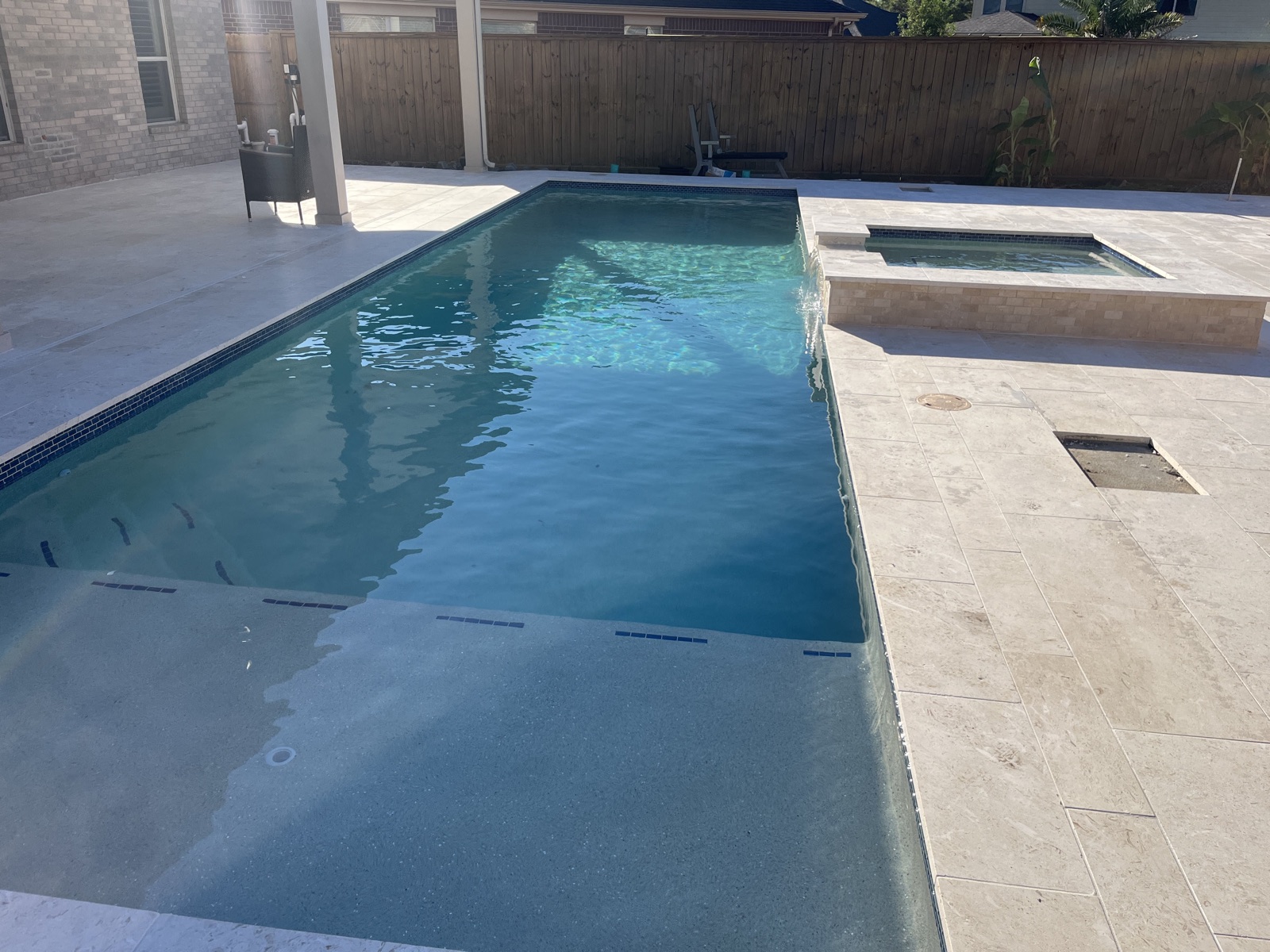
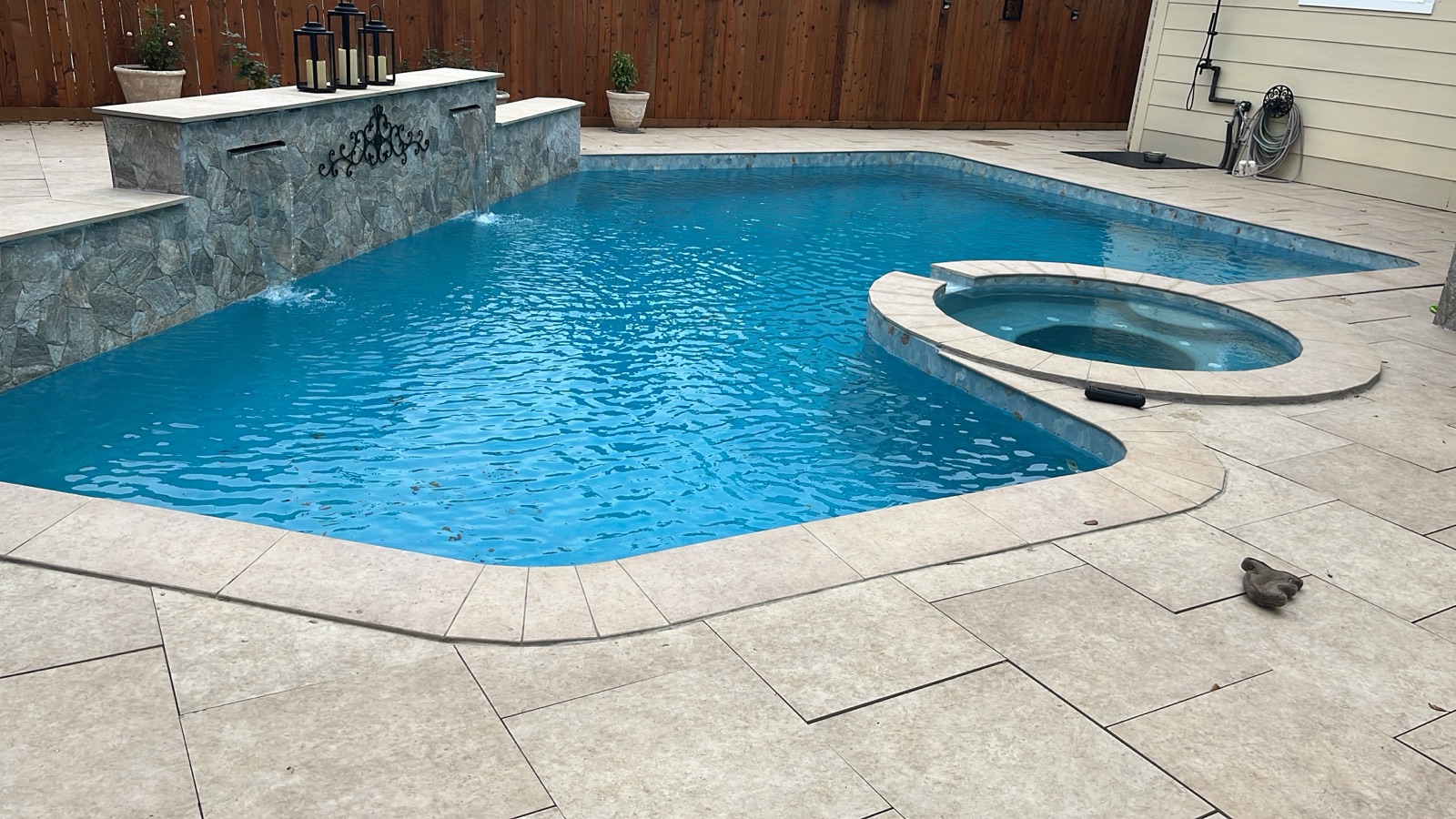
Travertine coping is the most popular choice for new and renovated pools right now. It is naturally cool underfoot, visually premium, and works well with a wide range of tile and deck combinations. It requires sealing but holds up well with basic maintenance.
Concrete coping in bullnose or cantilever profiles is a more affordable option that is durable and easy to match to an existing concrete deck. Cantilever coping extends slightly over the pool edge for a clean, modern look.
Cast concrete or brick coping works well for traditional-style pools and older homes where matching the existing aesthetic matters.
The Replacement Process
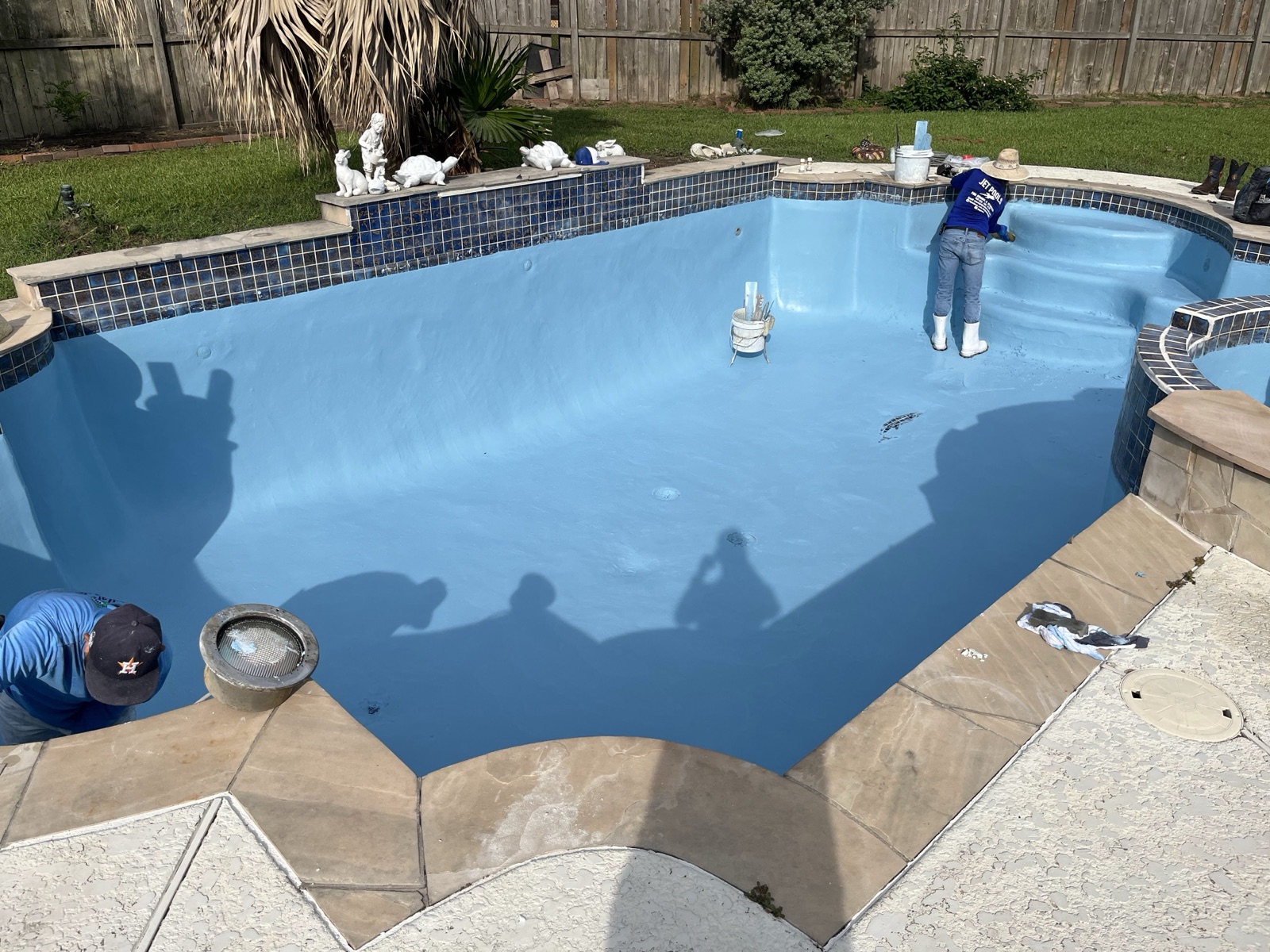
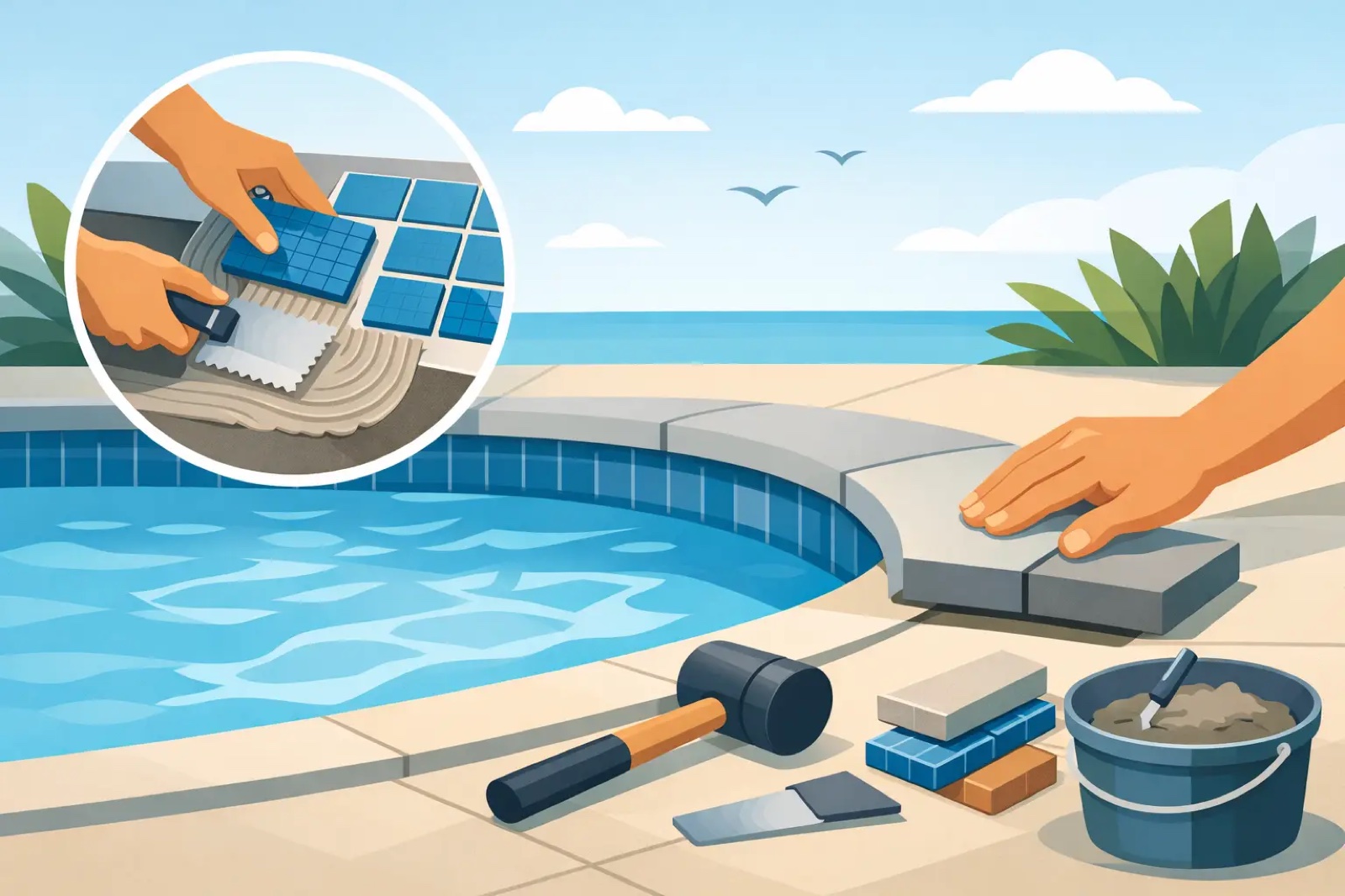
A full tile and coping replacement involves draining the pool, carefully demolishing the existing tile and coping without damaging the bond beam, inspecting and repairing the bond beam if needed, prepping the surface, installing the new tile and coping, grouting, sealing, and then refilling. The full process typically takes one to two weeks depending on scope.
If the plaster is also showing its age, many homeowners choose to replaster at the same time. You already have the pool drained and the crew on site. Doing tile, coping, and plaster together is more cost-effective than doing each separately, and the result is a cohesive finished look rather than mismatched renovation work.
Ready to Talk to an Expert?
If you have questions about pool tile or coping replacement for your Houston-area pool, our owner is happy to talk through it on a free 15-minute call. No obligation, no sales pressure. Just a straight conversation with the person who will build your pool.
Call us at (346) 481-3835 or book your free call at chrbuilder.com.