If you run your hand along the waterline of your pool and it feels rough, almost like sandpaper, you are feeling calcium scale. It is one of the most common issues pools develop over time in our area, and while it looks bad and feels worse, it is also one of the more straightforward things to fix once you understand what is causing it.
What Calcium Scale Actually Is
Calcium scale forms when calcium and other minerals in pool water come out of solution and deposit onto surfaces, mostly at the waterline where evaporation concentrates those minerals over time. It can also form on plaster surfaces below the waterline, especially in areas with poor circulation or where water chemistry has been out of balance for a while.
The harder the water in your area, and our local water tends to be on the harder side, the faster this buildup forms. Combined with Texas heat speeding up evaporation, scale can become noticeable within a year or two on a pool that is not getting it monitored.
Why Water Chemistry Matters
Calcium scale is closely tied to a measurement called calcium hardness, along with pH and total alkalinity. When these are out of balance, especially when pH or calcium hardness runs high, the water becomes more likely to deposit calcium onto surfaces instead of holding it in solution. Regular testing and balancing of these levels is the best way to slow down future scale formation, even after existing buildup has been removed.
Removing Existing Buildup
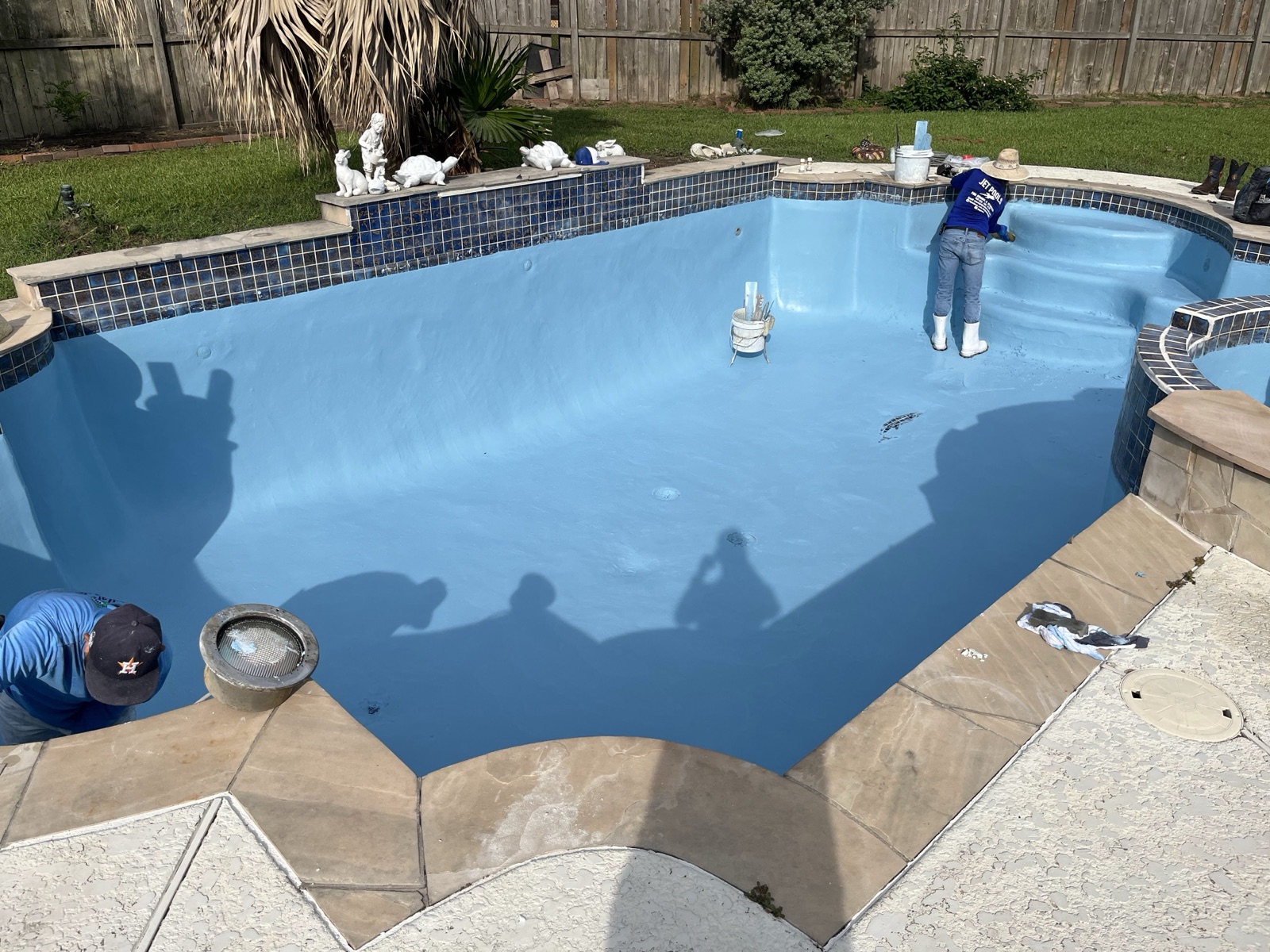
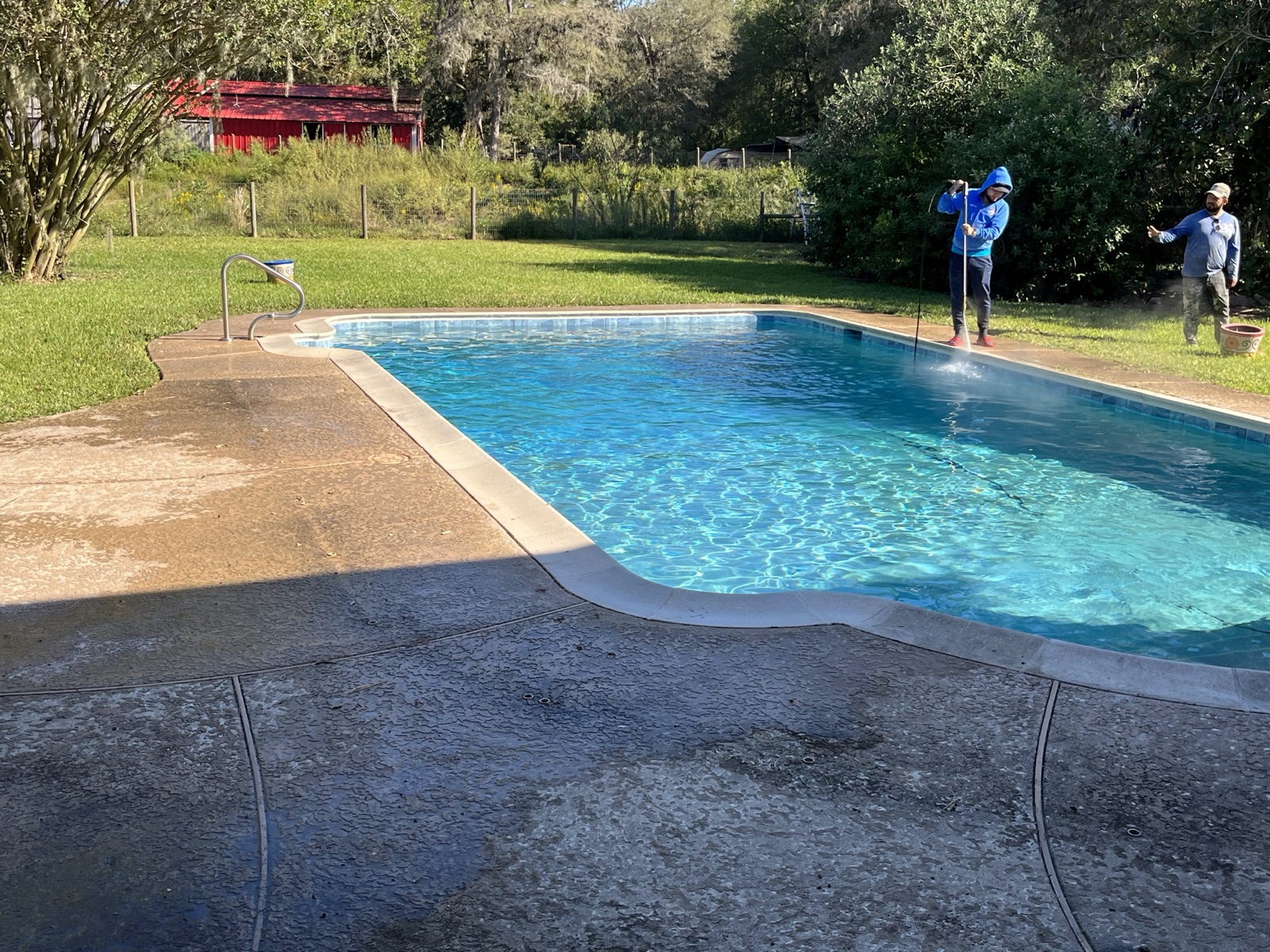
For scale that has already formed on tile, sandblasting with a soft media is the most effective removal method, taking the buildup off without damaging the tile underneath. For scale on plaster surfaces, the approach depends on how widespread and severe it is, ranging from acid washing for lighter buildup to a full resurfacing if the plaster itself is also failing.
Preventing It From Coming Back
Once scale is removed, keeping it from returning comes down to consistent water chemistry management. This means regular testing, keeping calcium hardness, pH, and alkalinity within recommended ranges, and brushing the pool regularly, especially at the waterline, to prevent deposits from settling in before they harden.
A salt chlorine generator and good circulation also help, since stagnant areas of a pool are more prone to scale formation than areas with consistent water movement.
When to Get It Checked
If your pool surface or tile is starting to feel rough or look chalky, it is worth getting it looked at before the buildup gets thick enough to require more aggressive removal methods. Catching it early usually means a simpler, less expensive fix.
Ready to Talk to an Expert?
If your pool has calcium scale buildup and you want to know the best way to remove it and keep it from coming back, our owner is happy to talk through it on a free 15-minute call. No obligation, no sales pressure. Just a straight conversation with the person who will build your pool.
Call us at (346) 481-3835 or book your free call at chrbuilder.com.